
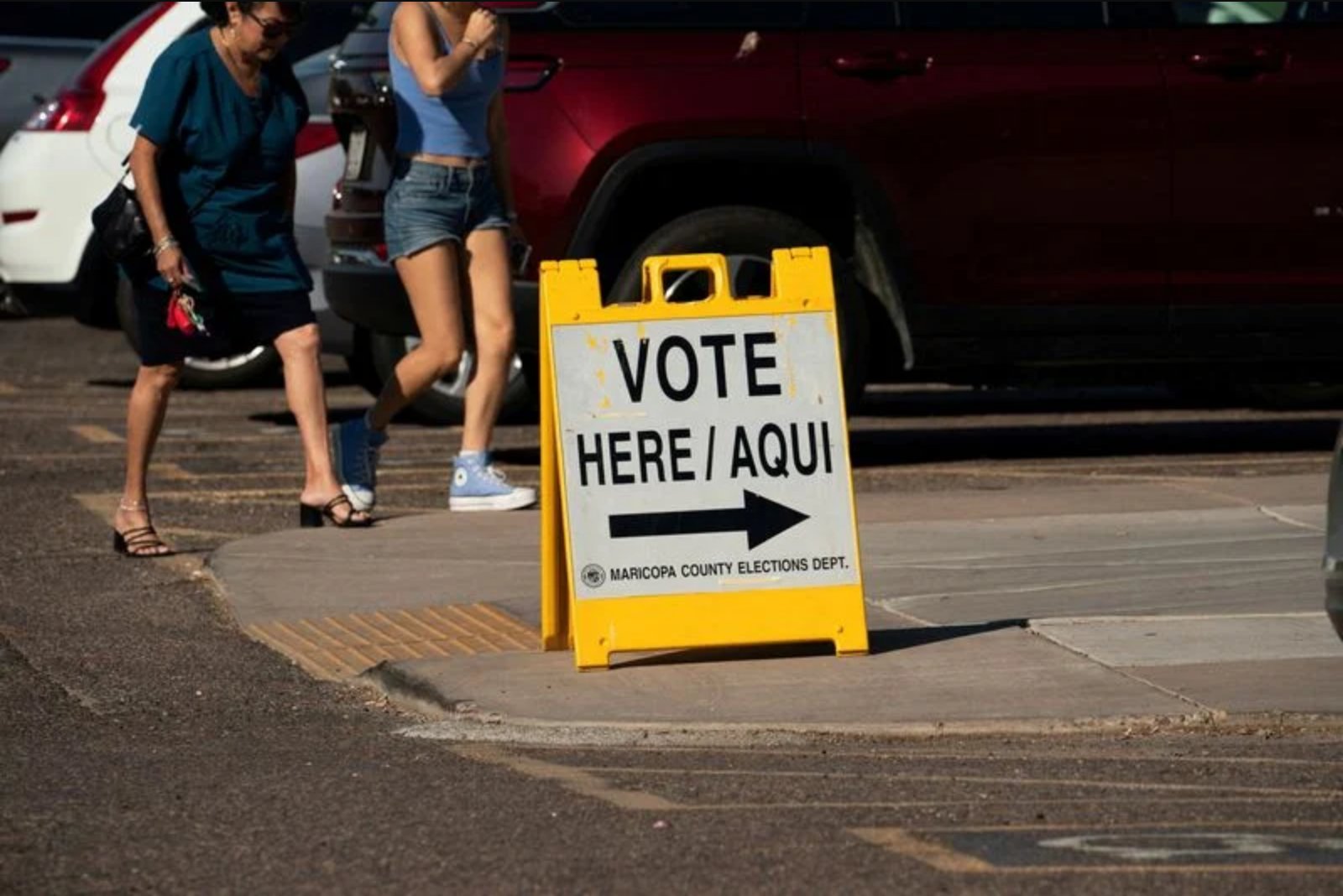
The U.S. Supreme Court on Monday agreed to hear an appeal from Republican officials that seeks to reinstate provisions of Arizona election law requiring documentary proof of U.S. citizenship for certain voter registrants and allowing regular purges of names from state voter rolls when citizenship cannot be verified.
The measures were adopted by Arizona's Republican-controlled legislature in 2022 and would require applicants using the state-issued voter registration form to provide documents such as a passport, birth certificate or other listed evidence showing U.S. citizenship. Under the state law, failing to produce the required documentation would prevent a registrant from being added to the rolls for federal and state elections.
Another component of the Arizona statute directed election officials to regularly remove from voter rolls registrants for whom American citizenship could not be confirmed. Supporters of the legislation said it balanced access to voting with election security when then-Governor Doug Ducey signed the bill in 2022. "Election integrity means counting every lawful vote and prohibiting any attempt to illegally cast a vote," Ducey said at the time.
Opponents have criticized the Arizona measures as imposing additional requirements that they say disproportionately affect Latino, Native American and student voters, groups that tend to favor Democratic candidates. Democrats argued the provisions were intended to suppress turnout among particular populations, while Republicans framed the rules as safeguards to protect elections.
The Biden administration, then led by President Joe Biden, filed suit in 2022 to block the Arizona restrictions, asserting the state law is preempted by a federal statute enacted in 1993, the National Voter Registration Act. That federal law requires registrants for U.S. elections to attest, by checking a box under penalty of perjury, that they are U.S. citizens, but it does not require documentary proof of citizenship.
A separate legal challenge contended the Arizona law breached a 2018 court-approved settlement that required state election officials to register voters for federal elections even if they lacked documentary proof of U.S. citizenship. The Republican National Committee and Arizona's leading Republican lawmakers intervened to defend the state statute. Voting rights groups and other advocacy organizations continued the litigation after Biden left office last year.
In September 2023, U.S. District Judge Susan Bolton in Phoenix ruled for the Biden administration and other plaintiffs, enjoining the proof-of-citizenship requirements. A three-judge panel of the 9th U.S. Circuit Court of Appeals in San Francisco, after reviewing the case on its legal merits, upheld Judge Bolton's decision. In 2024, the Supreme Court partially granted a request from Arizona Republicans to revive the voter registration restriction, and now the justices have agreed to take up the broader Republican-led appeal.
The justices are expected to hear oral arguments in the case during their next term, which begins in October. President Donald Trump's administration had backed key elements of the Republican-led appeal.
The legal dispute centers on the tension between state-level measures to impose documentary proof-of-citizenship requirements and federal law that prescribes a uniform attestation process without documentary proof. The case will determine whether the Arizona statute's verification and purge procedures can stand in the face of the federal statutory scheme and prior court orders that shaped voter registration practices in the state.
Summary
The Supreme Court will consider whether Arizona's 2022 law requiring documentary proof of citizenship for users of the state's registration form and mandating periodic purges of registrants with unconfirmed citizenship can be reinstated after lower courts blocked those provisions as violative of a federal voter registration statute and a prior court settlement.
Key points
- Supreme Court agreed to hear a Republican appeal challenging lower-court rulings that blocked parts of Arizona's 2022 voter law.
- The central legal conflict involves whether a 1993 federal law, which requires a signed attestation of citizenship without documentary proof, preempts Arizona's documentary-proof and purge requirements.
- Sectors potentially affected include election administration and public-sector operations, with indirect implications for firms providing voter registration technology and compliance services.
Risks and uncertainties
- Legal uncertainty - Ongoing litigation and impending Supreme Court review create a period of unsettled rules for Arizona election officials and vendors involved in voter registration processes.
- Disenfranchisement concerns - Critics argue the law could disproportionately affect certain demographic groups, raising political and reputational risks for public institutions and private contractors working with elections.
- Operational impact - If the law is reinstated or altered, state election operations may face administrative and compliance costs associated with document verification and roll maintenance.