
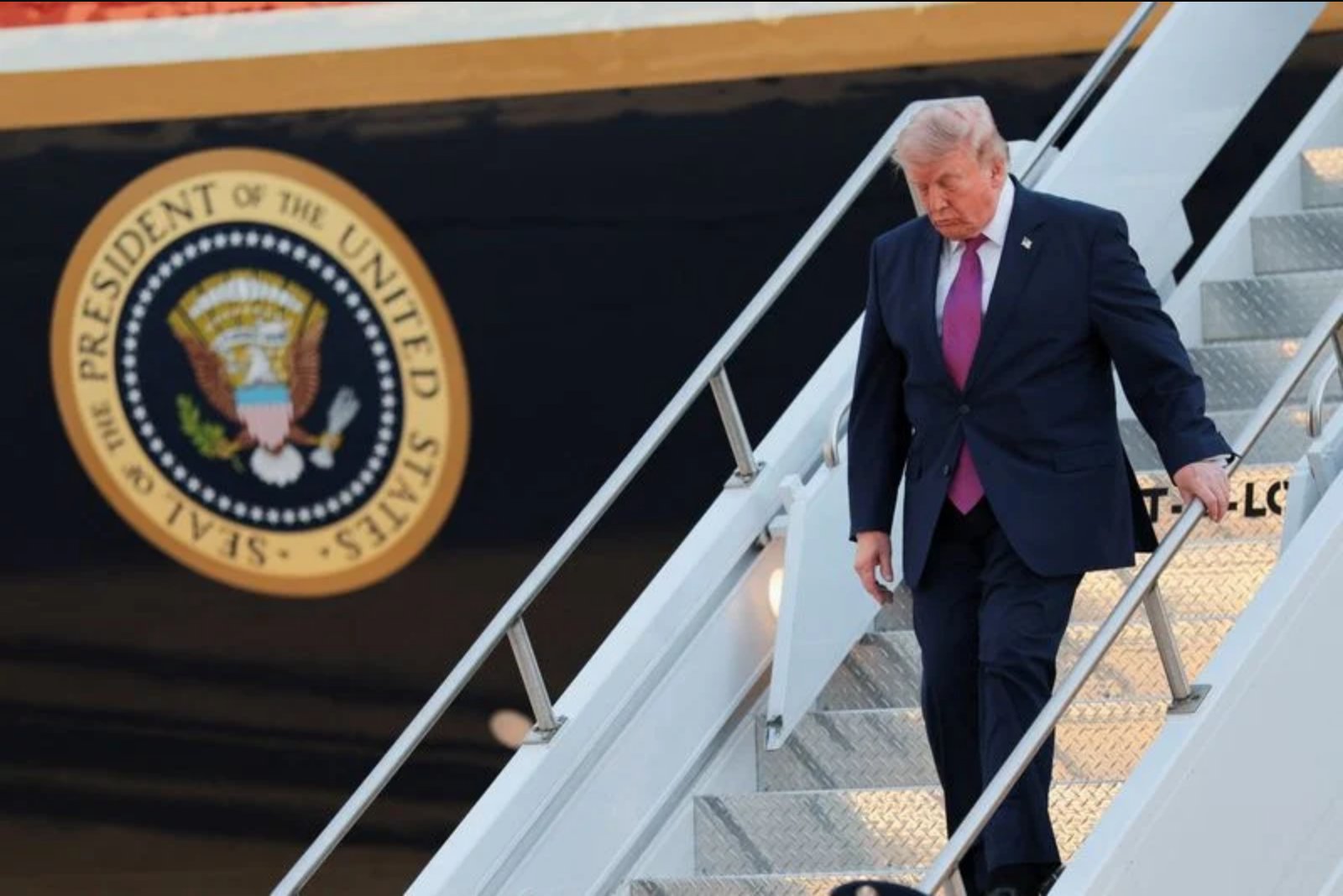
WASHINGTON, July 11 - The New York Times said on Saturday that the U.S. Department of Justice has subpoenaed several of its reporters, ordering them to testify before a federal grand jury after their coverage of alleged security concerns tied to President Donald Trumps new Air Force One, a plane the paper says was donated by Qatar.
According to the newspaper, the subpoenas were issued on Friday and requested the reporters appear on Wednesday to provide testimony "in regard to an alleged violation of federal criminal law." The Times reported that the subpoenas were issued by Jay Clayton, the U.S. attorney in Manhattan, and in some instances were delivered to journalists at their homes by federal agents.
The paper framed the move as a stark escalation by the Trump administration, calling it part of efforts to "threaten and intimidate independent news organizations." The Justice Department, in a statement to Reuters, declined to either confirm or deny the specific subpoenas but said the administration was not seeking to target reporters and was instead focused on identifying individuals who may have leaked classified information. The White House directed questions about the matter to the Justice Department.
Journalism advocacy groups reacted strongly. The National Press Club urged the Justice Department to withdraw the subpoenas "immediately," saying that when federal agents arrive at the homes of journalists with subpoenas, "it is not ordinary law enforcement" and amounts to "an extraordinary assault on the freedom of the press that strikes at the heart of the First Amendment."
The Reporters Committee for Freedom of the Press also called attention to the matter, asking the U.S. Senate Intelligence Committee to hold Jay Clayton accountable at his upcoming confirmation hearing, where he is expected to appear next Wednesday as the nominee to lead the Office of the Director of National Intelligence. Stephen J. Adler, chairman of the Reporters Committee, said in a statement that "when the publics right to know is crushed, as the Trump Administration is trying to do with its subpoenas against The New York Times, all of us suffer irreparable harm, as does the freedom upon which this nation is built."
Separately, the story includes reporting about President Trumps travel plans related to the aircraft at the center of the dispute. On Wednesday, Mr. Trump said he would fly from Ankara to the Royal Air Force base at Mildenhall in Britain using an older Air Force One "for old time's sake," while the new plane stopped at the same base so U.S. service members stationed there could tour the aircraft. Video released late on Wednesday showed the president boarding the new Air Force One, which the Times described as a gift from Qatar, at the British base as it prepared to return to the United States.
The sequence of events reported by the paperthe subpoenas, the involvement of federal agents in serving documents at journalists homes, the Justice Departments refusal to confirm the subpoenas and its stated focus on leaks, and the subsequent criticism from press advocacy organizationshave combined to raise debate over the appropriate balance between national security inquiries and protections for newsgathering. The Reporters Committee and the National Press Club have publicly urged the Justice Department to reconsider the use of subpoenas in this context.
What remains clear from the reporting is that subpoenas were issued, that Jay Claytons office in Manhattan is identified as the issuing authority, and that advocacy groups view the action as a serious challenge to press freedoms. The Justice Departments public comment emphasized concern about leaks rather than an intent to target journalists. Questions about the scope and justification for the subpoenas and about how they will be handled during Claytons confirmation process to lead the Office of the Director of National Intelligence are expected to be part of the public record as the week progresses.