
Overview
A federal judge on Friday imposed a tighter notice requirement on the administration ahead of any activity at the site of a proposed 250-foot (76-meter) triumphal arch near Arlington National Cemetery. The court ruling mandates at least 48 hours' notice before the government may "engage in any activity" at the location, while explicitly permitting efforts to identify archaeological resources beneath subsurface fill materials as required under the National Historic Preservation Act.
The decision by U.S. District Judge Tanya Chutkan comes after the U.S. Interior Department said it would move forward soon with site work, despite both legal challenges and the absence of final authorization from a government planning body. The administration's announcement, posted on X by Interior Secretary Doug Burgum, stated excavation work would begin after "a very long wait."
Court briefing and opposing positions
In a Friday filing seeking a temporary restraining order, lawyers for a group of three military veterans and an architectural historian argued the administration has "no legal basis for the construction work." The filing asserts the proposed arch violates federal law and that the project requires congressional approval.
The administration, for its part, relies on a 1925 law that authorized a now-defunct commission to build Washington's Arlington Memorial Bridge as the statutory basis for proceeding. Opponents contest that legal reading.
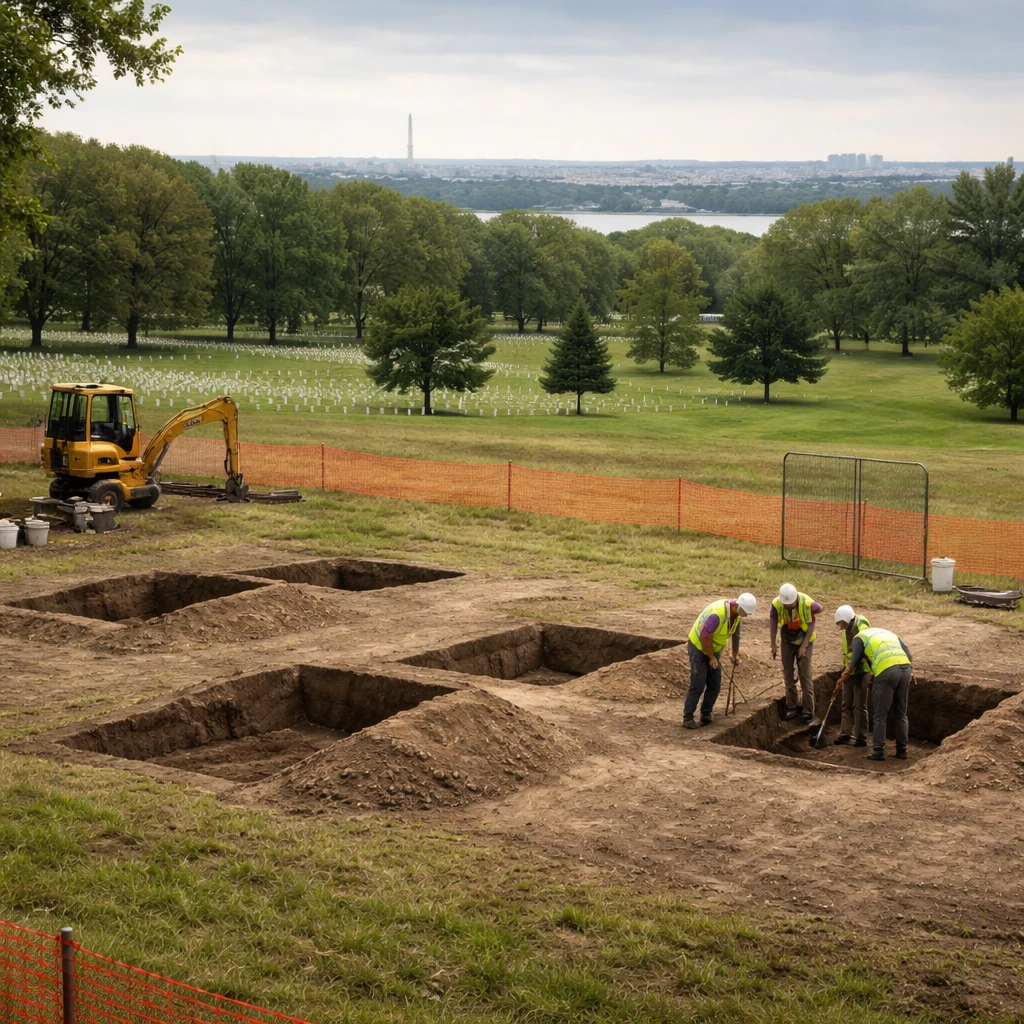
In its court filing on Friday the government characterized the planned excavation as limited: it said it intended to dig four "test pits" beginning on or after September 21 to determine whether artifacts or cultural materials are present and that it would restore the site by October 31. The government further argued that the planned activity was "not construction, or demolition in preparation for construction, of an arch."
Judge's prior and current orders
Earlier this year, in April, Chutkan sharply questioned the Trump administration's authority to build the arch. At that time the government agreed to provide 14 days' notice before starting construction as part of a consent order entered by the judge; the Interior Department reiterated that 14-day notice plan in its latest court filing.
In Friday's ruling Chutkan made clear that the court must receive at least 48 hours' notice before the government "engag[es] in any activity" at the site, with the single exception being work to identify underground cultural artifacts required by the National Historic Preservation Act. She reiterated that any construction or demolition in preparation for construction that takes place before the National Park Service issues a final authorization, or without providing the earlier 14 days' notice, would violate her new order and the prior consent order.
Broader context of related projects
The arch is one element of a broader series of projects intended to leave an architectural imprint on the capital. Other elements cited by proponents include a new White House ballroom, renovation of the Lincoln Memorial Reflecting Pool, and redevelopment of a golf course in East Potomac Park.
Design materials for the arch invoke the Paris Arc de Triomphe. Supporters say the monument would honor the sacrifice of American veterans. Opponents counter that the arch would damage a carefully designed historic sight line that runs between the Lincoln Memorial and Arlington House across the Potomac River.
The project has not yet received final approval from the National Capital Planning Commission. The commission is now considering whether to grant an exception to the 130-foot (40-meter) building height limit that applies to much of Washington, a decision that bears directly on the arch's viability.
Legal precedent and recent judicial developments
Opponents in their Friday filing also pointed to the administration's construction of a White House ballroom as a "cautionary tale," noting that courts previously found that ballroom work proceeded despite a District Court ruling that it was unlawful and an affirmation by a Circuit Court of Appeals. The U.S. Supreme Court last week permitted ballroom construction to continue while the administration challenges a judicial order that would halt much of that development; Chief Justice John Roberts dissented from that decision, calling the project "likely unlawful."
Implications and next steps
The immediate practical effect of the judge's order is procedural: it requires the government to alert the court in advance of activities at the arch site and preserves the court's prior protections against unannounced construction. The government has described its imminent work as limited to four test pits, with an intent to restore the site within the timeline specified in its filing. Meanwhile, opponents press claims that the arch lacks statutory authorization and must obtain congressional approval, and the project remains subject to the National Capital Planning Commission's review of a height-limit exception.
How the court resolves competing readings of the 1925 statute and whether the planning commission grants the exception will determine whether the project advances beyond site testing and into construction phases that Chutkan's orders constrain.