
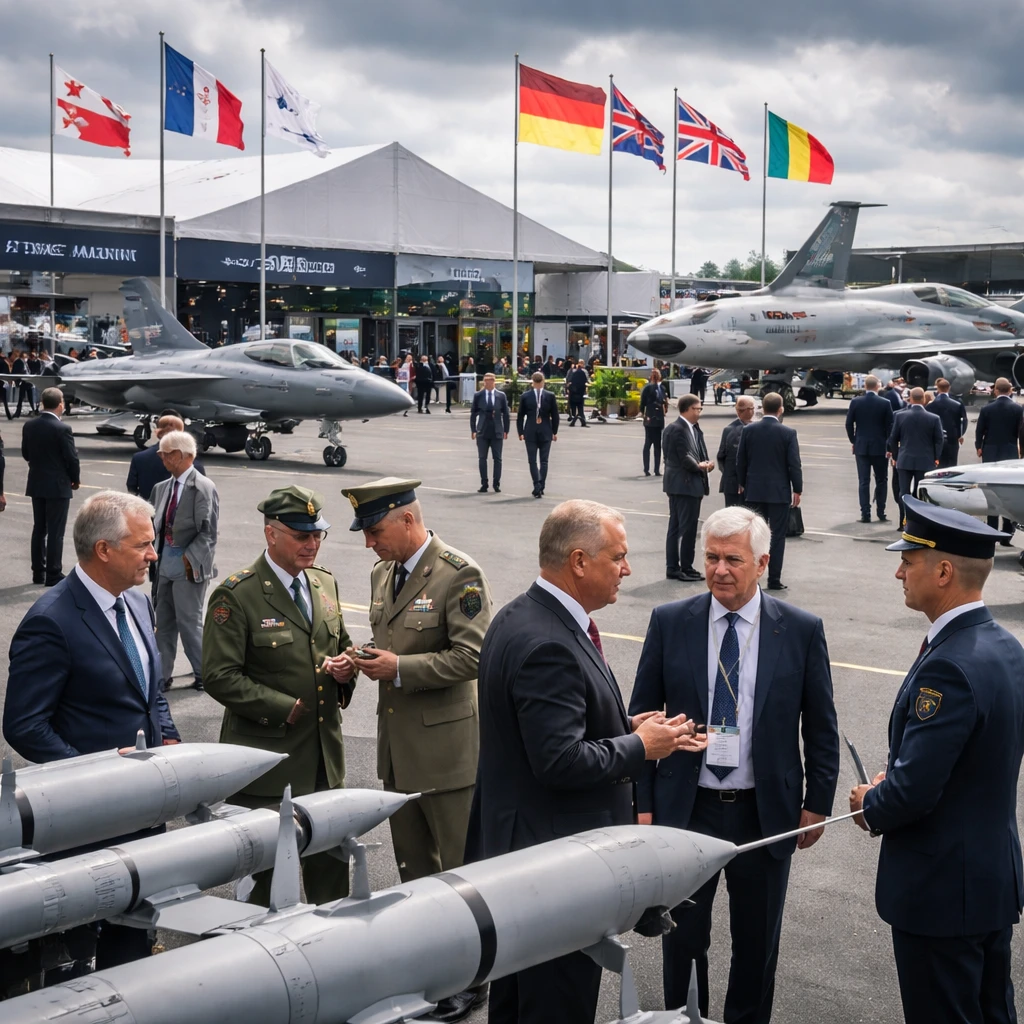
U.S. defence contractors attending the Farnborough Airshow this week found themselves meeting a persistent theme from European customers: a demand for more control over arms procurement, greater local production and a larger share of the economic benefits that flow from defence contracts. European governments are increasingly pressing suppliers to provide not just finished weapons but the capability to build, modify and sustain equipment on their soil.
Industry executives say that message is being heard. "We hear loud and clear: Europeans want more sovereignty, and they want more localised capability," said Daniel Tenney, Lockheed Martin's senior vice president of global business development and strategy.
In response to those demands, U.S. companies are adapting their commercial approaches. Rather than relying solely on exports of established systems, several firms are expanding manufacturing footprints in Europe, forming partnerships with local defence contractors and offering variants of their systems designed to fit European procurement priorities.
At the show, Lockheed unveiled a lower-cost version of its Patriot interceptor that it said will be developed with both European and U.S. partners. The announcement follows plans the company disclosed to produce an Army Tactical Missile System - ATACMS - together with Germany's Rheinmetall. Raytheon Technologies' Raytheon business has also moved to increase production partnerships in Europe; executives pointed to recently announced arrangements to boost Stinger missile output, including assembly work in the Netherlands.
Supporters of buying widely used U.S. systems argue the approach is economical and expedient, since many allied nations already have established logistics, training and data-sharing arrangements around such platforms. Thomas Laliberty, president of Raytheon's land and air defence systems, said countries operating systems like Patriot benefit collectively, for example through shared features such as a consolidated threat database. "They get a lot of benefit from that collective," he said.
At the same time, a new generation of defence-tech companies is pushing into Europe and adapting to sovereignty demands. Anduril, which had a major presence at Farnborough for the first time, has increased its UK workforce and agreed to set up local production of its Barracuda-500M cruise missile in Poland. "Each government has a different localisation need," said Richard Drake, Anduril UK general manager, underscoring the varying expectations across European capitals.
Behind the procurement shifts lie strategic anxieties. Some European officials and analysts fear the United States might, at times of heightened global demand, be less willing or able to supply weapons, components or sustainment support - particularly if U.S. defence firms must prioritise American military requirements in other theatres. That concern has led policymakers to press for more than just hardware purchases; they want access to the underlying technologies and the ability to maintain and modify systems independently.
Consultants and analysts at the airshow described European demands for technology access as substantial. Fabio Dal Pan, a Milan-based senior partner at Boston Consulting Group, said Europeans want "a significant IP transfer." Observers at the International Institute for Strategic Studies described the potential long-term shift toward autonomy as worrisome for U.S. industry. Tom Waldwyn of the institute said that trend was "of huge concern" for American suppliers if it becomes entrenched.
There are limits to immediate substitution. Certain systems, such as the F-35 fighter and Patriot air-defence missiles, remain difficult for Europe to replace quickly. Yet analysts noted there are areas where European systems could be adequate and provide the added advantage of sovereignty, sometimes with cost benefits. Sash Tusa, an aerospace and defence analyst at research firm Agency Partners, highlighted medium-range air-defence missiles as one such area, saying "there are European capabilities that may well be good enough," and stressing the sovereignty advantage.
Concrete examples of Europe developing independent options are emerging. NATO recently unveiled a roughly $4.5 billion plan to acquire up to 10 Saab GlobalEye surveillance aircraft to replace ageing AWACS early warning platforms, selecting the Swedish system over a rival proposal from U.S. planemaker Boeing. That procurement illustrates an appetite to back European-sourced solutions in key capabilities.
European firms are also moving into next-generation technologies. At Farnborough, BAE Systems showed a new unmanned fighter jet that the British government said it will use as its "operational concept demonstrator." The UK programme is intended to be "sovereign," Air Vice-Marshal Jim Beck, the Royal Air Force's director of capability and programmes, told Reuters, and will involve multiple vendors while retaining national control. "We need the right to do what we want with our kit at the point of our choosing," he said.
For U.S. defence firms, the evolving European posture is reshaping commercial strategies. Companies are attempting to balance the speed and cost advantages of selling proven American platforms with the political and industrial demands of European buyers. The result is a mix of localised production, technology-sharing arrangements where feasible, and new partnerships aimed at keeping U.S. systems competitive in a market that increasingly values sovereignty and domestic industrial participation.
Key points
- European governments at Farnborough pressed for more local production, technology access and industrial benefits from defence contracts - affecting procurement strategies for U.S. suppliers.
- U.S. companies, including Lockheed Martin, Raytheon and newer entrants like Anduril, are responding with European manufacturing, joint ventures and tailored system variants.
- Sector impacts include defence and aerospace manufacturers, European defence industrial bases, and markets tied to weapons systems and associated supply chains.
Risks and uncertainties
- Shift toward European autonomy could reduce demand for some U.S. systems over the long term, creating competitive and market-share risks for American defence firms - impacting defence contractors and suppliers.
- Dependence on U.S. systems in certain capability areas remains high; inability to substitute quickly for platforms like the F-35 or Patriot could leave capability gaps while domestic alternatives are developed - affecting military readiness and procurement timelines.