
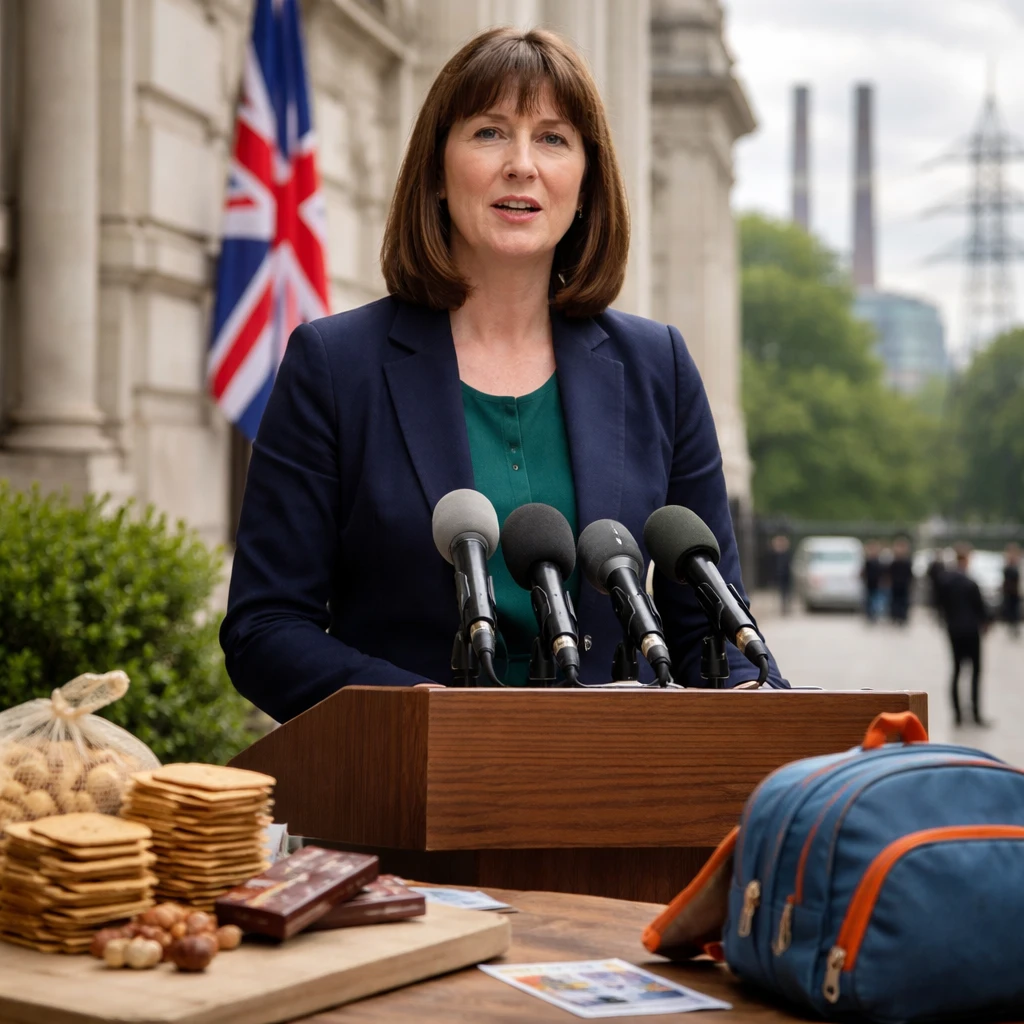
British finance minister Rachel Reeves on Thursday introduced a set of short-term interventions aimed at lowering costs for consumers during the school summer break and at supporting businesses that have been disrupted by higher energy prices tied to recent strikes on Iran.
The minister said U.S.-Israeli strikes on Iran in February have pushed energy costs higher, hampering Prime Minister Keir Starmer's efforts to relieve pressure on households already coping with the cost of living. In response, Reeves set out measures designed to provide immediate relief for families and specific industries.
Key measures announced
- For the summer period, the rate of sales tax applied to certain tourist attractions will be temporarily cut to 5% from 20%.
- Bus travel will be free for children under 15 in August.
- Import tariffs will be suspended on dozens of food products, including biscuits, chocolate and nuts, with the expectation that retailers will pass on the savings to consumers.
Reeves said she had engaged retailers directly on price behaviour, stating, "I met with supermarkets to urge them to do all they can to keep prices low." She added her expectation that supermarkets would transfer savings from tariff reductions fully to customers: "I expect supermarkets to pass these savings (from tariff reductions) on in full to their customers."
Funding and fiscal approach
The finance minister said the package will be financed by bringing forward planned changes to the taxation of international oil and gas groups. She framed the funding move as a reallocation of near-term fiscal timing rather than a permanent new spending stream.
Inflation, energy and contingency planning
Authorities have relied on regulated utility bill settings and previously announced measures to hold down energy costs for households, which helped to moderate inflation in April. Reeves warned, however, that price growth is expected to rise to around 4% in the coming months. She signalled readiness to act again if market conditions deteriorate, saying, "We stand ready to act if (energy) market conditions worsen significantly later this year."
Reeves said she has been "leading cross-government contingency work on design of potential future targeted and temporary support for businesses." She identified chemicals and ceramics - described as major energy-intensive sectors - as recipients of tailored support packages.
Business conditions and wider measures
A survey cited by the government showed British companies experiencing their most widespread fall in activity in over a year, attributing the weakness to domestic political uncertainty and the fallout from the Middle East conflict. In parallel to Reeves' announcements, the government confirmed on Wednesday that a temporary cut in fuel duty for transport, scheduled to expire in September, will be extended to the end of the year, alongside additional measures aimed at hauliers and drivers.
Earlier, in March, Prime Minister Starmer set out a £53 million package targeted at the most vulnerable households that use heating oil. The finance minister's comments included the exchange-rate reference $1 = 0.7439 pounds.
The package represents a mix of consumer-facing relief and sector-specific contingency planning, financed by an acceleration of planned tax changes affecting international oil and gas groups. Reeves emphasised engagement with retailers and signalled ongoing monitoring of energy markets as conditions evolve.