
Economy July 8, 2026 01:35 AM

Planned U.S. fees on China-built vessels could boost German exports, DIW finds

Study forecasts modest gains for Germany while some EU members and emerging exporters face sharp declines

By Maya Rios
Share
Twitter Reddit Facebook LinkedIn

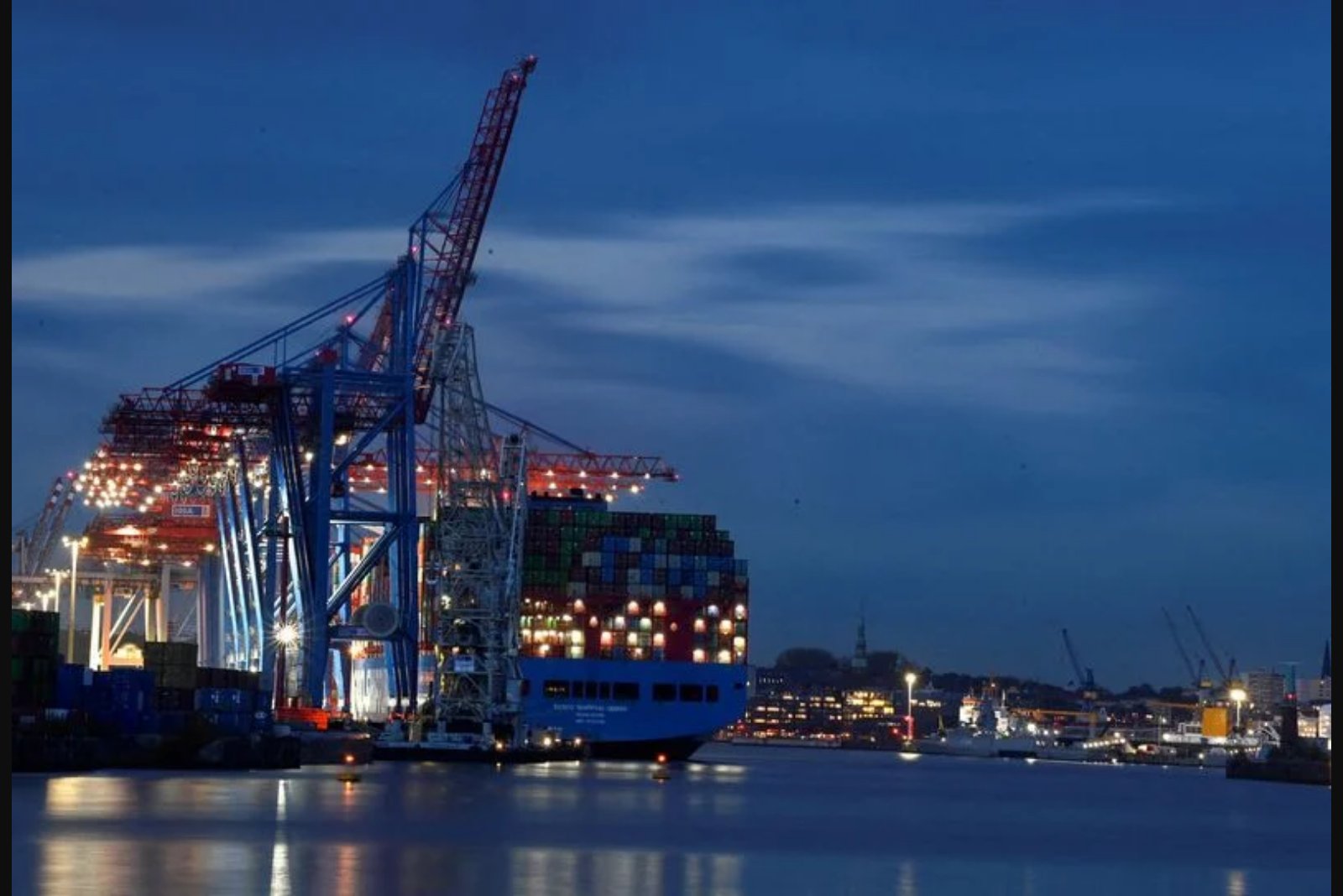
A study by the German Institute for Economic Research (DIW) indicates that planned U.S. port fees targeting ships built in China could raise Germany's exports to the United States by roughly 2% versus a scenario without the fees. The projected gain stems from Germany's freight fleet relying less on China-built vessels than some competitors, enabling German exporters to capture market share. DIW also warns the measures would largely harm the U.S., reducing its imports and exports by 0.2% and 0.3%, respectively, and would significantly affect certain EU and emerging-market exporters.

Planned U.S. fees on China-built vessels could boost German exports, DIW finds
Summarize with
ChatGPT Perplexity Claude Grok Gemini

Key Points

  • DIW projects Germany's exports to the U.S. could rise by about 2% under planned U.S. fees on China-built ships.
  • The fees are to be applied from November and are levied based on where a vessel was built, not on whose goods it carries.
  • Shipping, manufacturing and export sectors are unevenly affected: Finland, Denmark and Poland face steep export declines, while South Korea could gain.

A study from the German Institute for Economic Research (DIW) reviewed by Reuters suggests that Germany may be a modest beneficiary of planned U.S. port fees on merchant ships constructed in China. DIW's modelling shows German exports to the United States could increase by about 2% compared with a counterfactual in which the fees are not implemented.

The study attributes the potential upside to structural differences in national freight fleets. German shipping operators depend less on vessels built in China than some rival exporters do, a gap that could allow German firms to gain U.S. market share when the new charges raise shipping costs for competitors that rely more heavily on China-built ships.

The U.S. government intends to impose the port fees starting in November as part of an effort to blunt China’s lead in global shipbuilding, citing national security concerns. Under the proposal, the additional charges would be levied according to the location where a vessel was constructed rather than on the origin of cargo or ownership of goods transported.

DIW cautions that the policy would not be without domestic downside for the United States. The institute estimates U.S. imports would shrink by 0.2% and U.S. exports by 0.3% as higher shipping costs feed through into the price of intermediate inputs and reduce competitiveness and economic activity.

"The mechanism is simple," DIW economist Sonali Chowdhry said. "The fees raise the cost of intermediate inputs, U.S. manufacturers lose competitiveness, and weaker economic activity also weighs on demand for foreign goods."

The distributional effects across countries are uneven. Within the European Union, DIW finds the sharpest drops in exports to the U.S. would be in Finland, Denmark and Poland, with declines of 5.0%, 4.4% and 3.0%, respectively. Several emerging economies face even larger setbacks: Costa Rica, Vietnam and Pakistan could see U.S.-bound shipments fall by nearly 9% under the simulated policy.

Not all countries are projected to lose out. South Korea is among the potential gainers in DIW’s scenario, with U.S.-bound exports rising by about 2%.

The DIW analysis underscores how a policy targeting the origin of vessels rather than cargo can reconfigure trade costs and relative competitiveness among exporters, with implications for shipping, manufacturing and trade flows across affected economies.

Risks

  • The measures could reduce U.S. trade activity, with DIW estimating U.S. imports and exports falling by 0.2% and 0.3%, respectively - a risk to U.S. manufacturers and supply chains.
  • Certain EU economies and emerging exporters face significant export declines, with Finland, Denmark, Poland, Costa Rica, Vietnam and Pakistan among the hardest hit - a downside for exporters and freight-dependent industries.
  • Policy design that taxes vessels by build origin rather than cargo could produce uneven competitive effects across countries and sectors, creating uncertainty for shipping and trade-aligned firms.

More from Economy

Le Pen stakes her future on a presidential run after judges lift her ban Jul 8, 2026 Ceasefire Fragile as Gulf Attacks Reignite Supply Concerns Jul 8, 2026 Japan’s Ruling Party to Push for Stronger Enforcement of Activist Disclosure Rules Jul 8, 2026 RBNZ Hikes Policy Rate by 25 Bases Points, Keeps Door Open for Further Tightening Jul 7, 2026 Dollar Holds Gains as U.S. Strikes on Iran Escalate Geopolitical Tensions Jul 7, 2026