
Summary
Marine Le Pen launched her fourth bid for the presidency shortly after judges altered a court-ordered ban that had cast doubt on her political future. While the appeals court confirmed her conviction for embezzling European Parliament funds to pay staff at the National Rally (RN), it reduced the electoral prohibition that had kept her out of politics since March 2025. The decision permits her to run in 2027, even as legal and policy uncertainties persist for the RN as it seeks to translate polling strength into an actual governing majority.
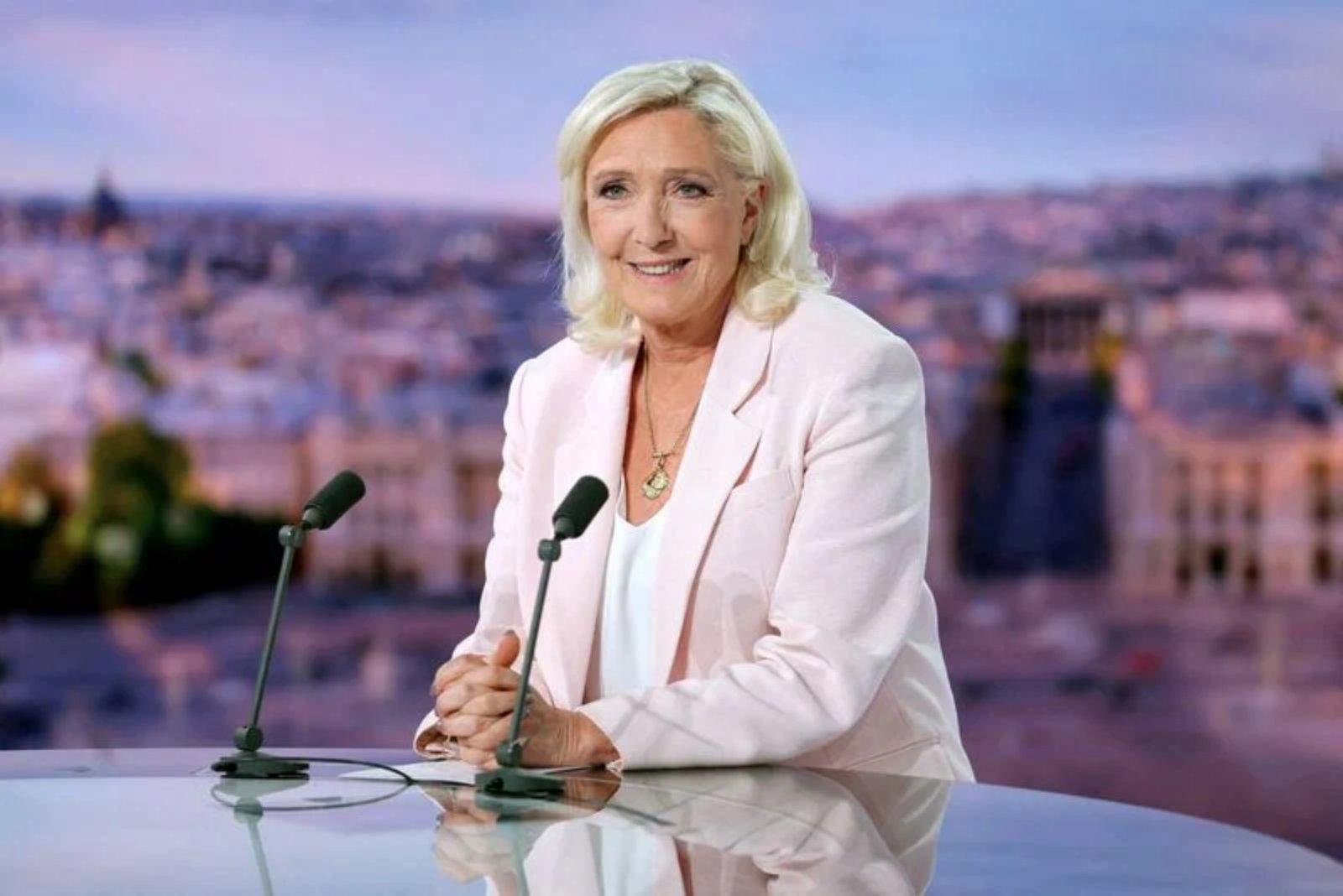
In a prime-time interview on TF1, Le Pen framed her campaign as the continuation of a fight she says she has already won in spirit. "There are many French people who are going through hardships, and we too are going through hardships," she told viewers. "These trials, I believe, have strengthened us." Her remarks came hours after a Paris appeals court shortened the electoral ban imposed after she was found to have embezzled European Parliament funds to pay party staff, a conviction the court maintained even as it modified the sanction.
The court's decision effectively reopened the path for Le Pen to contest the next presidential election. She stated that she intends to appeal the guilty verdict while running for the presidency. The move amounts to a bold political gamble: she is placing her prospects on multiple outcomes at once - the success of a last-ditch appeal to France's highest court and voters' willingness to elect a candidate whose conviction has been upheld by two separate courts.
Le Pen argued that the choice should ultimately rest with the electorate. "I think you should never impose anything on the French people; they must have the final say, and now the French people will have the final say," she said. Her campaign also confirmed that Jordan Bardella, the 30-year-old RN party president who had been poised to lead if Le Pen were barred, will be presented as her running partner in the event of a victory with the promise of becoming prime minister.
Allies and supporters offered public explanations for the decision to press on. Brigitte Barges, a former lawmaker from a right-wing party allied with the RN, expressed understanding of Le Pen's choice to run. "I know her character and Im a bit like that," Barges said. "You want to show those who caused you this setback that you are not dead because of it, that you are still there."
Tantalizingly close to power
The RN has never been nearer to taking the reins of government. Polls indicate Le Pen is likely to reach the second-round runoff in next year's election, though outright victory in a final contest remains uncertain. Her candidacy had been in limbo since March 2025, when a five-year ban was issued, but the appeals court ruling permits her to campaign provided she abides by the terms tied to an electronic tag. Le Pen told TF1 she was confident she could run without such a tag restricting her movement.
She and Bardella have cultivated a public image of unity that fuses his youth and electoral appeal with her experience and political gravitas. Bardella currently polls more strongly than Le Pen for the presidency, yet the pair present themselves as a tandem with a shared mission. "Jordan Bardella and I are fighting for France. We are fighting for the French people. This cause clearly goes beyond us," she said. "And therefore our personal ambitions do not come into consideration at all." Supporters argue the partnership boosts the RNs overall electoral prospects by offering a complementary leadership combination.
Policy challenges and internal tensions
Despite their public cohesion, substantive differences have emerged between Le Pen and Bardella, particularly on economic matters. Critics charge that the RN lacks a coherent plan to confront France's indebted public finances and weak growth. As legal issues consumed Le Pen, Bardella has at times advocated a more free-market approach than his mentor, notably on issues such as pension reform. That divergence underscores a central strategic dilemma for the party: how to broaden appeal among pro-business right-wing voters without alienating its traditional blue-collar base.
One notable policy flashpoint is the RN pledge to lower the retirement age back to 62. Some inside the party view that commitment as increasingly unaffordable, and senior RN officials acknowledge that several major policy questions remain unsolved. Difficult choices loom on pensions and taxation, among other areas, and the party has yet to present fully fleshed-out answers to those fiscal challenges.
Gilles Ivaldi, a political scientist at Sciences Po, underscored the political implications of those unresolved positions. He said that the RN must clarify its economic messaging to both govern effectively and secure a parliamentary majority. "To govern and secure a parliamentary majority, the RN ultimately needs to win over right-wing voters and, at some point, reach accommodations with the mainstream right," Ivaldi said. "A broad alliance of right-wing forces is a prerequisite for the RN to take power."
The path ahead therefore contains overlapping uncertainties: the outcome of Le Pen's pending appeal, the willingness of voters to elect someone twice found guilty of embezzlement by separate courts, and internal debates over economic policy that could determine the RN's ability to form durable governing coalitions and to propose viable fiscal measures for France's indebted public finances.
Contextual note
Le Pen's announcement crystallises a campaign strategy built on resilience in the face of legal setbacks and on the tactical pairing with Bardella. The combination seeks to maximize electoral reach while leaving unresolved how the RN would reconcile competing economic impulses within its leadership if entrusted with power.