
Summary
Iran’s Islamic Revolutionary Guard Corps (IRGC) said it launched joint missile and drone attacks against U.S. military facilities in Bahrain and Kuwait on Wednesday, after Washington carried out a new round of strikes on Iranian assets. The Iranian statement named Bandar Salman, Bahrain’s Fifth Naval District and Ali Al Salem Air Base in Kuwait among the targets, and said a U.S. MQ9 drone was shot down while attempting to interfere. Air raid alarms were reported in both Bahrain and Kuwait as their armed forces engaged incoming missiles and drones.
The exchanges and immediate military claims
The U.S. had earlier conducted military strikes against Iranian targets, accompanied by the revocation of a licence previously allowing certain Iranian oil sales. U.S. Central Command (CENTCOM) said the strikes targeted more than 60 small boats attributed to the Islamic Revolutionary Guard Corps among other assets, describing the action as intended to impose a heavy cost on Iran for attacks on commercial shipping in the Strait of Hormuz. CENTCOM said, in part, "The unwarranted aggression by Iranian forces is a clear and dangerous violation of the ceasefire and undermines freedom of navigation."
The IRGC said its operation was a coordinated missile-and-drone mission against U.S. sites and that it had shot down an MQ9 drone that sought to interfere. Kuwait’s army reported that air defences were engaging what it called "hostile" missile and drone attacks. Bahraini and Kuwaiti officials reported air raid sirens sounding as the incidents unfolded.
Damage, injuries and targets named
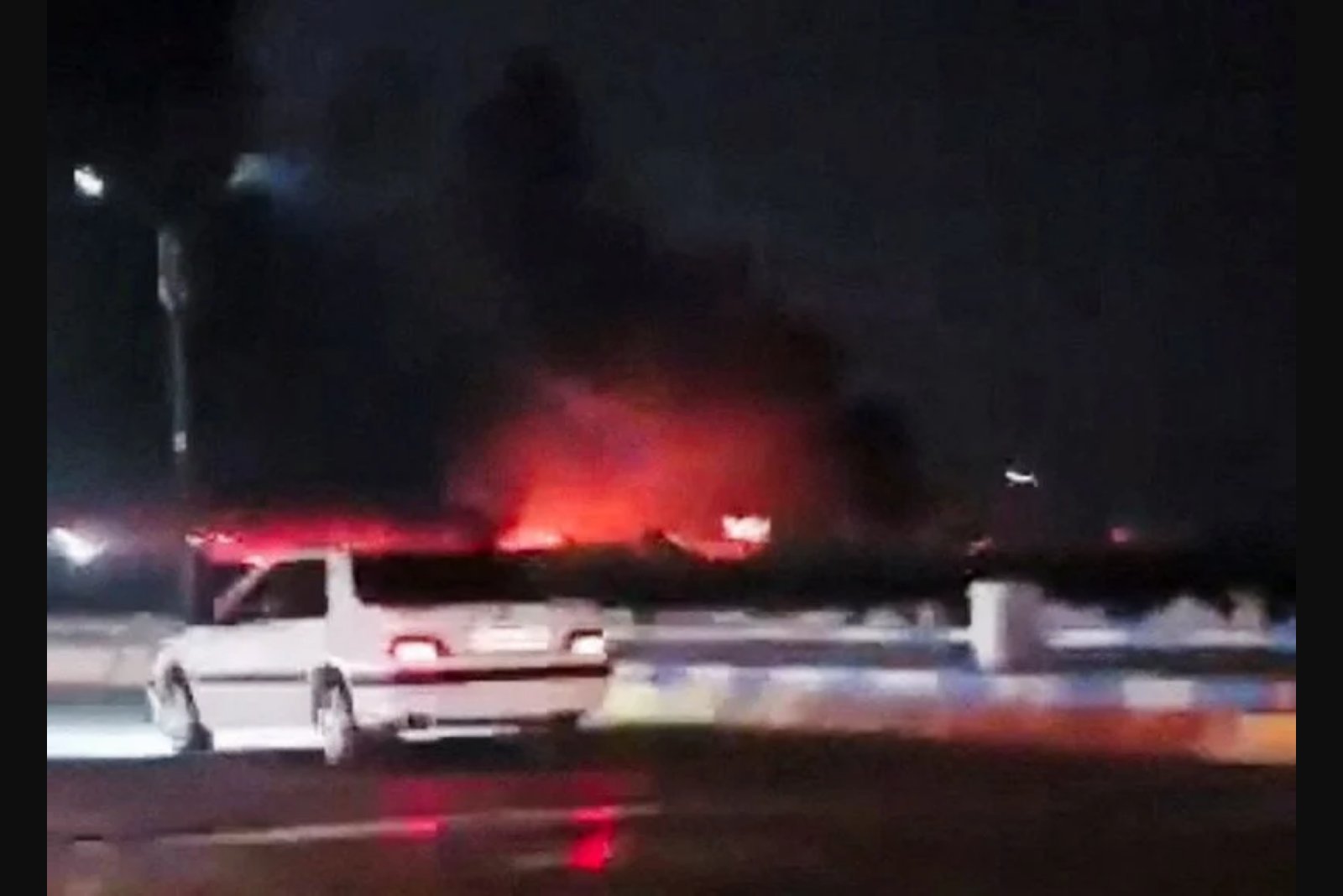
Iranian state media reported explosions in several southern locations inside Iran, including the main oil terminal at Kharg Island, Qeshm Island and the coastal cities of Sirik and Bandar Abbas. Iran’s Press TV said several blasts were heard on southern Kharg Island. CENTCOM did not mention Kharg Island in its statement. According to the article of record, Kharg Island is the departure point for roughly 90% of Iran’s crude oil exports.
A U.S. official told Reuters that the U.S. strikes had been aimed at Iranian air defence systems, coastal surveillance networks, surface-to-air missile batteries, anti-ship cruise missiles and drone launch facilities. Iranian state media reported no civilian deaths tied to the U.S. strikes, but several people were injured by shrapnel from an "enemy projectile" that struck a commercial pier in Sirik. The same reports also described damage to fishing piers in Sirik and Bandar Abbas.
Political reactions and rhetoric
A top Iranian negotiator and parliament speaker, Mohammad Baqer Qalibaf, accused the United States of violating the ceasefire framework, citing both the recent military strikes and the renewed imposition of oil sanctions, as well as what he described as violations of Iran’s adjustments in the Strait of Hormuz and Israeli strikes against Lebanon. In a post on X he stated, "The era of bullying and extortion is over. We don’t fold."
Iran’s Khatam al-Anbiya Central Headquarters, the nation’s top joint military command, denounced the U.S. strikes as a "blatant act of aggression," threatened a "crushing response," and warned that Tehran would not allow U.S. interference in the management of the Strait of Hormuz.
Iran’s foreign ministry described Washington’s move to revoke the licence as a breach of the interim framework agreement intended to pause hostilities and said the U.S. would bear responsibility for the consequences. The ministry said Iran would take any measures it considered necessary to protect its interests and national security.
Incidents involving commercial vessels and regional accusations
Qatar publicly blamed Iran for strikes on commercial vessels, naming the large Qatari liquefied natural gas tanker Al Rekayyat as one of the ships that reported being struck by a drone and suffering a fire in its engine room; Qatari authorities said the crew were safe and being evacuated. Maritime security sources also reported damage to a Saudi-flagged crude oil tanker believed to be the supertanker Wedyan off Oman, though the immediate cause of that damage was not clear.
Iran’s foreign ministry called Qatar’s accusations "perplexing" and insisted it was complying with its commitments, even as it warned that commercial vessels faced risks when transiting routes not coordinated with Tehran. A U.S. official, speaking on condition of anonymity, said initial indications were that Iran had fired on three commercial vessels.
Diplomatic framework and sanctions development
The incidents constitute a serious strain on the fragile ceasefire arrangement reached last month that had paused a wider conflict triggered by U.S. and Israeli strikes on Iran. Under that interim U.S.-Iran agreement, the U.S. Treasury issued a June 22 general licence permitting the sale of Iranian crude oil and petrochemical and petroleum products through August 21. On Tuesday, the United States revoked that general licence and provided Iran until July 17 to wind down any ongoing transactions under its terms.
The revocation of the trade licence and the fresh round of strikes together represent a significant change in the concessions underpinning the temporary pause in hostilities. Oil markets reacted quickly: oil prices rose more than 3% after the U.S. announced the licence revocation.
Ceasefire talks and negotiating posture
Negotiators had been engaged in indirect talks in Qatar to convert the temporary pause into a longer-term agreement, but the Qatar-facilitated talks concluded last week with no evident progress. Iran’s foreign minister Abbas Araqchi said the interim ceasefire memorandum required that final deal negotiations could not begin if threats continued.
Separately, the article records that U.S. President Donald Trump has repeatedly warned that he would resume bombing unless Iran agreed to "make a deal." The text also includes a note about mass mourning in Qom for Iran’s Supreme Leader Ayatollah Ali Khamenei, and states that "Khamenei was killed with his daughter, granddaughter, son-in-law and daughter-in-law on the war’s first day."
Military and market implications
U.S. military officials framed their strikes as punitive steps designed to raise the cost to Iran for maritime attacks that they view as violations of the ceasefire and threats to freedom of navigation. CENTCOM specifically cited IRGC small boats as among more than 60 targets struck. Iranian statements framed their strikes as retaliation for U.S. military action and sanction moves, and vowed to repel outside interference in the Strait of Hormuz.
Markets were immediately sensitive to the developments. The revocation of the oil sales licence and the prospect of renewed instability in the Strait of Hormuz — a critical artery for global energy flows according to the reporting — supported a jump in oil prices. The articles of record note the notable squeeze on the diplomatic window intended for negotiating a more permanent settlement.
What remains uncertain
The public accounts in this report leave several points unresolved: CENTCOM did not reference strikes on Kharg Island despite Iranian media reports of explosions there; the precise causes of damage to some commercial vessels remain unclear; and the talks in Qatar produced no immediate breakthrough before they concluded. Both sides issued strong warnings, but how the exchanges will affect the trajectory of negotiations and regional security in the near term is not determined by the available statements.
Reporting in this piece synthesizes official statements from the parties involved and media accounts cited in the available reporting. The piece preserves the factual assertions as presented by those sources.