
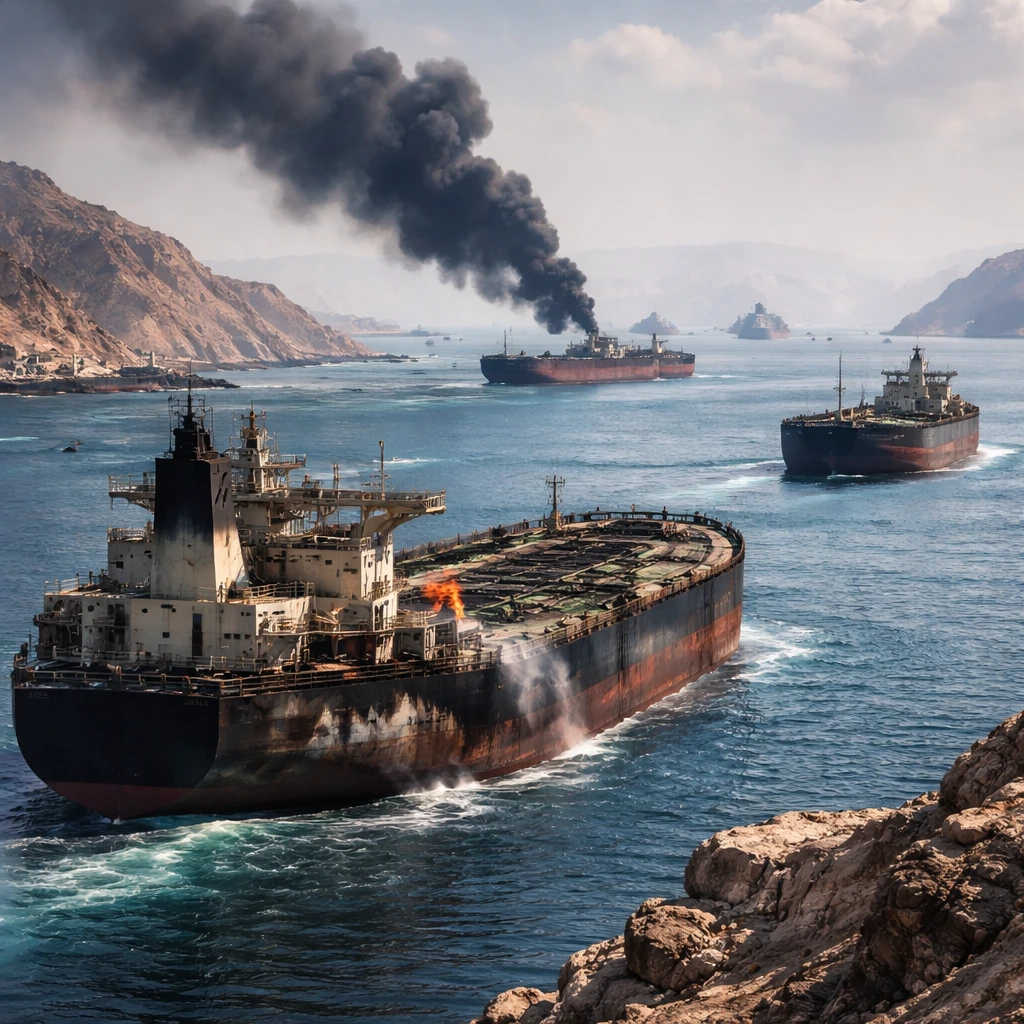
Oil futures rose by over 3% in midday trade on Tuesday after the United States revoked a general license that had authorized the sale of Iranian oil. The move came in the wake of attacks on three tankers in and near the Strait of Hormuz over recent days, incidents a U.S. official described to Reuters as "wholly unacceptable" and warned would be met with consequences.
The British navy-affiliated agency UKMTO reported that three tankers were struck by unknown projectiles in and around the Strait of Hormuz in the recent period. The vessel incidents included attacks earlier on Tuesday on tankers flying the flags of Saudi Arabia and Qatar. Tehran has not issued any comment on the events, and no organisation has claimed responsibility for the strikes.
U.S. negotiators, according to a U.S. official, continue to engage in talks in good faith toward a final agreement with Iran even after the latest escalation. Still, the attacks and Washington's response have put strain on a fragile diplomatic understanding between the two sides. That strain increases the risk that further retaliation could unravel talks aimed at a broader deal.
Before the recent incidents, officials from both sides had been working toward a potential agreement that would combine limits on Iran's nuclear activities with relief from some sanctions, including constraints on Iran's oil exports. The U.S. decision to rescind the licence that permitted certain oil sales directly affects that element of negotiations.
The Strait of Hormuz is a narrow channel separating Iran and Oman and is one of the world’s most critical energy chokepoints. Roughly a fifth of global oil consumption moves through the strait each day, along with substantial volumes of liquefied natural gas shipments. Disruptions there reverberate quickly through global energy markets, a dynamic reflected in Tuesday's rise in oil prices.
Market participants monitored the situation closely as tensions in the waterway intersect with diplomatic efforts. The combination of physical attacks on vessels and policy steps targeting Iranian oil flows has introduced fresh volatility into energy markets and into the negotiations between Washington and Tehran.
Context and market reaction
The U.S. action to revoke the general license on Tuesday coincided with reports of tanker damage in the Strait of Hormuz. Traders pushed oil futures higher as the incidents and ensuing policy response heightened concerns about supply disruptions and the prospect of escalating confrontation.
There has been no official comment from Tehran about the reported strikes, and no group has stepped forward to claim responsibility. The lack of attribution leaves uncertainties about motives and potential next steps.
Implications going forward
- Diplomacy - The incidents and policy response could imperil a nascent diplomatic framework that tied nuclear limits to sanctions relief, including easing on oil exports.
- Energy markets - The Strait of Hormuz's status as a major transit route for oil and LNG means that any sustained disruption could affect global energy flows and price volatility.
- Iranian finances - Restrictions on oil exports play directly into Iran's hard-currency earnings, and renewed efforts to curb shipments would add pressure to Tehran's economy.
As events develop, market watchers and negotiators will be weighing both the immediate impact on shipping safety and fuel flows and the broader consequences for the stalled diplomatic track between the United States and Iran.