
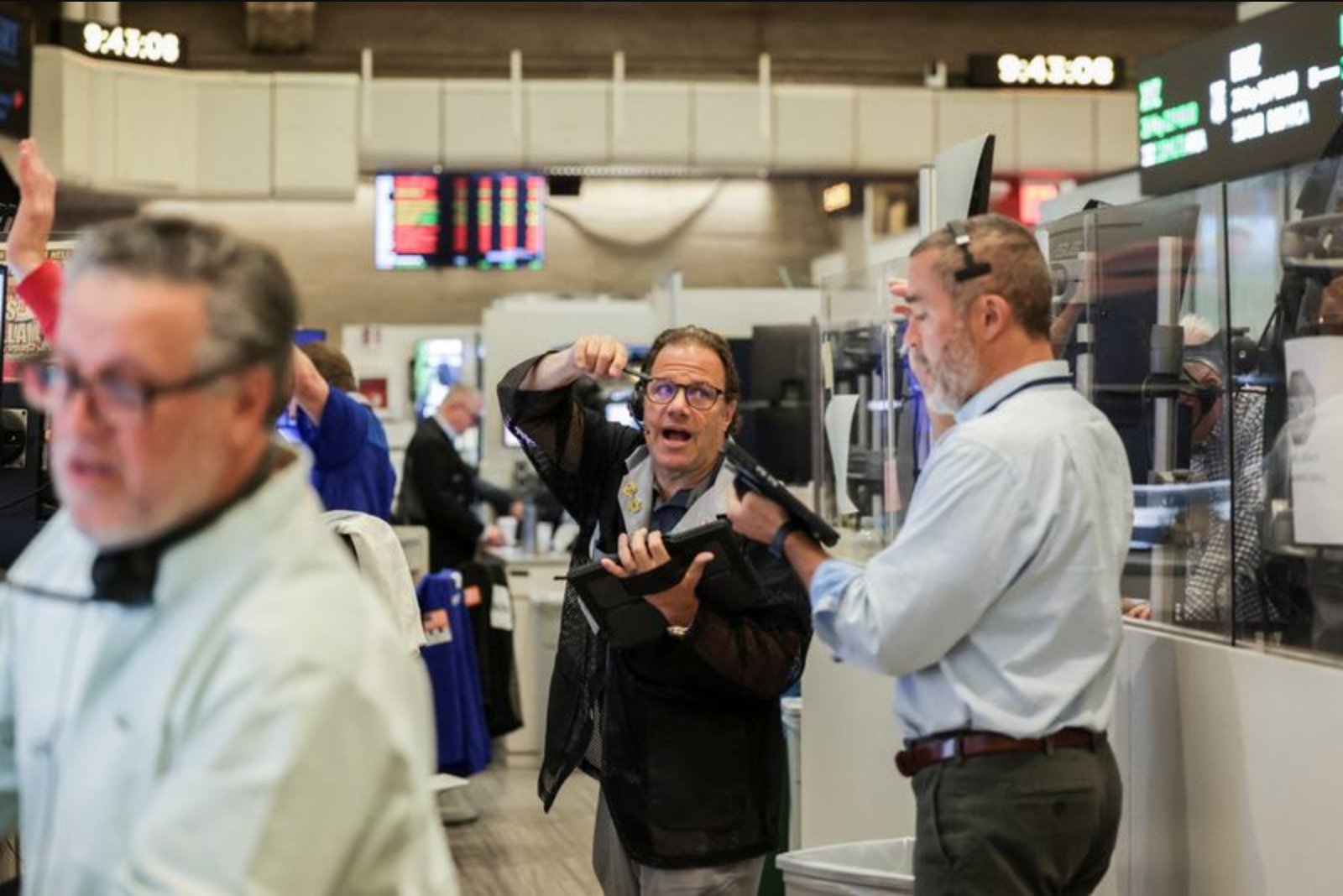
U.S. stock markets navigated a period of fluctuation on Thursday, eventually finishing the session in positive territory. This upward movement was supported by growing optimism surrounding the possibility of a peace deal between the United States and Iran. Beyond geopolitical developments, market participants remained focused on several critical pillars: the recent earnings report from Nvidia and the looming prospect of significant initial public offerings (IPOs) from industry leaders SpaceX and OpenAI.
The current market landscape is characterized by a complex intersection of factors, including extreme concentration in U.S. stock ownership, a massive surge in artificial intelligence interest on Wall Street, the resulting wealth effects, and the fact that workers are currently seeing a record low share of national output. These dynamics raise questions about whether equity market growth can effectively offset economic pressures felt by the workforce.
Global Market Performance and Sector Movements
The performance across international markets was varied. In Asia, South Korean equities saw a significant jump of 9%, while Japan's Nikkei rose by 3%. Conversely, Chinese markets experienced a decline of 2%. European and UK markets remained relatively flat throughout the session.
In the United States, the major indices showed modest gains, with the Dow Jones Industrial Average climbing 0.6% and the S&P 500 rising 0.2%. Individual stock performance highlighted significant volatility in specific sectors:
- Notable Gainers: SoftBank in Japan surged by 20%, Samsung rose by 9%, Ralph Lauren saw a 14% increase, and IBM climbed 12%.
- Notable Decliners: Intuit experienced a sharp drop of 20%, while Walmart fell by 7%.
In the foreign exchange markets, the U.S. Dollar and G10 currencies remained largely stable. Within emerging markets, India's rupee appreciated by 0.5%, whereas the Korean won declined by 0.5%. In the bond market, long-dated U.S. yields saw a decrease while short-end yields experienced minor fluctuations, leading to a flattening of the yield curve. A 10-year Treasury Inflation-Protected Securities (TIPS) auction yielded mixed results, showing an adequate bid/cover ratio but finishing with a tail of nearly 2 basis points.
The Upcoming Wave of Tech IPOs
A major focal point for investors is the anticipated entry of SpaceX and OpenAI into the public markets. These companies represent the latest developments in the massive trillion-dollar narrative surrounding technology and artificial intelligence, which has been a primary driver for record-high global stock prices this year. Based on projected IPO pricing, SpaceX could be valued at nearly $2 trillion, while OpenAI may approach a $1 trillion valuation.
While these companies are attempting to capitalize on the intense interest in AI, the scale of this equity supply introduces significant questions. Deutsche has referred to OpenAI as "ChatIPO," noting that the creator of ChatGPT is not expected to generate profits for several years. The success or failure of these massive offerings could potentially dictate the market's direction for the remainder of the year.
Fixed Income and Equity Risk Dynamics
The current environment for Treasury Inflation-Protected Securities (TIPS) presents a complex scenario for investors. Real yields on TIPS have reached notable levels: the 30-year yield touched 2.90% this week, marking its highest point since 2008. The 5-year yield stood at 1.70%, and the 10-year yield reached 2.20%, both representing one-year highs. While these figures may offer attractive real returns for those seeking inflation protection, there is uncertainty regarding whether yields could continue to rise in the near term.
Furthermore, the relationship between bond yields and equity valuations is under scrutiny. Both nominal and inflation-adjusted measures of the "equity risk premium" are currently at or near levels not observed in two decades. According to JPMorgan's Nikolaos Panigirtzoglou, stocks appear expensive relative to bonds from a long-term perspective. However, he also suggested that the market has not yet reached the extreme exuberance seen in the late 1990s, noting there is limited room for further rises in real bond yields before they begin to negatively impact the equity market.
Commodities and Economic Outlook
In the commodities sector, oil prices fell by 2%, while gold remained stable. NYMEX gasoline futures saw an 8% decline this week, approaching their most significant drop since September. U.S. wheat futures also declined by 2%, retreating from a two-year high recorded on Tuesday.
Looking ahead, several key economic indicators and events are expected to influence market direction, including:
- Middle East geopolitical developments.
- Japan's April CPI inflation data.
- Consumer sentiment and business condition reports from Germany (GfK and Ifo).
- Meetings of Eurozone finance ministers and central bankers in Cyprus.
- UK GfK consumer confidence and April retail sales data.
- Canada's producer price inflation (April) and March retail sales.
- Final U.S. University of Michigan inflation expectations and consumer sentiment data.
- A scheduled speech by U.S. Federal Reserve Governor Christopher Waller.