
Overview
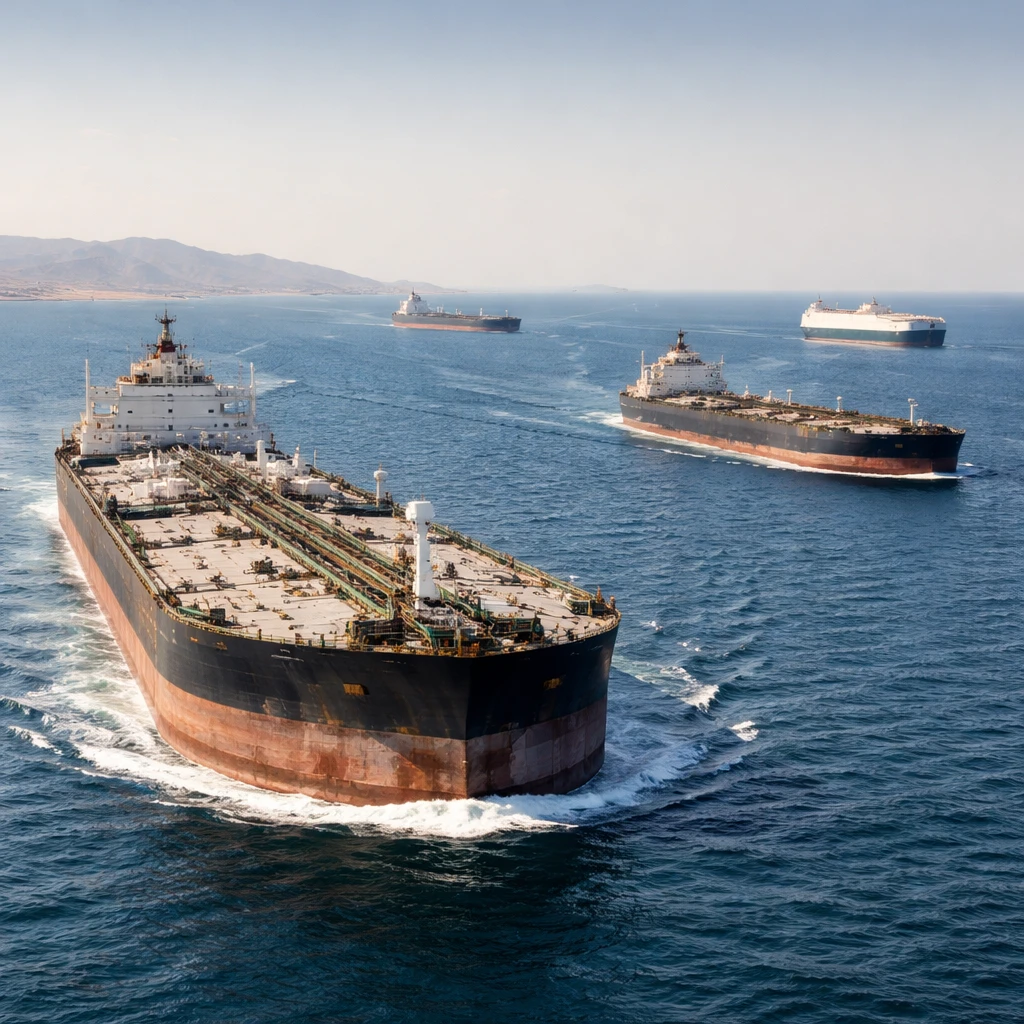
Ten vessels linked to Japanese interests began exiting the Strait of Hormuz on Monday after being stranded in the narrow shipping lane for several months, according to media reports. The convoy includes six very large crude carriers (VLCCs) loaded with an aggregate of 12 million barrels of crude from the Middle East, as well as two chemical tankers, a vehicle carrier and a container ship.
Cargo origins and ship management
The crude carried by the tankers was loaded in late February and early March and originates from Saudi Arabia, the United Arab Emirates and Qatar, media accounts said. Most of the vessels are under the management of the Japanese shipping group Mitsui O.S.K. Lines, the reports added.
Additional departures and expected arrivals
Separately, a supertanker transporting about 2 million barrels of Saudi crude bound for South Korea also left the strait over the weekend, according to statements from the Korean refiner S-Oil. That vessel is expected to arrive at Onsan, South Korea, on July 26, the reports said.
Implications for oil flows and prices
The recent departures have bolstered hopes that shipments through the Strait of Hormuz - a critical maritime chokepoint that carried roughly a fifth of the world’s oil and liquefied natural gas before the outbreak of the conflict in late February - are beginning to recover after months of effective closure.
Following an interim peace agreement between Washington and Tehran last month, benchmark global oil prices have fallen back to about $70 a barrel, roughly the level seen before the conflict began. Crude had briefly spiked above $110 a barrel after the fighting started. That retreat in prices has helped ease concerns about an energy-driven inflation surge and the possibility of renewed central bank interest rate hikes.
Outstanding disputes and diplomatic friction
Despite the framework agreement that followed recent negotiations, the United States and Iran remain in disagreement over control of the Strait of Hormuz. Tehran has sought to retain some authority over the strait, which lies partially off Iran’s southern coast, while Washington has rejected those demands. The two sides also remain at odds on other core issues, including Iran’s nuclear ambitions and clashes involving Hezbollah militants backed by Tehran in Lebanon.
Talks between the United States and Iran were postponed to accommodate a multi-day funeral for the former Iranian Supreme Leader, who was reported killed in strikes at the beginning of the conflict. Iran’s newly designated Supreme Leader, who succeeded the previous leader, has not yet appeared at the funeral ceremonies, media accounts said.
Outlook
The recent movement of laden tankers and other vessels through the strait provides an early indication that maritime oil flows may be resuming after a prolonged disruption. However, lingering diplomatic disagreements over control of the waterway and unresolved security issues mean the situation retains significant uncertainty. Markets and energy-dependent sectors will be watching subsequent transits and diplomatic developments closely for signs of a durable normalization of supply routes.