
Economy July 6, 2026 06:28 AM

Eight Mitsui-Controlled Vessels Exit Strait of Hormuz via Route Close to Iran

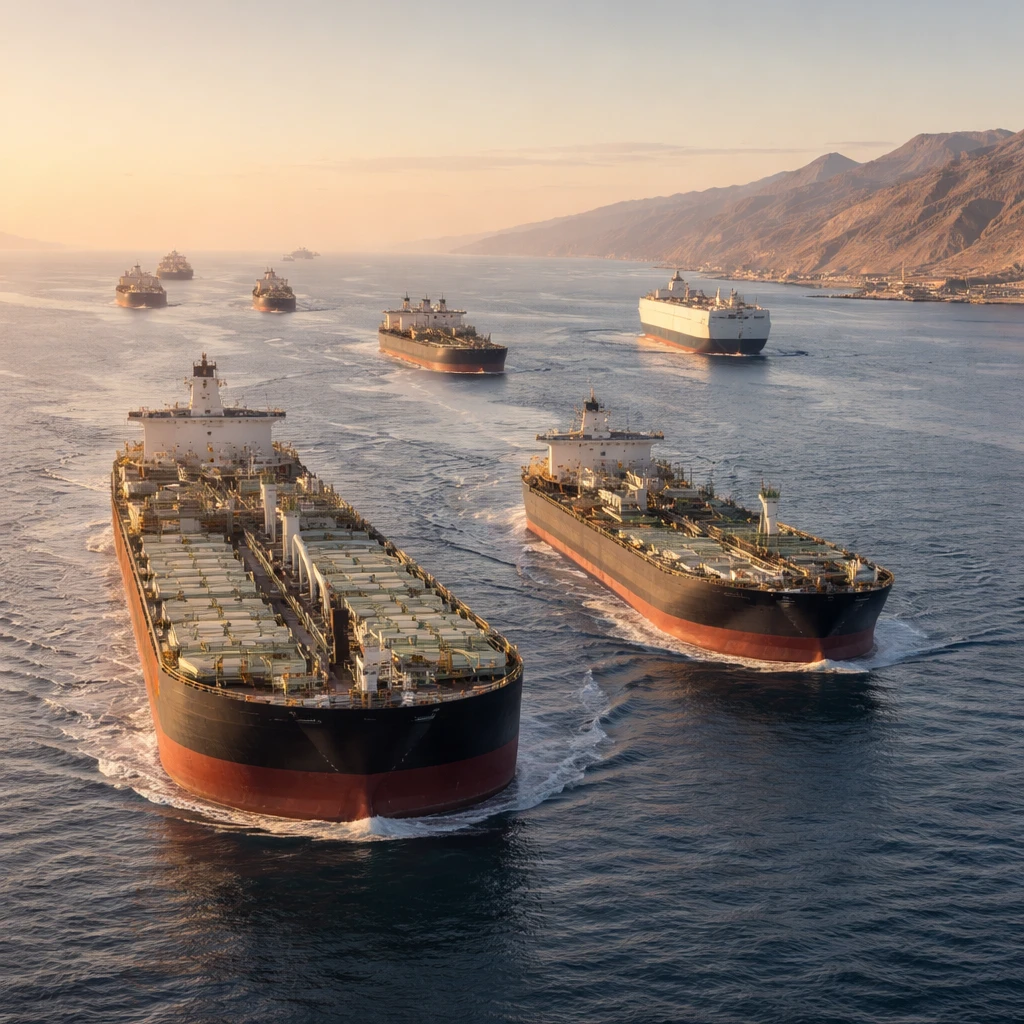
Convoy includes five supertankers, two chemical tankers and a car carrier as transit patterns shift amid Tehran's asserted control

By Hana Yamamoto
Share
Twitter Reddit Facebook LinkedIn

At least eight ships operated by Japan's Mitsui OSK Lines Ltd. are transiting the Strait of Hormuz through a passage closer to Iran, according to ship-tracking data. The group - five supertankers, two chemical tankers and a car carrier - are moving as a convoy after some vessels previously abandoned earlier exit attempts. The movements follow shifts in routing tied to Iran's claims of control over the waterway and diplomatic engagement by Japan.

Eight Mitsui-Controlled Vessels Exit Strait of Hormuz via Route Close to Iran
Summarize with
ChatGPT Perplexity Claude Grok Gemini

Key Points

  • Eight vessels controlled by Mitsui OSK Lines are transiting the Strait of Hormuz via a passage near Iran; the convoy includes five supertankers, two chemical tankers and a car carrier.
  • Some ships had earlier abandoned exit attempts before joining the current convoy; tracking data cited are from Bloomberg and Equasis.
  • A successful transit would reduce the number of large oil tankers trapped in the Persian Gulf since the war began to just a few, down from over 100 in early March; Japan has engaged diplomatically with Iran and Mitsui has required safety confirmation and coordination with governments and insurers before resuming regular passage.

At least eight vessels managed by Japan's Mitsui OSK Lines Ltd. are leaving the Strait of Hormuz via a corridor close to Iran, ship-tracking data compiled by Bloomberg and the Equasis database show. The group comprises five supertankers - each with a carrying capacity of 2 million barrels of crude - along with two chemical tankers and a car carrier.

The vessels are traveling together in a convoy. According to the tracking records, some of the ships had earlier attempted to exit the waterway by other means but abandoned those attempts before joining the current passage.

Iran has moved to assert control over the Strait of Hormuz since reaching an interim peace agreement with the United States last month. The country has repeatedly said it will permit crossings only for ships that have its authorization. Over the recent weekend, several tankers ceased attempts to use a U.S.-managed route along the coast of Oman. Some of those vessels then completed their transits after switching to the route nearer to Iran.

If the Mitsui-controlled vessels complete their transit through the strait, the tally of large oil tankers that have remained trapped in the Persian Gulf since the outset of the war would fall to only a few, down from more than 100 in early March, according to the tracking accounts cited.

Mitsui OSK Lines is among the owners of oil and gas tankers that have, indirectly, sought support from Tokyo to secure the removal of their ships. Japan, which relies on imports of energy, has repeatedly urged Iran to guarantee free passage through the Strait of Hormuz. Japanese officials have engaged with Iranian counterparts at various points during the conflict as Tokyo pushed Tehran for assurances of safe transit.

In June, Mitsui O.S.K. Lines stated it would resume passage through the Strait of Hormuz only after a full confirmation of safety. The company said that restarting navigation would require close coordination with relevant governments, insurance firms and other stakeholders before operations could safely recommence.


Context and operational notes

The tracked convoy reflects a broader change in vessel routing amid evolving controls and security arrangements in the strait. The use of a passage closer to Iran follows aborted attempts to use a U.S.-managed corridor along the Oman coast and comes against a backdrop of diplomatic engagement involving Tokyo and Tehran.

Risks

  • Uncertainty over authorization for ships to cross the Iran-proximate route - affects shipping and energy logistics sectors.
  • Potential delay to the full resumption of regular navigation through Hormuz pending safety confirmations and coordination with governments and insurers - impacts shipping, insurance and energy markets.
  • Changes in routing and control assertions may continue to disrupt tanker movements and supply chains, with implications for import-dependent economies.

More from Economy

FCA Calls for Review of Rules Governing General-Purpose AI in Financial Advice Jul 6, 2026 Japan-linked Fleet Departs Strait of Hormuz After Prolonged Stranding Jul 6, 2026 NATO’s 5% Defence Drive Is Testing European Budgets and Industry Confidence Jul 6, 2026 US Futures Rise as Chip Stocks Stabilize and Oil Retreats Jul 6, 2026 Spain may reach 100 million foreign visitors in 2026, minister says Jul 6, 2026