
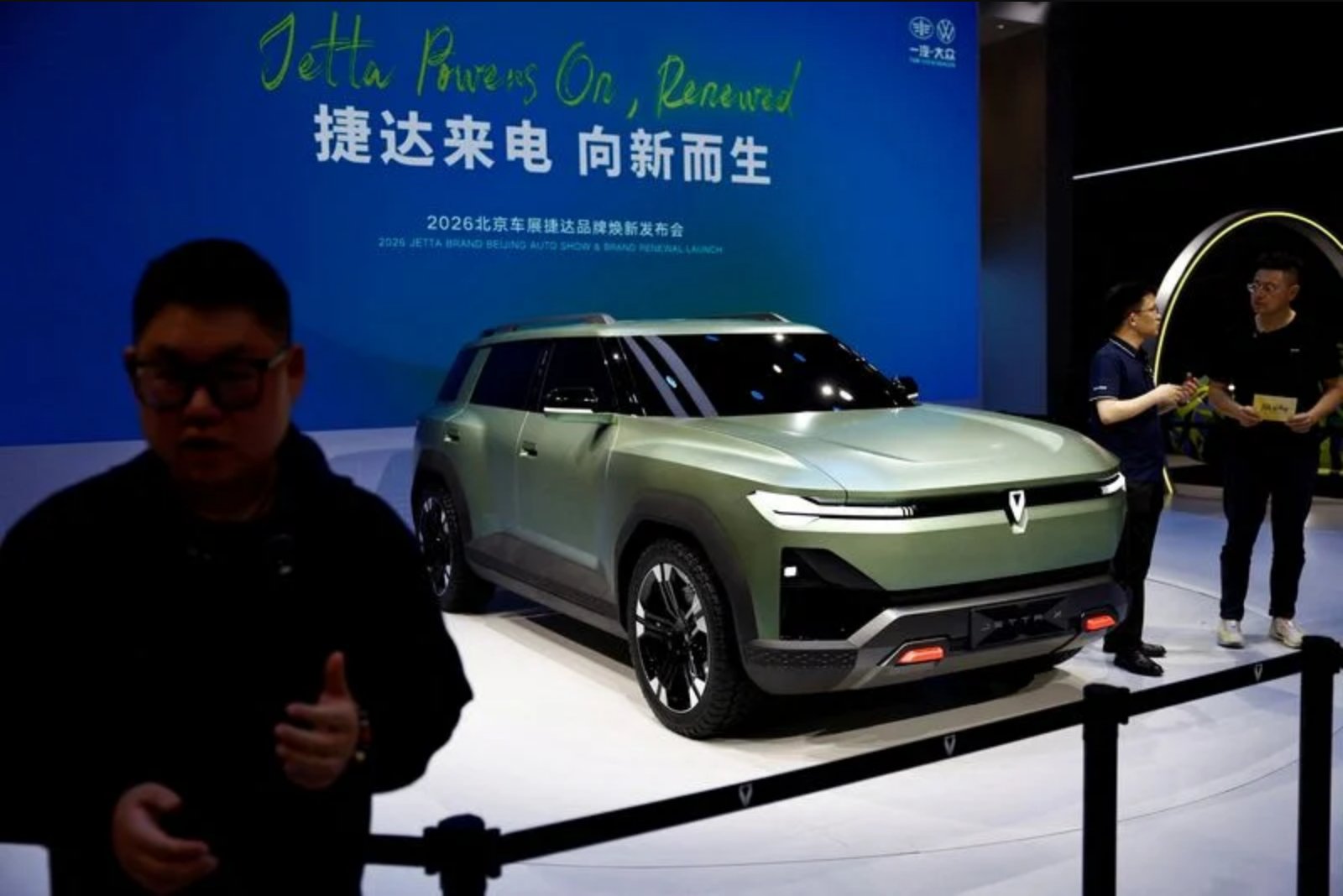
German automakers endured a pronounced contraction in sales in China during the second quarter, intensifying the strain on established brands contending with vigorous local competition and a prolonged market downturn. Company sales figures show that Volkswagen, Mercedes-Benz and BMW each recorded declines of at least 30% in China in the April to June period.
Volkswagen disclosed the steepest year-on-year fall in China at 36.6%. Marco Schubert, a Volkswagen sales executive, described the market as challenging and said the company "was unable to escape the overall market decline of around 20%, despite initial positive momentum from our newly launched, locally developed electric vehicles there."
Volkswagen had been overtaken by Chinese electric vehicle heavyweight BYD as the market's top-selling carmaker in 2024, though the German marque briefly reclaimed the lead at the start of the year when it pressed an EV-focused product push in China. That temporary rebound was linked to the ebbing of subsidies for greener cars in the country.
Legacy German brands have built much of their China success on combustion engine models, a positioning that analysts and industry observers say resonates less strongly with younger, tech-oriented Chinese consumers. BMW recently reduced its 2026 guidance in what marked its third China-related profit warning in under three years. The automaker also highlighted that the Middle East war had pushed up fuel prices and that higher fuel costs were dampening Chinese consumer demand for the combustion-engine models it still relies upon in that market.
Like Volkswagen, BMW and Mercedes are accelerating updates to their China line-ups, introducing electric models they say are tailored to the region. But market observers remain cautious about the pace of the catch-up. "Theyre trying to play catch-up at a very rapid pace, whilst their competition is running at twice the speed," said Paul Bennett, managing partner at advisory firm Madox Square.
Domestic demand has been weak: Chinese car sales fell for a ninth straight month in June, a trend that has pushed automakers to increasingly seek relief through exports to other markets, including Europe. Despite efforts to pivot sales externally, Volkswagen, Mercedes and BMW could not fully make up for their China shortfalls in the second quarter and reported worldwide sales declines of 8.6%, 8% and 4.9%, respectively.
The second-quarter results underscore the headwinds German legacy brands face in the world's largest auto market. Companies are deploying region-specific EV models and expanding export channels, but so far those measures have not reversed the downturn. The situation highlights the intersection of shifting consumer preferences in China, changing policy incentives for greener vehicles, and supply-and-demand dynamics influenced by external factors such as fuel-price movements.
Context and implications
- Automakers are confronting a sustained slowdown in China that has reduced domestic sales and extended into their global results.
- Transitioning product portfolios toward China-specific electric vehicles is a focal response, but the shift has been insufficient to offset rapid local competition and broader market weakness.
- Exporting vehicles to other regions, including Europe, has increased but did not compensate fully for the China shortfall in the second quarter.