
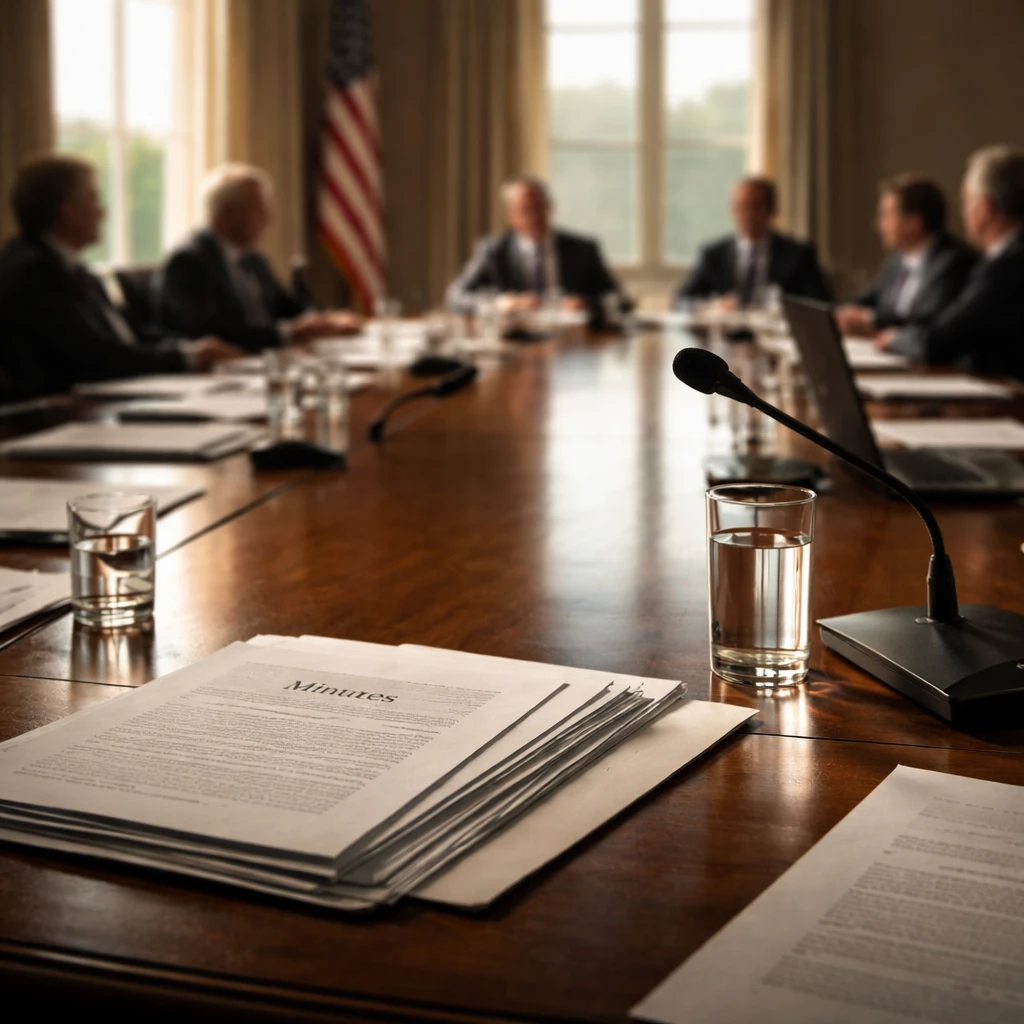
Federal Reserve officials voiced increasing unease about persistent inflation during their June 16-17 meeting, according to the FOMC minutes released Wednesday. The record of the discussions shows that, while some participants made a case for raising interest rates immediately, the group as a whole decided to keep the fed funds rate unchanged at a 3.50% to 3.75% target range.
Inflation dominated the conversation. The minutes make clear that inflation remained at the forefront of policymakers' concerns. A number of participants cited scenarios in which inflationary pressures could remain elevated, pointing to factors such as increased demand tied to artificial intelligence, the conflict in the Middle East, and tariffs as potential drivers of sustained price gains. Those participants generally signaled that additional policy firming would likely be appropriate if inflation did not move back toward the Fed's 2% objective.
At the same time, the discussion was not one-sided. The broader debate among committee members was described as evenly split. While many participants outlined paths in which inflation would decline toward the 2% target without further tightening, an almost equal share identified circumstances under which inflation could stay persistently above target.
The minutes also noted an assessment of risks: upside risks to price stability were seen as elevated, whereas downside risks to the achievement of maximum employment had moderated somewhat. Fed staff updated their projections, raising their inflation outlook for 2026 and 2027 versus the April forecast, a change they attributed in part to the Middle East war and the effects of AI-related buildout. At the same time, staff projected slightly slower GDP growth than in April.
Policy communication and projections. The June meeting was the first under Chairman Kevin Warsh. Policymakers considered his proposal to curtail forward guidance and to reduce commentary in the policy statement about the likely path of future rate decisions. A majority of participants favored shortening the policy statement, and most preferred not to repeat earlier language that suggested an easing bias.
New projections released with the minutes showed that nine of 18 policymakers expected the policy rate to be somewhat higher by the end of 2026. Despite the debate and those projections, all participants at the June meeting ultimately supported holding the benchmark rate steady in the 3.50% to 3.75% range.
Clear takeaways
- The FOMC minutes emphasize concern over persistent inflation and outline scenarios that could keep price pressures elevated.
- Fed staff raised inflation forecasts for 2026 and 2027 while trimming the near-term GDP outlook compared with April projections.
- Policymakers debated shrinking the policy statement and reducing forward guidance; nine of 18 officials expected somewhat higher rates by end-2026 despite the decision to hold now.