
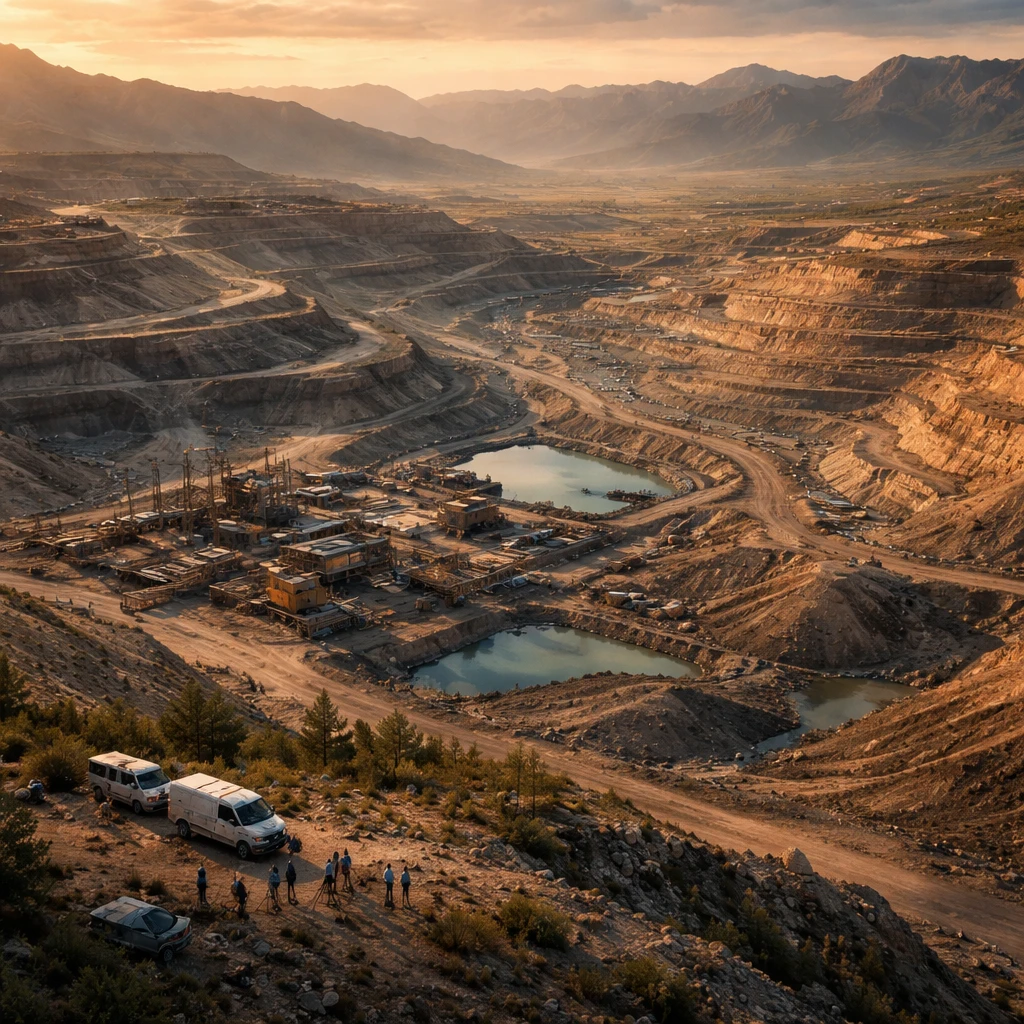
China has announced substantial upward revisions to its estimated reserves of several strategic minerals after completing a nationwide reassessment of mineral deposits, according to figures published by the Ministry of Natural Resources.
The reassessment reported that retained rhenium resources rose by more than 200%. In addition, the ministry said gold reserves were increased by an amount equivalent to 50 large deposits, while nickel reserves were expanded by the equivalent of 30 large deposits.
Other metals that registered material increases included gallium, indium, tantalum and vanadium, each of which recorded gains equivalent to more than 10 large deposits. The ministry said these adjustments follow a systematic review that broadened the scope of counted resources.
The exercise covered 17 strategic minerals and encompassed field work across more than 1,800 operating mines and large and medium-sized mining areas. More than 100 institutions and nearly 2,000 survey personnel took part in the yearlong project, which spanned 27 provinces, autonomous regions and municipalities.
Officials said the reassessment took account of associated mineral resources, lower-grade deposits and deposits that had previously been judged difficult to exploit, thereby expanding the estimated pool of strategic mineral resources available domestically.
Separately from the reassessment, authorities identified China’s first paleofluvial-lacustrine zircon placer deposit in Baicheng in the northwestern Xinjiang region. The discovery was described as potentially significant for domestic zircon supplies and could reduce reliance on imports of the mineral.
Zircon is a feedstock for zirconium, which is used in nuclear reactor fuel-rod cladding and in high-temperature alloys for aerospace applications. Rhenium, highlighted by the reassessment, is used in high-temperature superalloys for jet-engine components.
The ministry emphasized that the reported increases reflect revised resource estimates produced by the nationwide assessment, rather than necessarily representing newly discovered deposits. That distinction underscores that the numbers are the result of updated accounting and evaluation methods applied across a broad set of existing mining areas.
As reported, the findings align with a stated effort to strengthen the domestic resource base for minerals used in advanced manufacturing, aerospace, and nuclear energy.