
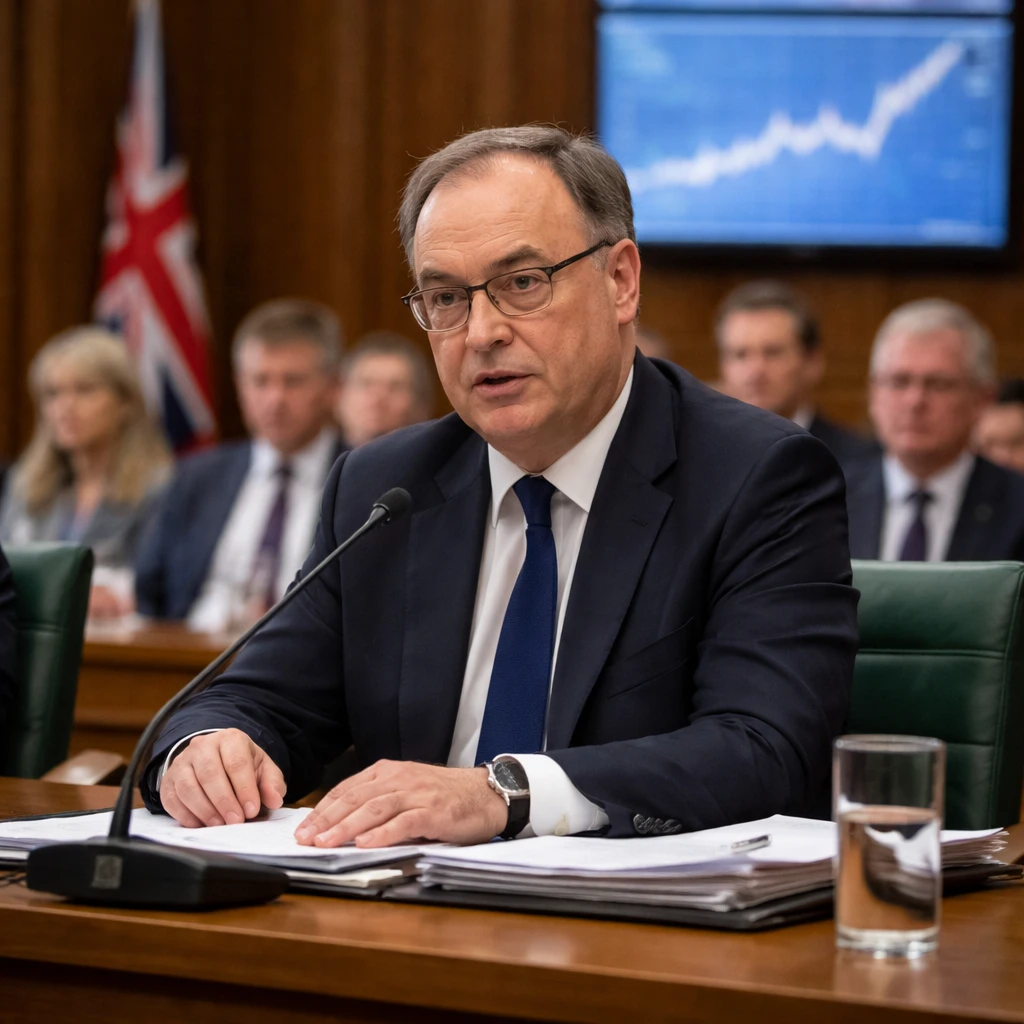
Bank of England Governor Andrew Bailey told members of the Treasury Select Committee on Tuesday that Britain’s banking system continues to show resilience, but that the recent escalation of hostilities between the United States and Iran has intensified risks to financial stability.
Bailey said he had earlier placed the potential fallout from the Iran conflict toward the lower end of the Bank’s three scenario framework when he joined a 7-2 majority last month to leave interest rates unchanged. He qualified that assessment with a warning about the fragility of the situation, saying: "But I would have added the very strong caveat to that it seems to me that the situation remained unstable, and the ceasefire was fragile."
The governor linked the collapse of peace talks and the resumption of attacks to heightened instability risks for markets and the economy. In the immediate market response, British government bond yields climbed on Tuesday to their highest level since May as tensions pushed oil prices higher, prompting renewed concerns about inflation.
Bailey also noted that investor expectations for future Bank of England policy tightened after comments from a Federal Reserve official suggesting that borrowing costs in the United States could rise soon. That shift in expectations contributed to upward pressure on yields and fed into worries about domestic inflation dynamics.
When questioned about whether a change in Britain’s prime minister might affect financial stability, Bailey declined to enter into political commentary. He said the UK’s economic outlook remained underpinned by the government’s fiscal framework and the monetary policy set by the Bank of England.
Throughout his testimony the governor returned to the theme of growth, stressing the need to accelerate the pace of economic expansion. "I think the big issue is growth in the economy. So I think we can do all we can on financial stability," he said.
Summary
Andrew Bailey warned lawmakers that renewed US-Iran hostilities raise financial stability risks despite a resilient banking sector. He reiterated that his earlier risk assessment had been at the lower end of the Bank’s scenarios when supporting a decision last month to keep rates unchanged, while noting the ceasefire remained fragile. Market reactions included a rise in UK government bond yields to levels not seen since May amid oil-driven inflation worries.
Key points
- Governor said Britain’s banking system remains resilient but exposed to heightened risks from renewed US-Iran hostilities.
- Bailey had placed the conflict risk at the lower end of the BoE’s scenario range when he voted with a 7-2 majority to hold rates last month.
- Market reaction included British government bond yields reaching their highest level since May as oil price moves fueled inflation concerns.
Risks and uncertainties
- Renewed hostilities between the US and Iran increase instability risks for financial markets, affecting bond markets and inflation expectations.
- Rising oil prices and higher bond yields could feed into broader inflation pressures, complicating monetary policy decisions.
- Political developments, including questions around a change in the prime minister, create uncertainty though the governor declined to comment on politics directly.