
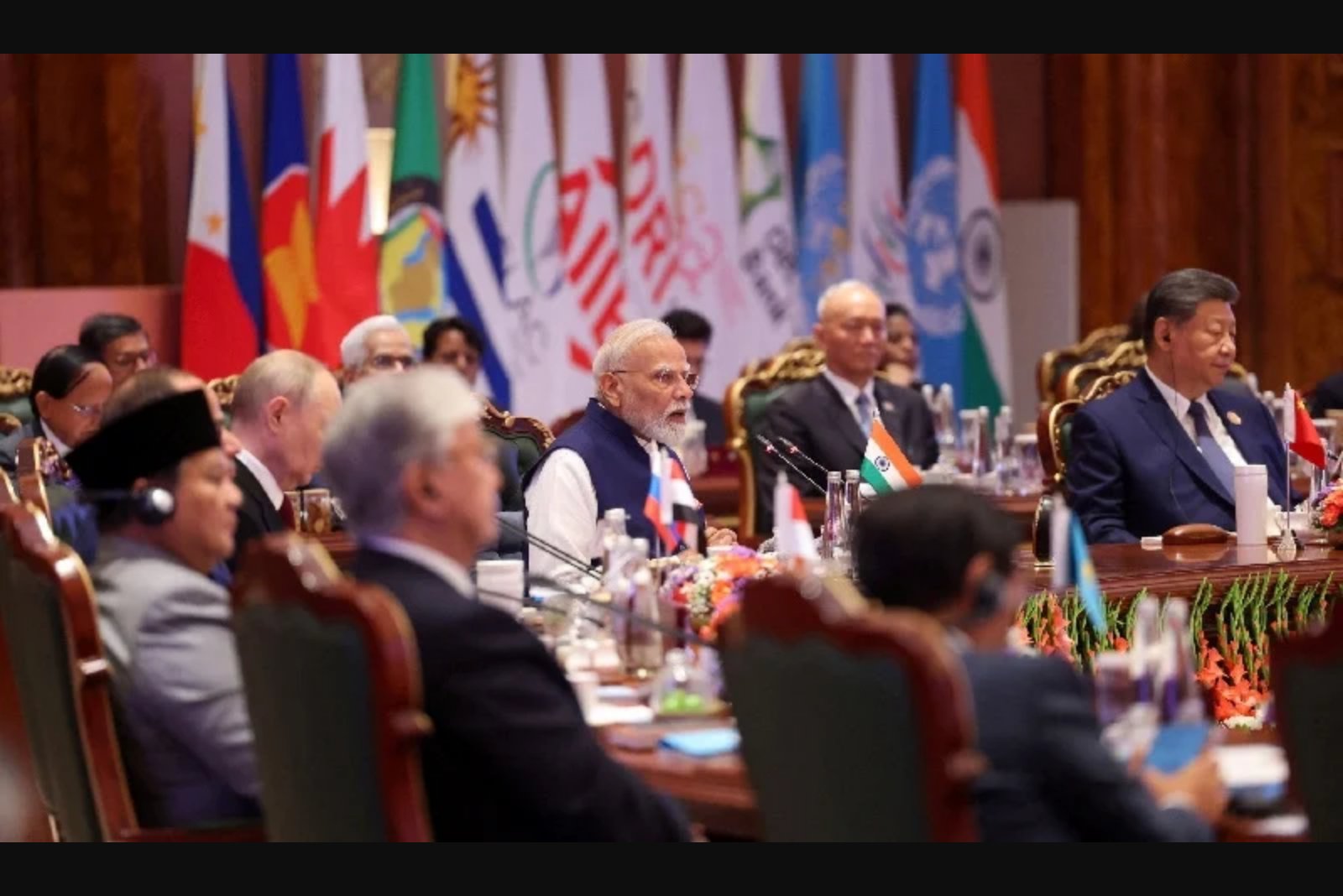
NEW DELHI, Sept 13 - Chinese President Xi Jinping used the closing session of the BRICS leaders' summit to present a set of initiatives across technology, trade and investment designed to deepen ties among the enlarged grouping often referred to by some as "Greater BRICS." Xi framed the package as part of an effort to turn the bloc into a concrete vehicle for advancing development across the Global South.
Speaking to leaders gathered in New Delhi, Xi said the success of the "Greater BRICS Initiative" hinges on constructing a firm base for pragmatic cooperation. He urged member nations to "further co-operate, maintain the stability of industrial and supply chains, and cultivate an integrated market," according to official accounts of his remarks at the summit's closing session.
On technology cooperation, Xi proposed that China will lead the creation of a BRICS AI Open Source Zone. The stated aim of that zone is to foster collaboration on large language models, support AI training and promote an open AI ecosystem among member economies.
In trade and investment, Xi put forward the idea of a BRICS Special Economic Zone partnership and announced that China will host a BRICS Service Trade Forum next year. The forum is intended to enhance trade and investment ties among the grouping's members.
BRICS has expanded beyond its original five members - Brazil, Russia, India, China and South Africa - to incorporate Iran, Indonesia, Egypt, Ethiopia and the United Arab Emirates. In addition, the bloc now includes 10 partner countries that span emerging economies across Asia, Africa, Latin America and the Middle East, broadening the grouping's reach across what participants describe as the Global South. The larger configuration has been referred to at times by China and Russia as "Greater BRICS."
Indian Prime Minister Narendra Modi, whose country will chair the grouping in 2026, said earlier in the summit that benefits generated by BRICS should not remain confined to its members but should be adaptable and accessible to meet the needs of the Global South. China is scheduled to chair BRICS in 2027.
Russian President Vladimir Putin characterized BRICS as a "powerful driving force" toward a new, fairer and multipolar world order. He urged members to identify ways to combine the competitive advantages of their individual economies.
The summit took place amid renewed violent exchanges in the Gulf region. Officials noted tit-for-tat attacks involving the United States and Iran and activity by Iran-backed Houthi forces that have included operations against Saudi Arabia. Against this tense backdrop, leaders at the BRICS summit achieved consensus on a joint declaration that was backed by both Iran and the UAE.
The joint declaration, in general terms, expressed deep concern about the continuing escalation of tensions in the Middle East and urged the exercise of maximum restraint.
On the sidelines of the summit, Iranian President Masoud Pezeshkian and the Crown Prince of Abu Dhabi held what was described as the highest-level meeting between officials of the two countries since the start of the conflict. The discussions focused on de-escalation, stability and efforts to advance regional peace and development.
Summit participants emphasized cooperation across a broad agenda that includes politics, security, economics and finance. Leaders from the countries set to chair the grouping in coming years signaled a shared interest in widening partnerships and increasing the bloc's global influence by strengthening economic linkages, technological collaboration and supply chain resilience.
While specific operational details and timelines for the new initiatives were not provided in the closing session remarks attributed to Xi, the proposals outline a multi-pronged approach to deepen institutional cooperation among the participating emerging economies.
Observers at the summit highlighted that laying a practical foundation for cooperation across such a diverse set of countries will be critical to the initiative's effectiveness. The proposals presented at the New Delhi meeting now form the basis for follow-up activity by member states, including a service trade forum to be hosted by China in the coming year and further exploration of AI, special economic zones and integrated market arrangements.