
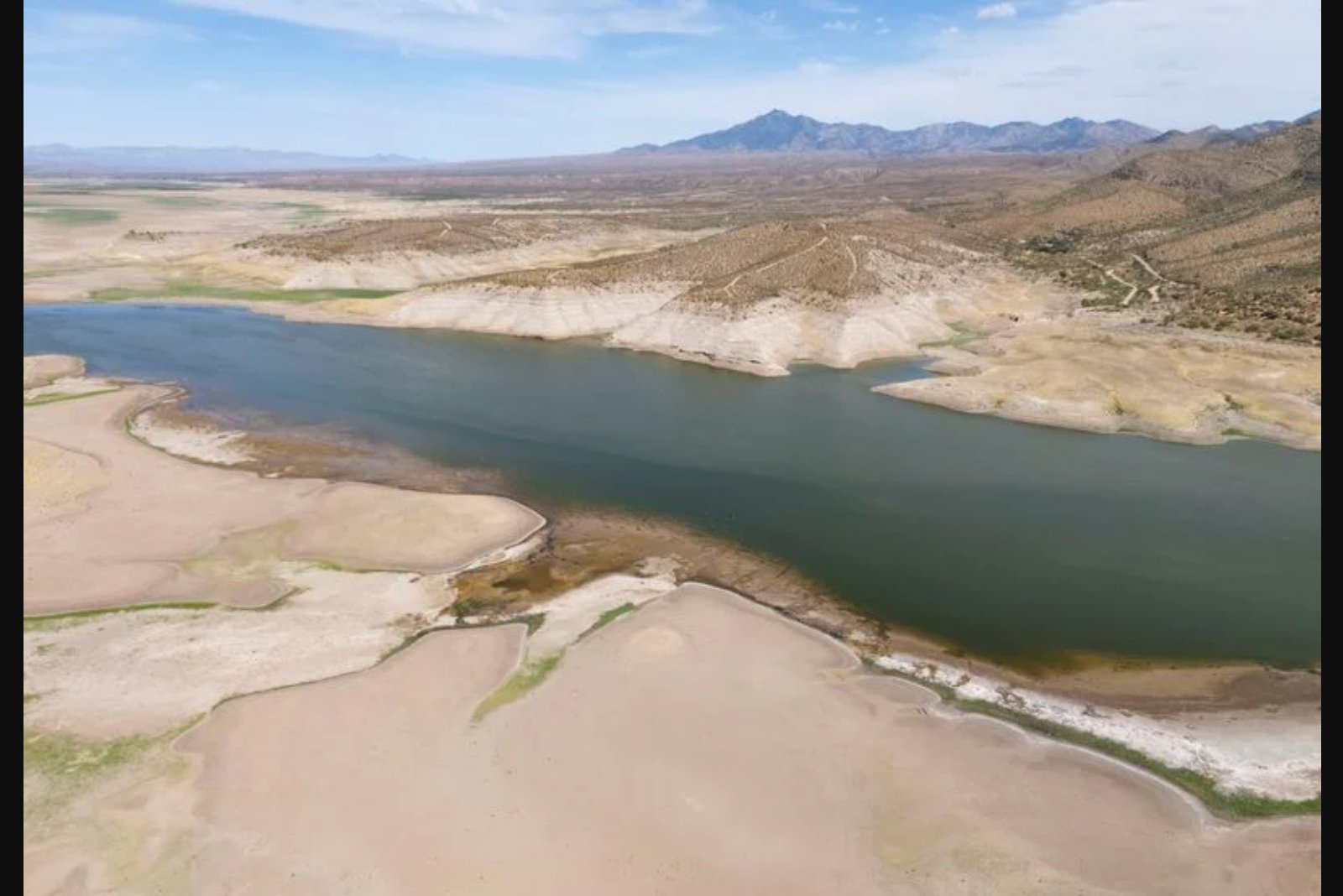
Across the U.S. West, the effects of a long-running drought have escalated into a direct contest for water between farms, towns and industrial users. The Colorado River system - which provides water to about 40 million people in seven Western states and Mexico and irrigates millions of acres of farmland - is under acute strain as decades of dryness, a record-low winter snowpack and the hottest March on record deepen shortages across the basin.
Scenes of strain differ by locale but tell the same story: near Casa Grande in central Arizona, dead fish lie on the dry bed of a reservoir; in central Utah a small town faces the prospect of running out of potable water within months; and in Colorado a rancher has sold a fifth of her herd as stock ponds go empty. Those examples highlight how the region's water shortfall is pitting farmers against suburban and urban residents as well as industrial operations such as data centers, solar arrays and semiconductor plants.
Federal officials are weighing steep reductions in Colorado River allocations to Arizona, California and Nevada. One proposal under discussion would have the Lower Basin states reduce their annual river use by around 21% per year through 2028 as part of efforts to preserve critical reservoir levels.
Farms on the Front Line
Near Casa Grande, farmer Nancy Caywood faces the reality of a system stretched to its limits. Caywood pays a $21,000 annual fee to her local water district even though river water ran out in March. Her roughly 250-acre (100-hectare) farm, planted with alfalfa and cotton, depends fully on irrigation supplied from the San Carlos Reservoir on the Gila River, a tributary of the Colorado River. In an exceptionally poor snow year, demand from farms and towns drained the reservoir to 1% of capacity, exposing fish on the cracked floor where herons and pelicans now feed.
"We have hung on for almost 30 years," Caywood said, noting she has leased neighboring fields with aquifer access to keep operating. She added that people have approached her asking if she would sell land to install solar panels.
Also in Pinal County, fifth-generation farmer Jace Miller - whose family has farmed the area for 107 years - is trying to preserve the multigenerational operation and hopes to bring his son into the business. More than half of Miller's fields lie fallow due to the drought. Many farmers in the region lost most access to Colorado River water in 2022, when municipal users were prioritized amid shrinking supplies.
Housing developers and solar companies have been buying agricultural parcels Miller leases south of Phoenix. He has urged state authorities to impose a moratorium on residential growth, arguing that agricultural production is essential to national food security. Miller has argued for engineering solutions beyond simply tapping aquifers - suggesting, for example, cross-country water pipelines similar to oil pipelines - and warned that continual transfers from agriculture are not sustainable.
Urban Demands and Possible Transfers
Not all stakeholders agree that agriculture should keep priority on limited water. Michelle Ugenti-Rita, running for a city council seat in Scottsdale, a Phoenix suburb with about 250,000 people, said water historically used by farms could be repurposed to meet urban needs. Scottsdale currently gets roughly 70% of its water from the Colorado River and is actively seeking new sources. Ugenti-Rita suggested that buying groundwater rights from farmers and other towns is among potential options.
"The ag community, they’re a big user of our water. Is that where it should go?" Ugenti-Rita asked.
Colorado State University scientist Brad Udall noted that Arizona’s vast groundwater reserves allowed the state's population to double over four decades, but warned those reserves are non-renewable. "We kind of created this monster that you’ve got to continue to feed," he said, referring to the state's ongoing water needs.
Headwaters States and Legal Friction
As federal officials consider adopting much of the Lower Basin proposal to cut usage by about 21% annually through 2028, tensions are rising between downstream states and the Upper Basin states - Colorado, New Mexico, Utah and Wyoming - which include the river's Rocky Mountain headwaters. The disagreement over how to divide shrinking flows has sharpened longstanding disputes and could lead the seven states to seek legal resolution in court.
On the Western Slope of Colorado, rancher Robbie LeValley said she managed only about a quarter of her normal hay crop after irrigation water from snowmelt ran out two months early. Hay prices have tripled in her region, which lies just east of one of the country's largest areas of drought rated "exceptional," the worst Drought Monitor category. LeValley, whose husband's family has ranched near Hotchkiss, Colorado since 1910, said she faced similar shortages in 2010 and 2012. She also rejected the notion that agriculture is chiefly to blame for the river's shortages: "We are benefit. We are not the problem," she said. According to reporting from the basin, she has sold a fifth of her herd as stock ponds stood empty.
Small Towns Running Low
In Emery, Utah, roughly 190 miles west of LeValley's ranch, the town's only reliable source of drinking water in typical years is Muddy Creek, which feeds the Colorado River. Muddy Creek is currently running at about 6% of normal volume, following extremely low snowpack in its Wasatch Mountain headwaters. The town's population of about 330 people faces strict conservation measures: outside watering is banned, and residents reuse bath and dish water to sustain trees and gardens.
Emery maintains a reservoir that local officials estimate should last between six to nine months. Mayor Jack Funk, 61 years old, said he is testing old wells and springs for possible use and acknowledged that the town will have to begin trucking in water supplies after the reservoir is exhausted unless alternatives or precipitation arrive.
"Everybody thought we’d never run out of water in Emery, because we’re not a very big town, but here we are," Funk said.
The unfolding water crisis across the Colorado River basin illustrates how interconnected demands - agricultural, municipal and industrial - are straining a resource that supports millions of people and vast agricultural acreage. As federal and state officials consider allocation cuts and as stakeholders debate transfers, the coming months will test the durability of arrangements that have governed water use in the basin for decades.