
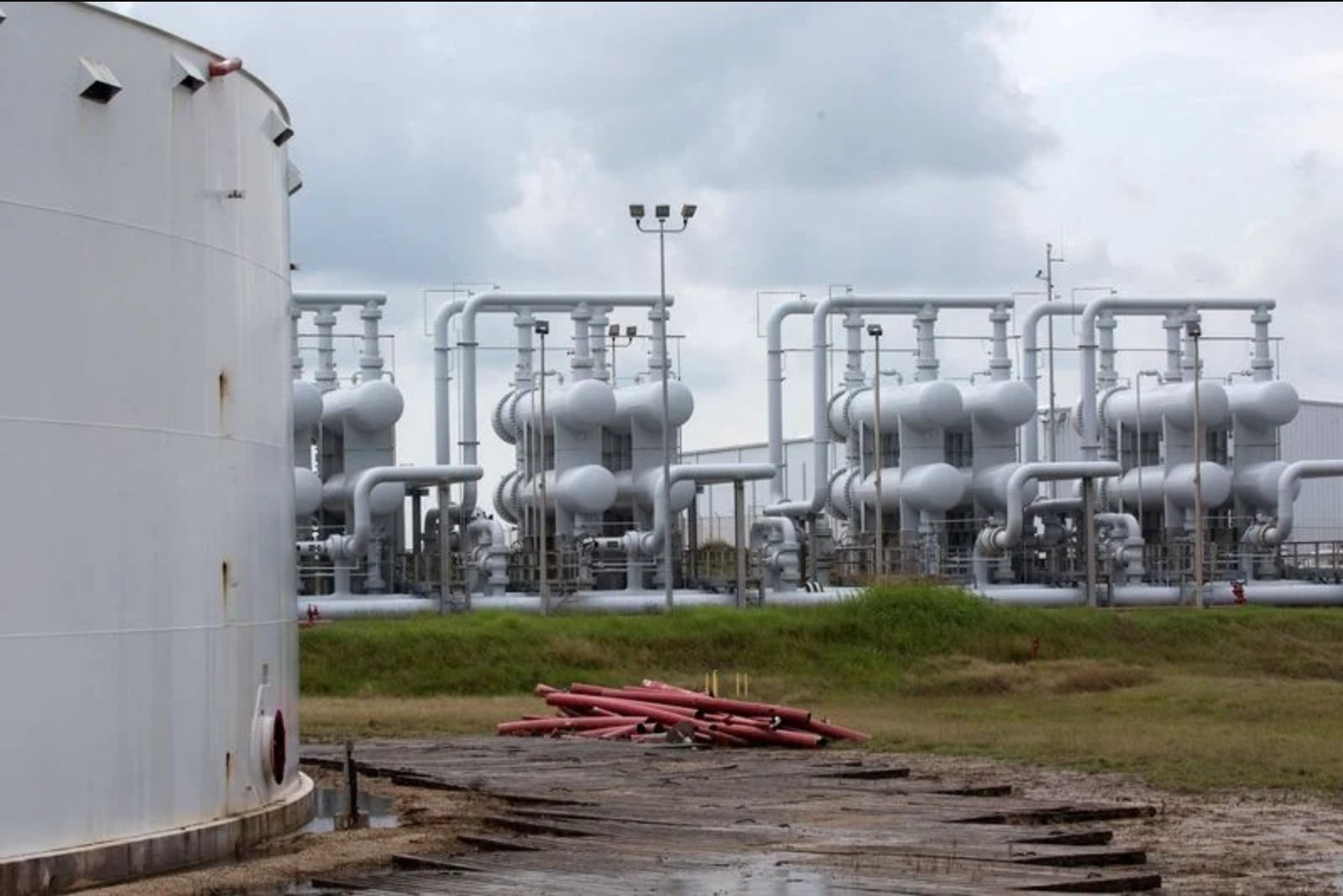
Six months into the U.S.-Israeli war with Iran, U.S. officials face a narrowed set of tools to steady volatile oil markets because the Strategic Petroleum Reserve (SPR) has been drawn down repeatedly over the last five years. The reserve, established after the oil crises of the 1970s and stored in 60 underground salt caverns along the Texas and Louisiana coasts, now holds 289.7 million barrels - its lowest volume since 1982.
That level is set to fall further if a final tranche from an earlier agreement is released. A remaining 39 million barrels tied to a March arrangement with the International Energy Agency (IEA) would cut the SPR to roughly 243 million barrels if released. The March agreement saw more than 30 countries commit to a collective release of a record 400 million barrels, with the United States accounting for 172 million of those barrels as part of efforts to calm markets after the U.S. and Israel launched the war on Iran on February 28.
Oil in the caverns rests atop water injected beneath it; as oil is removed the water level rises. Higher water levels can damage cavern walls and the associated wells, pipes and pumps used to retrieve crude. A Department of Energy source said the minimum operating level is 70 million barrels. But Siddharth Misra, a petroleum engineering professor at Texas A&M University, warned that while 70 million barrels is the absolute physical floor, the practical threshold for safe operations is nearer to 250 million barrels. "The core mission of the reserve is to supply the market rapidly during a crisis," Misra said. "But operating below 250 million barrels pushes the infrastructure into a dangerous zone," noting his comments do not necessarily reflect his university’s position.
President Trump said recently the United States will refill the SPR using Venezuelan oil, though it is unclear how quickly that would translate into restored reserve volumes or lower gasoline prices. Washington is expected to reach a deal with Caracas this week intended to revive Venezuela's battered oil industry; officials say that could give the U.S. control of about a fifth of Venezuela’s proved crude reserves. How such a deal would feed into the SPR and on what timeline remains uncertain.
The 172 million barrels the U.S. released under the March arrangement were provided as a loan that must be repaid with interest in kind - the repayment terms call for about 40 million additional barrels above the principal. That volumetric interest equates to roughly what the United States consumes in two days. Repayment is not scheduled to begin until later this year and is not expected to be completed until late 2028.
Analysts caution that replenishing the reserve could be prolonged. Kevin Book of ClearView Energy Partners noted that whether Venezuelan crude is shipped directly into the SPR or sold to fund U.S. purchases for the reserve, a full replenishment "could take years" and might be interrupted by elections domestically and in Venezuela.
The SPR's drawdown is the result of several policy choices over a number of years. Beginning in 2021, the administration released about 230 million barrels in coordination with international partners to dampen prices, including selling a record 180 million barrels following Russia's invasion of Ukraine in 2022. Washington had started to replenish the SPR afterward, but the outbreak of the Iran war halted those efforts. Funding constraints have also been a factor: Congress provided just $171 million last year to replenish the reserve, far below the roughly $20 billion that would have been needed at the time.
Legal and operational constraints limit the president's options as volumes decline. U.S. law bars routine, small drawdowns once the reserve falls below 252.4 million barrels, although the president retains authority to order releases in major emergencies. Separately, a Government Accountability Office report in May expressed concern about the integrity of SPR wells and emphasized that the reserve's drawdown, distribution and fill capabilities are limited and at risk due to aging infrastructure compounded by major construction intended to address those issues. "The SPR’s drawdown, distribution, and fill capabilities are currently limited and are at risk going forward due to longstanding issues with aging infrastructure compounded with ongoing major construction intended to address them," the GAO wrote.
At an August 24 event, Clayton Seigle, a senior associate at the Center for Strategic and International Studies' energy security and climate change program, described the SPR's level as "precariously low." He warned that the small cushion of crude reserves, together with a reduced ability by OPEC to rapidly expand output, means policymakers will have fewer options to respond to future supply disruptions.
Market observers are increasingly focused on how dwindling reserves may affect sentiment. Lutz Kilian, director of the Center for Energy and the Economy at the Federal Reserve Bank of Dallas, said market participants are likely to grow more worried as levels approach critically low points. "Would market participants worry more, as we approach the bottom of the barrel? Clearly, yes," Kilian said. He added that participants may even question whether any remaining releases can calm markets.
Kilian cautioned that tapping the reserve further could push oil prices higher and harm the broader economy. "Once inventories are for all practical purposes exhausted, demand destruction becomes the only response to a shortage of oil," he said, underscoring the stakes of limited emergency stocks.
Key context and operational realities underscore the constraints: the SPR's caverns can be as tall as the Empire State Building; pressure and water management are central to safe withdrawal; and the process of restoring strategic volumes through loans, international agreements and domestic purchases can span years.
For policymakers and market participants, the current situation presents a balancing act between deploying remaining SPR volumes to stabilize prices and preserving enough inventory to retain operational flexibility should shipments be delayed or infrastructure issues arise. The combination of low inventory, aging systems and political constraints on replenishment timelines leaves the reserve vulnerable at a time when geopolitical uncertainty is elevated.