
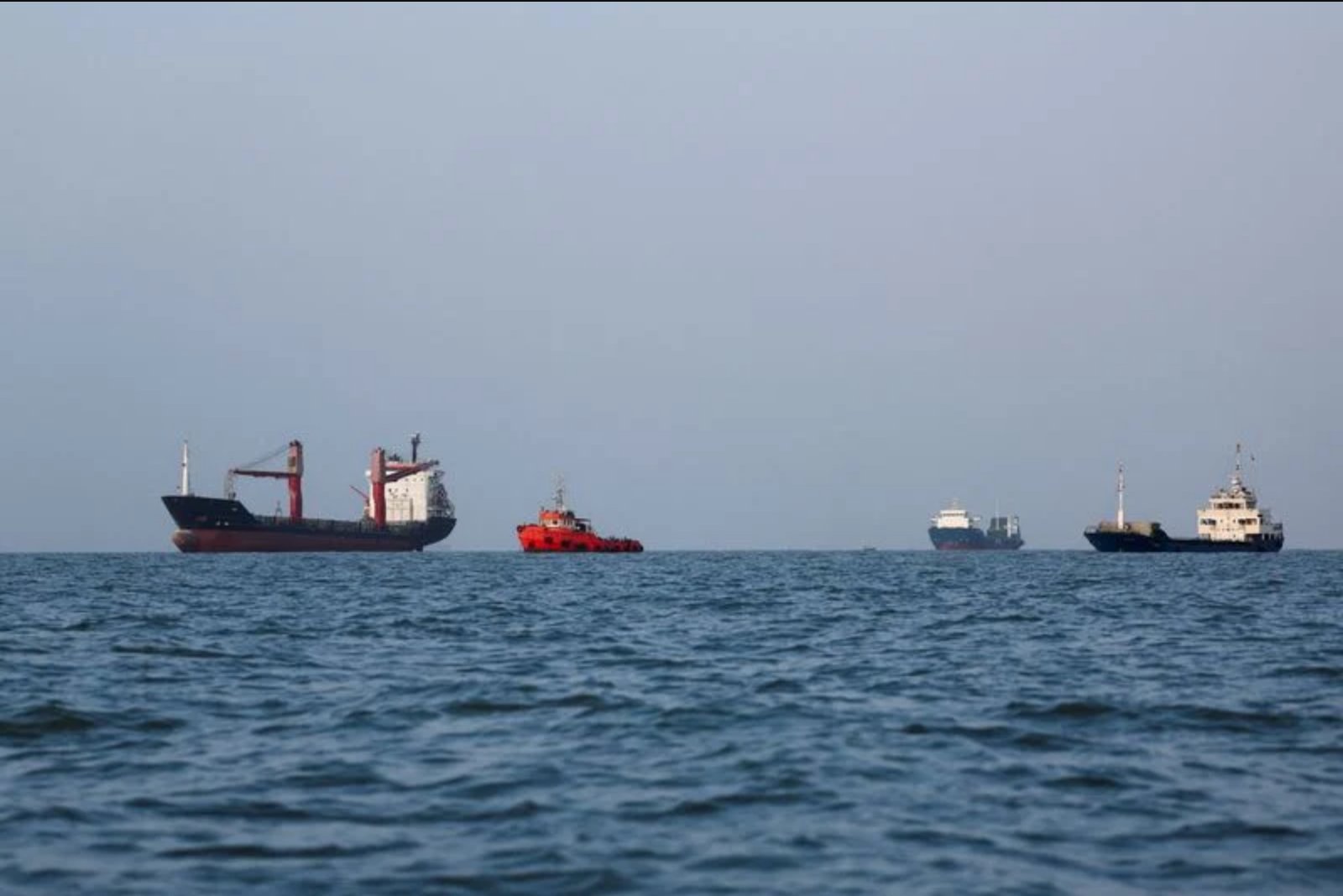
For the first sustained stretch on record, Iran has gone about seven weeks without successfully routing significant crude exports through the Strait of Hormuz, according to industry trackers. The result of a U.S. naval blockade applied from mid-July is a near-total halt to fresh shipments reaching China, Tehran’s only major remaining oil customer, and a rapid deterioration in the flow of foreign-currency income.
Data and ship-tracking firms Kpler, Vortexa and TankerTrackers.com report that since the blockade was reimposed on July 14, no Iranian crude cargoes have completed a transit of the strait bound for China. Officials and analysts say this contrasts with earlier cycles of sanctions when Iranian crude still moved to buyers despite restrictions.
Exports have collapsed
Estimates from Vortexa and Kpler show a steep drop in loading activity. Iran’s combined crude oil and condensate loadings were around 220,000 to 255,000 barrels per day in August, down from roughly 740,000 bpd in July and about 2 million bpd in March. Vortexa analyst Claire Jungman highlighted the gap with previous sanctions episodes, noting that even at the height of maximum-pressure sanctions in 2019-20 some crude still cleared Hormuz every month. The current near-zero outbound flows for a sustained stretch are unprecedented in the trackers’ records.
With the blockade preventing fresh cargoes from transiting the strait, Iran’s ability to replenish crude held in Asia has been cut off. Traders continue to offer Iranian cargoes for September and October delivery to China, but available volumes are below levels seen in July and August because floating storage outside the Gulf is shrinking as new supply fails to arrive.
Floating storage and the stranded fleet
TankerTrackers.com co-founder Samir Madani reports that 29 tankers are currently inside the Strait of Hormuz carrying 36.11 million barrels of crude. Vortexa data indicate that Iranian crude in floating storage west of the blockade line rose to 41.7 million barrels by August 26 from 35.5 million barrels at the end of July, while total Iranian crude afloat fell to 107 million barrels from 135 million barrels.
Those figures mean China can access volumes already afloat in nearby waters, but it cannot draw on a continuing stream of fresh loadings from Iran’s ports while the blockade remains in place. Madani said the picture is effectively that "China can grab whatever’s floating around in their neck of the woods, but that’s about it for now, really."
Vessel dynamics add another strain: once tankers that have sold their cargo are emptied, they cannot return to Iranian ports because of the blockade, leaving ships idle offshore. Vortexa’s Jungman observed that 27 sanctioned tankers linked to Iran’s oil trade are currently waiting off Sri Lanka in ballast, unable to return to Iran.
Shadow fleet activity beyond the blockade
The U.S. blockade does not extend along Iran’s entire coastline, and dozens of Iran-linked shadow-fleet tankers remain active outside the immediate interdiction zone. Blackstone Compliance Services’ David Tannenbaum put the count at 51 vessels operating in the Gulf of Oman and another 81 either making deliveries in Asia or waiting off Malaysia. Reuters could not independently verify those figures.
Economic strain at home
Analysts warn the export collapse is stripping Iran of a key source of foreign-currency income. Kpler analyst Homayoun Falakshahi said that the shortfall could force Tehran to finance spending by printing money, which would risk even higher inflation. The International Monetary Fund estimates Iran’s inflation rate at nearly 70% this year, ranking it among the highest in the world.
Washington has sought to increase pressure on Tehran by publicly warning countries that continue to trade with Iran, though it stopped short of immediately issuing penalties for those transactions.
Timeline
- War starts - Feb 28
- US issues 1-month waiver allowing Iranian oil exports - Mar 20
- US announces blockade on Iran-linked shipping - Apr 13
- Waiver expires - Apr 19
- US and Iran sign 60-day MoU, blockade is suspended - Jun 18
- US reimposes blockade - Jul 14
- MoU negotiation period expires - (no circa Aug official announcement)
- Six months of war - Aug 28
What remains uncertain
While Iranian crude is still being offered and floating stocks allow for some deliveries, the blockade’s persistence means those volumes cannot be replenished by fresh loadings. The longer the interdiction continues, the more constrained Iran’s capacity to realize export revenues from new shipments will be.
For markets, the immediate effect is a reduction in available Iranian export capacity to China and pressure on Tehran’s foreign-currency position. For Iran, the loss of export flows amplifies financing challenges and heightens inflationary risk should monetary authorities resort to printing money.
Contact: TradeVae Commodities Desk