
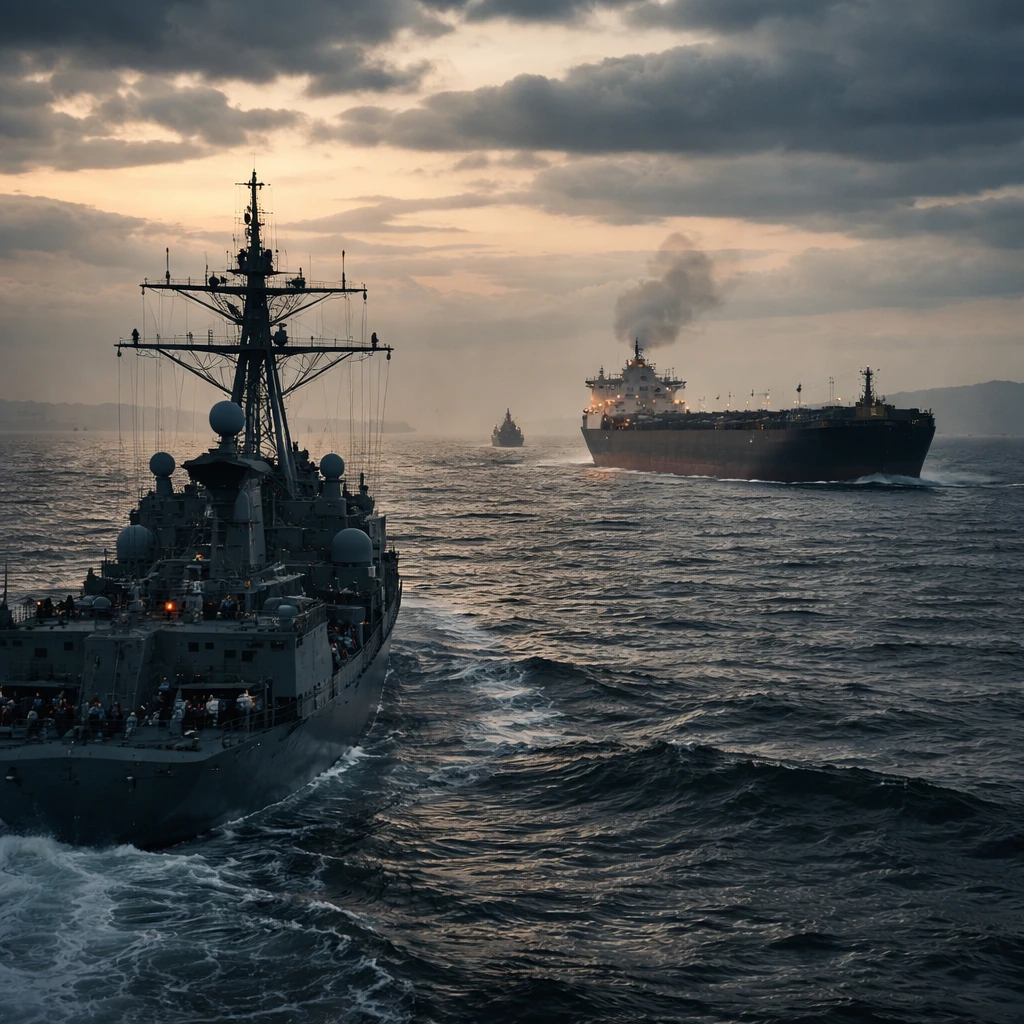
Brent crude traded above $93 a barrel on Tuesday as U.S. Central Command said it had begun striking Islamic Revolutionary Guard Corps targets inside Iran at noon ET on September 1. CENTCOM framed the operation as a response to recent IRGC actions that targeted commercial shipping in the Strait of Hormuz and threatened American service members operating in the region.
In a post on X, CENTCOM said the strikes followed IRGC attacks on commercial vessels and actions against U.S. forces. CENTCOM spokesman Capt. Tim Hawkins stressed a freedom-of-navigation rationale: "Last week, CENTCOM completed cleaning sea mines from the strait's international shipping routes. We simply will not allow Iran to emplace more mines."
Tuesday's strikes marked the second notable escalation inside five days. On August 30, U.S. forces struck two Iranian rocket launchers on Larak Island; CENTCOM characterized those strikes as the first U.S. strikes on Iran since late July. According to reporting that accompanied initial accounts, the August 30 action followed observation of IRGC personnel preparing to launch rockets carrying sea mines into the strait.
The day after the August 30 strikes, Iran launched ballistic missiles and drones at Jordanian air bases - King Hussein and Muwaffaq Salti. Jordan reported intercepting eight missiles, while U.S. officials said most of the incoming fire was neutralized with no significant impact, according to reporting from Kurdistan 24.
In public remarks after Iran's missile strike on the Jordanian bases, President Trump indicated a firm U.S. posture, telling Fox News, "We're going to hit them hard. There will be a response."
Reporting from Axios, citing three U.S. officials, said CENTCOM had previously developed a concept referred to as a "mow the lawn" plan. That plan envisions periodic, limited strikes aimed at degrading Iranian radar, air defense, and anti-ship missile capabilities along the strait. Defense Secretary Hegseth is reported to have supported the concept, though Axios noted the plan had not been formally approved by Trump prior to the weekend escalation.
It is not yet clear whether the strikes announced on Tuesday represent implementation of that "mow the lawn" approach or are a discrete response to recent events. The operational intent and any follow-on actions have not been specified beyond the CENTCOM statement and the contextual reporting that linked the recent sequence of strikes and counterstrikes.
Market and regional implications
The strikes took place against a backdrop of rising oil prices, with Brent moving above $93 a barrel on Tuesday. The actions in and around the Strait of Hormuz - a crucial maritime chokepoint for global oil flows - have direct relevance for energy markets, commercial shipping operations, and defense posture in the region. The degree to which the U.S. strikes will alter maritime security, shipping costs, or further influence energy prices depends on subsequent developments that have not been detailed in the CENTCOM announcement.
What remains uncertain
- Whether the recent U.S. strikes signify adoption of the previously reported "mow the lawn" doctrine or are an isolated response tied to specific IRGC actions.
- The scope and duration of any additional U.S. operations targeting Iranian capabilities along the Strait of Hormuz.
- How Iran and allied actors will respond moving forward, and whether further exchanges will affect commercial shipping and regional stability.