
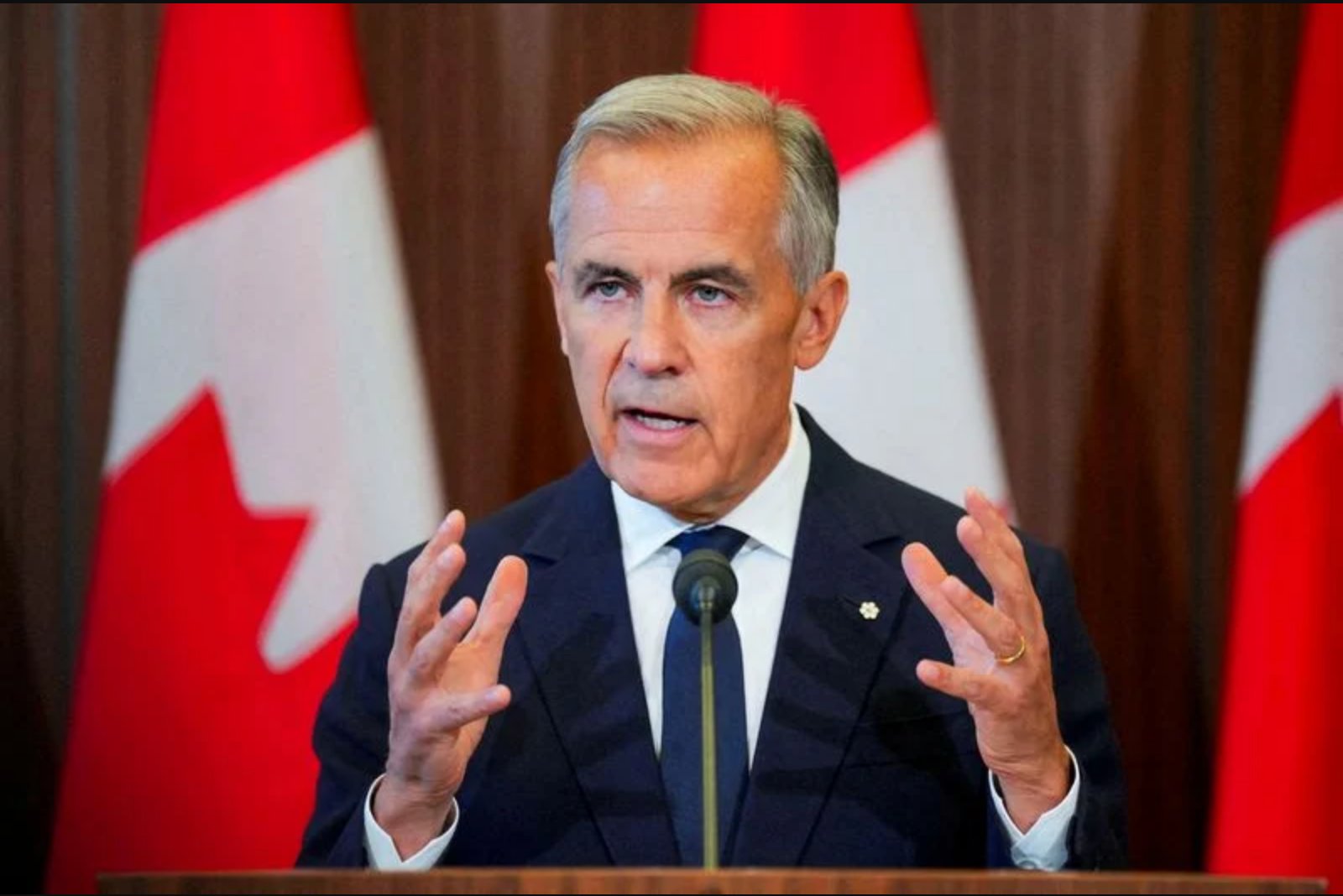
OTTAWA - Canada will only return to the negotiating table on a possible trade deal with the United States once Washington alters its approach, Prime Minister Mark Carney said in remarks to reporters on Tuesday.
Carney reiterated that Ottawa had suspended talks on Aug. 21 after concluding that the American delegation introduced last-minute demands Canada deemed unacceptable. He said there remains scope for a deal that would be mutually beneficial while respecting Canadian sovereignty, but that the tone and conduct from the U.S. side must change first.
"And when the Americans stop doing memes, stop throwing shade, stop trying to be tough and start being serious about having those discussions, we can have those discussions," Carney said, calling recent U.S. actions "not constructive."
The Canadian leader pointed to a string of public actions by U.S. President Donald Trump since the talks collapsed: proposals that Lake Ontario be renamed Lake America, statements describing Canada's leaders as "the worst" he has to deal with, repeated assertions that Canada is ripping off the U.S., and the circulation of an AI-generated meme showing Canadian geese with Trump's distinctive hairstyle marching under a U.S. flag.
Ottawa's account of why negotiations ended has been contested by U.S. officials, who have said there was a good deal on the table. Carney said Canada never believed the proposed terms were adequate, highlighting concerns about the deeply integrated automotive sector.
He characterized the U.S. negotiating posture as one that either envisioned core Canadian industries operating effectively as subsidiaries of U.S. firms or included provisions that would lead to the gradual winding down of those industries in Canada. "Of course, we're not going to accept those terms," Carney said.
This standoff leaves open the possibility of renewed negotiation, but only if the diplomatic and rhetorical environment changes and substantive terms acceptable to Canada are presented. U.S. officials' differing public interpretation of the talks' collapse suggests both sides remain at odds over what was proposed and whether an acceptable compromise was available.