
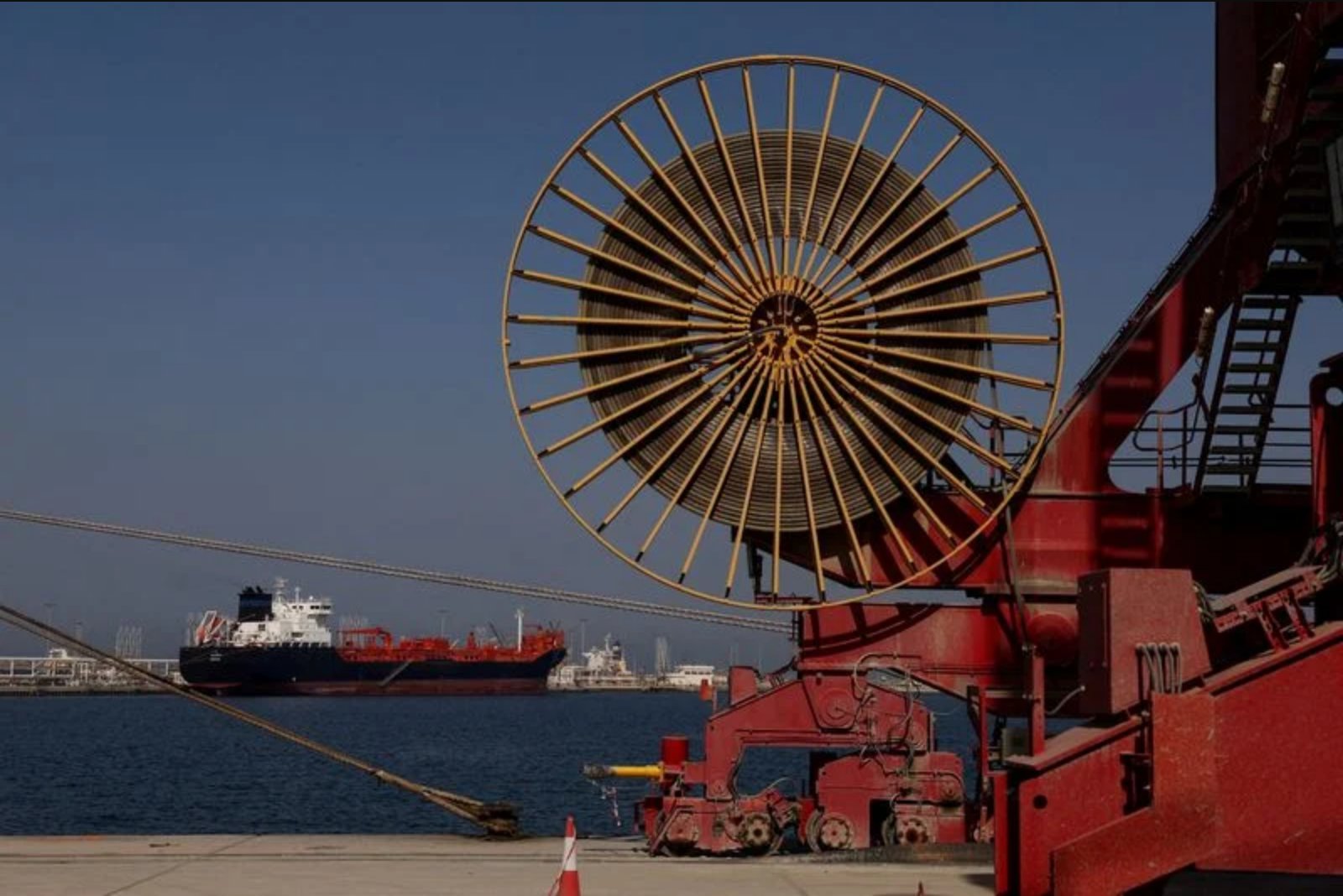
Global oil futures moved lower on Thursday as market participants priced in a greater chance that diplomatic talks may restore more normal flows through the Strait of Hormuz, a critical chokepoint for Gulf energy exports.
By 0004 GMT, Brent crude futures were down 60 cents, or 0.7%, at $87.24 a barrel, marking a fourth straight day of losses. West Texas Intermediate futures slipped 56 cents, or 0.7%, to $81.67 a barrel, registering a fifth consecutive decline.
Market sentiment shifted after a senior Iranian source said on Wednesday that Iran and Oman are working to finalize details of an agreement to govern the Strait of Hormuz. The announcement followed comments from Iran’s Revolutionary Guards that the two countries had agreed on how to share the waterway, which links major Gulf oil producers to global markets, and its revenues.
Before the U.S.-Israeli war on Iran began on February 28, the strait carried oil and natural gas shipments equal to roughly one-fifth of global consumption of those fuels. According to ship-tracking data cited by market sources, since Iran moved to shut the waterway in response, flows have fallen to about one-quarter of their pre-war level.
Daniel Hynes, senior commodity strategist at ANZ, said in a note on Thursday that “Crude oil edged lower as the prospect of the Strait of Hormuz reopening improved amid ongoing talks,” while cautioning that “concerns over shortages in the oil market persist.”
Diplomatic activity intensified this week. Qatar’s prime minister is scheduled to travel to Iran on Thursday to relaunch talks aimed at ending the conflict that is approaching six months in duration. The renewed diplomacy, coupled with a pause in U.S. attacks on Iran that has lasted about a month, has bolstered investor hopes for an easing of Gulf-related supply disruptions. U.S. officials, for their part, are reported to be seeking to impose greater economic pressure on Iran.
At the same time, the situation remains fragile. The countries involved remain far apart on key demands to halt the fighting, and Iran has carried out strikes on shipping in the Gulf and the strait as a means of asserting control over the waterway. Iranian officials have also stated that the strait would not reopen unless the United States met Tehran’s conditions under an interim ceasefire agreement that was reached in June and later unraveled.
Beyond crude oil, analysts at ANZ highlighted the combined impact of the Middle East conflict and the Russia-Ukraine war on diesel supply. Damage to refineries in the Middle East and strikes by Ukraine on several Russian refineries have reduced exports from what had been a major global diesel supplier, tightening the market.
Those supply constraints are visible in official inventory data. The U.S. Energy Information Administration reported that distillate stockpiles, which include diesel and heating oil, fell by 2.2 million barrels in the week to August 21, leaving total distillates at 103.4 million barrels. Hynes noted that this is “the lowest distillate stockpile level ever recorded for this time of year.”
Traders and market observers are balancing the possibility that the Strait of Hormuz could reopen against the ongoing structural and wartime disruptions that have already dented refinery output and inventories. For now, modest price declines reflect a shift in near-term risk perception even as the underlying supply picture in refined products remains tight.
Market context: Crude benchmarks fell modestly on improved prospects for diplomatic resolution around the Gulf, while inventory data underscored continuing strain in the diesel and distillate complex.