
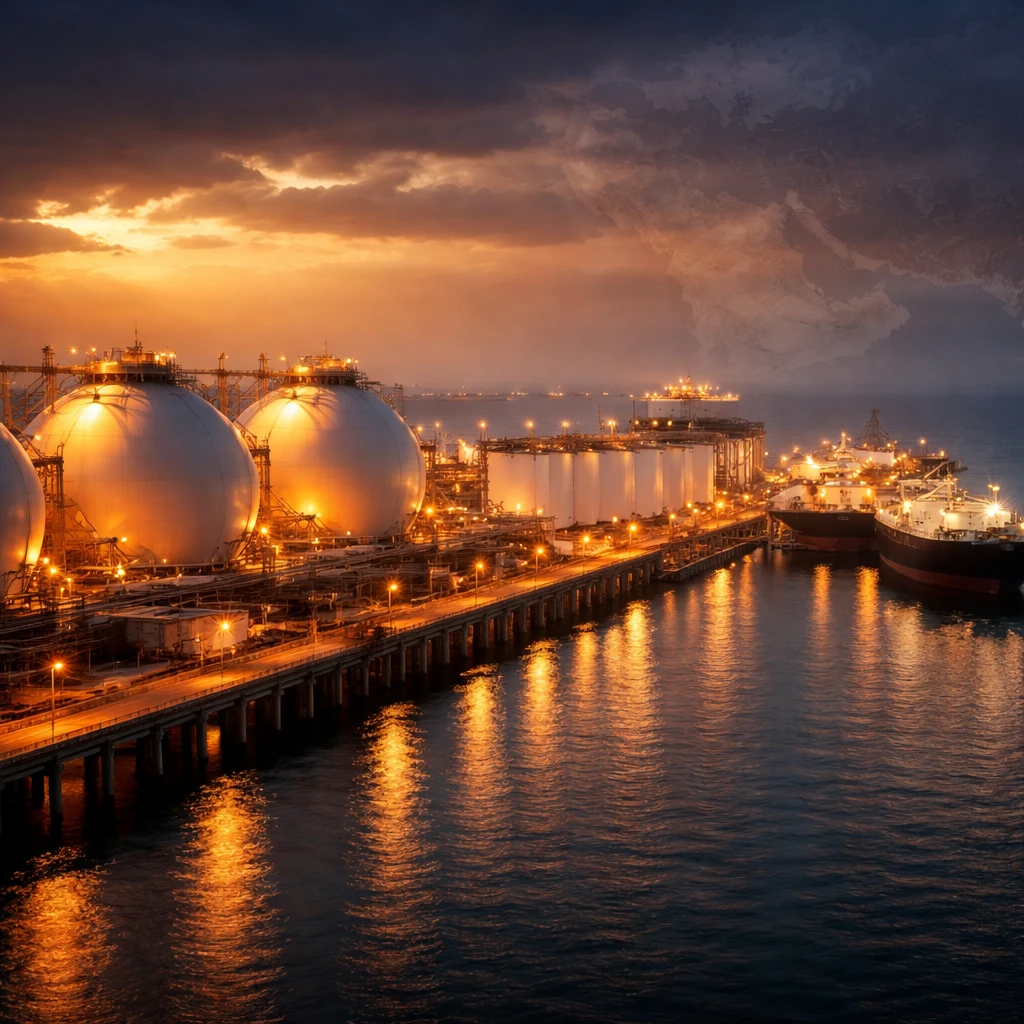
European natural gas markets remain exposed to significant upside risk in 2027 as traders and analysts factor in the possibility of renewed conflict in the Middle East and potential hits to liquefaction infrastructure, according to Citi.
Scenario pricing and estimates
Citi's analysis projects that the Dutch TTF winter 2026-27 benchmark could rise to about 85 per megawatt-hour in a scenario where regional hostilities intensify but LNG liquefaction plants escape damage. If, instead, liquefaction facilities were struck and taken out of service, the bank's estimate rises sharply to roughly 154/MWh.
Weighing the probabilities of both outcomes, Citi calculates a weighted escalation-price near 103/MWh for the winter 2026-27 contract. That sits above the roughly 95/MWh level prevailing at the time Citi completed its assessment. By contrast, in the absence of escalation Citi sees winter prices trading in a narrower 60-70/MWh range.
Market-implied probabilities and contract behavior
The bank notes that winter 2026-27, and the 2027 and 2028 calendar contracts, appear to be discounting comparable chances of an escalation event, with markets also pricing about a 25% probability that liquefaction facilities could be hit. Citi raises the question of whether the market is correctly assessing the risk of infrastructure damage, pointing to improving relations between Iran and Qatar as a factor that could influence outcomes. At the same time, the bank cautions that developments in the region remain unpredictable.
Citi flagged an especially strong rally in longer-dated European gas contracts, noting calendar 2028 TTF prices have climbed around 60% over the past three months. The bank describes this as an atypical move for far-dated contracts and observes that these levels approach those seen in 2022 following the outbreak of the Russia-Ukraine war.
The bank suggests that markets may be pricing in the risk that LNG liquefaction plants could be not only damaged but remain offline for extended periods - months or even years - and that some of the price action could reflect short-covering activity.
U.S. gas outlook and positioning
On the U.S. side, Citi sees relatively larger risk-adjusted upside in Henry Hub prices than in European TTF if extreme cold or a polar vortex were to occur. The bank notes that winter Henry Hub prices have declined sharply and that speculative managed-money positioning is among the most short since early 2020, which could amplify moves in the event of a weather-driven demand spike.
Diplomatic and political variables
Citi highlights several diplomatic and political developments that could shape the outlook, including engagement involving Qatar, Saudi Arabia and China, as well as the impact of Israeli election-related developments. The bank underscores that these factors remain important and that outcomes are uncertain.
Bottom line
Citi's work outlines clear, discrete price paths for European gas depending on whether LNG liquefaction infrastructure is affected by regional conflict. Market behaviour in longer-dated contracts, coupled with positioning in U.S. gas futures, suggests traders are actively weighing both geopolitical risk and weather-driven demand scenarios.