
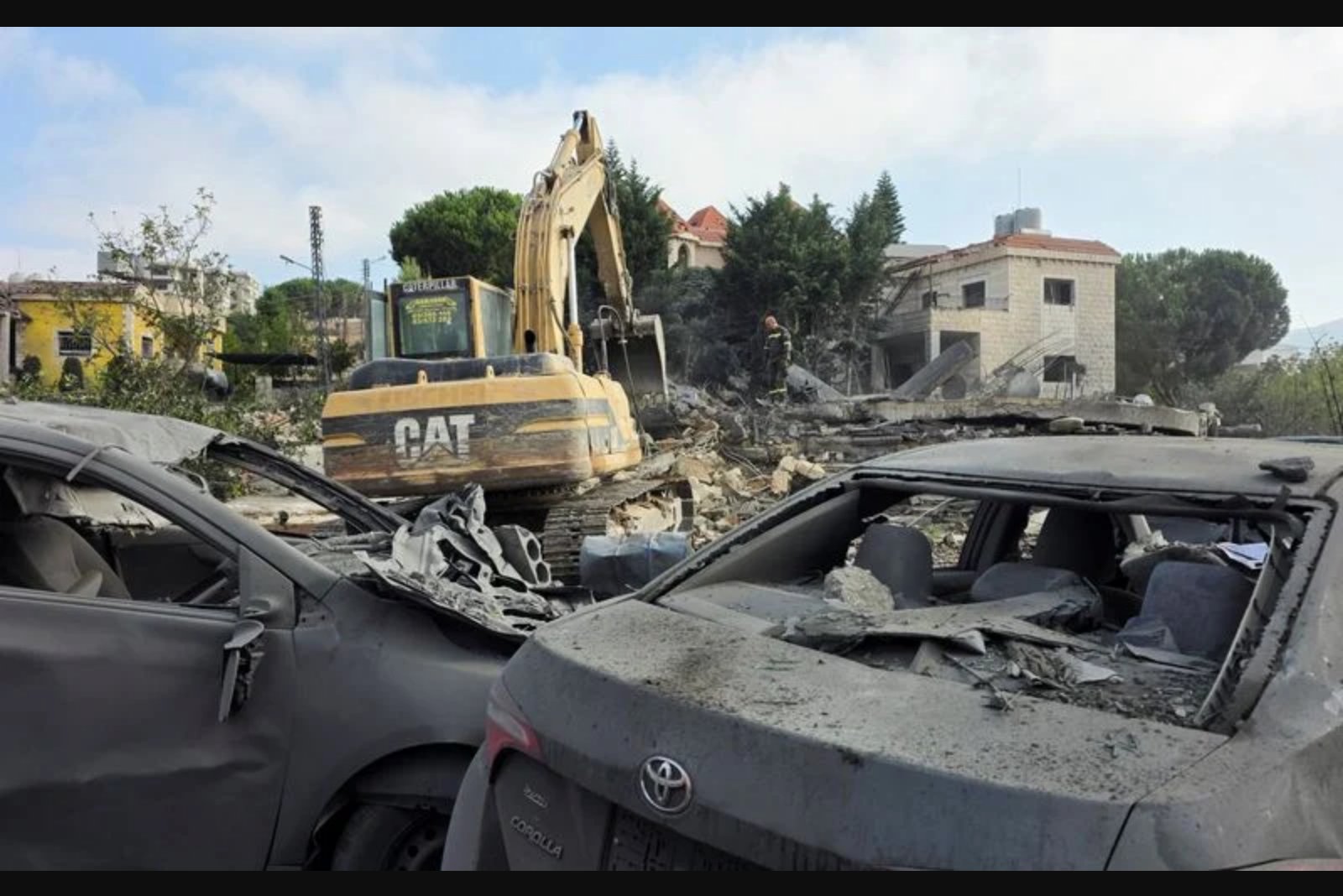
BEIRUT, Sept 7 - Israeli strikes on a town in southern Lebanon in the early hours of Monday resulted in the deaths of at least 11 people, Lebanon's state news agency reported, with casualties among civilians that included two children and two medics.
According to the National News Agency, just after midnight Israeli warplanes struck a residential building in Kfar Rumman, killing nine people, among them two children, and injuring five others. A separate strike using a drone hit a civilian vehicle in the same town, killing the two medics who were inside the car, the agency said.
The state agency also reported that at least seven people had been killed in Israeli strikes the previous day, on Sunday.
The incidents in Kfar Rumman were not preceded by an online evacuation warning from the Israeli military for those specific locations, the state agency said. The Israeli military did not immediately respond to questions regarding the strikes, including whether it was aware of medics and children at the targeted sites or why no evacuation notice was issued.
Separately, a spokesperson for the Israeli military issued an evacuation warning just after 2:00 a.m. local time (2300 GMT on Sunday) for areas around a building in another town in southern Lebanon, saying it intended to strike facilities used by Hezbollah there.
These recent strikes occur against the backdrop of heavier hostilities that followed Hezbollah's launch of rockets at Israel on March 2 - an action that came two days after the start of U.S. and Israeli strikes on Iran and that triggered a broader Israeli air and ground offensive. Since then, Israeli strikes on Lebanon have killed more than 4,300 people, the state agency reported.
The June ceasefire initially brought a marked reduction in violence, the agency said, but the situation has not returned to calm. Israeli troops continue to occupy large parts of southern Lebanon and have been reported to be razing villages within what Israel describes as a self-declared security zone. The Israeli military has carried out strikes both within that zone and to its north, the agency noted, often without issuing evacuation warnings in advance.
Context and immediate developments
The state news agency's account places the Kfar Rumman strikes and the drone attack in the context of ongoing military activity across southern Lebanon. The reported civilian fatalities and the lack of prior evacuation warnings for the Kfar Rumman locations underscore continuing concerns about civilian exposure to cross-border operations.
At this time, details remain limited to the account provided by the state agency and the Israeli military's separate statements about other evacuation warnings and intended strikes. The Israeli military's direct responses to queries about the Kfar Rumman incidents were not immediately available.