
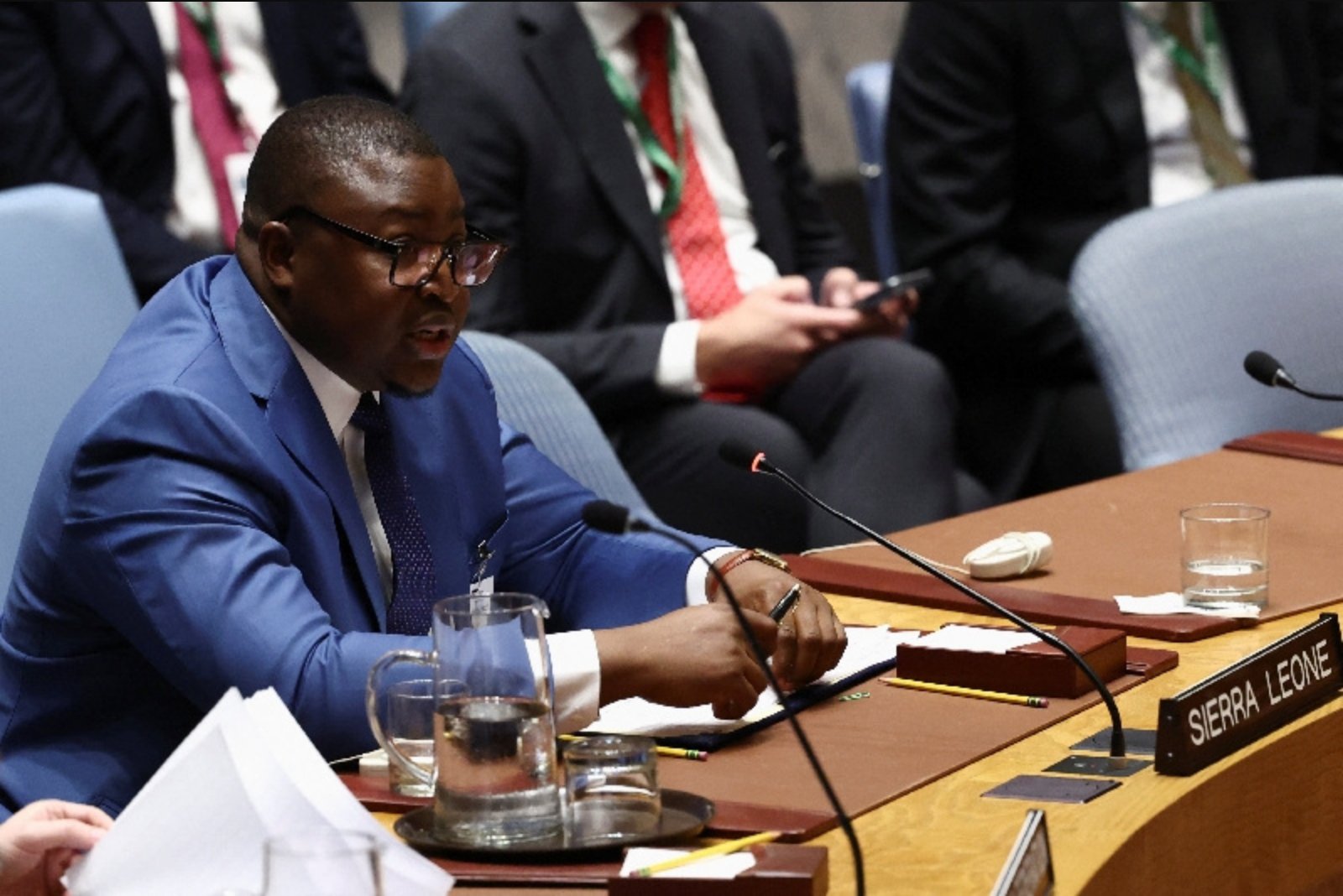
Sierra Leone has agreed to accept hundreds of West African migrants being deported from the United States, its foreign minister said, marking the latest expansion of U.S. third-country removals.
Timothy Kabba told reporters that the country signed a Third Country National Agreement with the U.S. to take in 300 citizens from ECOWAS - the West African regional bloc - each year, with a maximum of 25 people per month. He said the first flight under the arrangement will arrive on May 20 and will carry 25 nationals from Senegal, Ghana, Guinea and Nigeria.
The United States has already moved third-country deportees to several African states, including the Democratic Republic of Congo, Ghana, Cameroon, Equatorial Guinea and Eswatini. Those transfers have drawn criticism from legal experts and rights groups who question the legal basis for moving people to countries where they are not nationals and raise concerns about the treatment of those deported.
Some prior cases have shown deportees who were sent to countries on the African continent subsequently forced to return to their countries of origin, despite having obtained court-ordered protections in the United States that were intended to prevent such outcomes. The arrangement announced by Sierra Leone restricts accepted deportees to citizens of ECOWAS member states, a condition similar to the arrangement Ghana has put in place.
At this stage it is not clear whether the migrants sent to Sierra Leone will be permitted to remain there on an ongoing basis. A government spokesperson did not immediately respond to a request for comment on Saturday.
Kabba did not detail whether Sierra Leone would receive any direct material or financial consideration in exchange for taking in the deportees. He described the agreement as part of bilateral cooperation with the United States on immigration policy, saying: "It’s part of our bilateral relationship with the U.S. to assist with its immigration policy."
A February report from Democrats on the Senate Foreign Relations Committee noted that the overall cost of third-country removals was unknown, while indicating that more than $32 million had been transferred directly to five countries - Equatorial Guinea, Rwanda, El Salvador, Eswatini and Palau.
The United States and Sierra Leone have previously clashed over deportation issues. In 2017, during the first Trump administration, Washington announced that the U.S. Embassy in Freetown would deny tourist and business visas to certain Sierra Leonean foreign ministry and immigration officials after the government had refused to accept Sierra Leonean deportees. The U.S. State Department did not immediately respond to a request for comment on the new agreement with Sierra Leone. The White House and the State Department have previously maintained that the deportations are lawful.
The recent agreement brings into focus ongoing debates around third-country removals, the legal protections available to migrants who obtain U.S. court-ordered relief, and the diplomatic negotiations that underlie bilateral arrangements to handle migration flows. Questions remain about the practical implementation of the Sierra Leone agreement, including who will be eligible to stay and how transfers will be managed month to month under the 25-person cap.