
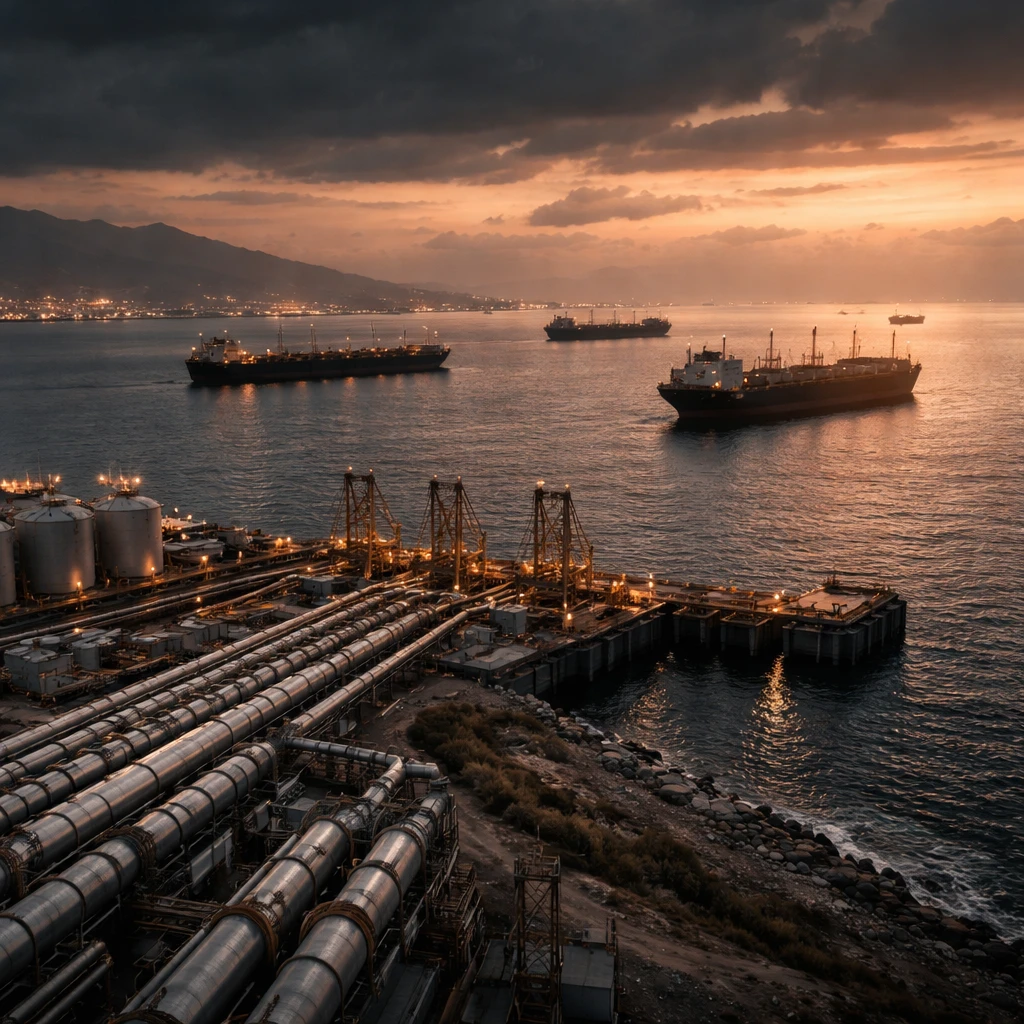
Iraq's oil exports through the Strait of Hormuz plunged to just 10 million barrels in April, a sharp drop from a historical baseline of about 93 million barrels per month before the outbreak of the Iran war.
The April export figure was disclosed at a press briefing by Iraq’s new oil minister, Basim Mohammed. The near-closure of the key shipping chokepoint amid ongoing conflict has severely restricted aggregate exports across the region, curtailing flows not only from Iraq but also from major producers such as Saudi Arabia, the United Arab Emirates and Kuwait, and contributing to higher global crude prices.
To compensate for the constrained maritime routes, Baghdad has pivoted to overland infrastructure. Iraq resumed crude deliveries through the Kirkuk-Ceyhan pipeline in March after concluding a regulatory agreement with the Kurdistan Regional Government. The move represents a deliberate effort to reroute supplies away from the embattled Strait of Hormuz.
On the operational side, Mohammed said: "We export 200,000 barrels through Ceyhan port, and we have a plan to increase it to 500,000 barrels." He also outlined intentions for Iraq to coordinate with OPEC to increase the country’s overall production and export capacity, noting that Baghdad aims to attain a steady production capacity of 5 million barrels per day.
The severe geopolitical disruptions over the weekend capped a resilient weekly showing for energy benchmarks. WisdomTree Brent Crude settled up 1.2% at $83.80 a barrel, while U.S. West Texas Intermediate crude futures rose 1.4% to $79.50 a barrel. The gains marked a rebound after earlier downward pressure from a U.S. Energy Information Administration report showing a surprise 1.8 million barrel build in domestic commercial crude stockpiles.
Analysts and traders pointed to the escalating conflict in the Middle East as the catalyst for repricing supply-risk premiums, with restricted maritime traffic along vital shipping corridors forcing energy market participants to reassess worst-case supply scenarios. Preliminary OPEC+ compliance data further supported tone in the market, indicating that members are deepening adherence to voluntary output cuts of 2.2 million barrels per day ahead of the group’s upcoming ministerial review.
Market sentiment also reflected demand-side resilience. Despite a restrictive macroeconomic environment linked to the Federal Reserve’s prolonged high-interest-rate stance, strong physical crude buying across Asian markets underpinned prices and helped offset broader growth concerns.
Summary
Iraq’s seaborne crude exports via the Strait of Hormuz fell sharply in April to 10 million barrels from an earlier baseline near 93 million barrels monthly, prompting a shift to the Kirkuk-Ceyhan pipeline and plans to expand exports through Ceyhan. The disruption contributed to gains in Brent and WTI prices as markets priced higher supply-risk premiums amid the regional conflict and observed stronger OPEC+ compliance with voluntary cuts.
Key points
- Iraq’s Strait of Hormuz exports declined to 10 million barrels in April from around 93 million barrels per month before the Iran war - impacting regional seaborne flows.
- Baghdad reopened and is increasing flow through the Kirkuk-Ceyhan pipeline, currently exporting 200,000 barrels through Ceyhan port with a plan to raise that to 500,000 barrels.
- Global benchmarks rose - Brent settled at $83.80 a barrel (up 1.2%) and WTI at $79.50 a barrel (up 1.4%) - supported by supply concerns and preliminary OPEC+ compliance with voluntary cuts totaling 2.2 million barrels per day. Sectors affected include energy producers, shipping and commodities markets.
Risks and uncertainties
- Ongoing closure or severe restriction of the Strait of Hormuz - this maritime bottleneck is directly constraining exports from major regional producers and elevating supply risk for global oil markets, affecting shipping firms and import-dependent refiners.
- Inventory surprises and demand signals - the EIA’s unexpected 1.8 million barrel build in U.S. commercial crude stocks introduces uncertainty for price direction and for physical oil buyers and traders.
- Macro headwinds from high interest rates - the Federal Reserve’s sustained high-rate environment creates a restrictive backdrop that could weigh on broader economic growth and oil demand, introducing uncertainty for energy-sector investment and refining margins.
Outlook
Baghdad’s plan to engage with OPEC to raise output and the strategy to expand overland exports through Ceyhan are intended to shore up Iraq’s production and export capacity toward an eventual steady-state objective of 5 million barrels per day. Meanwhile, market participants continue to weigh supply disruptions, OPEC+ compliance and regional demand patterns as they reassess risk premia in crude pricing.