
Lead
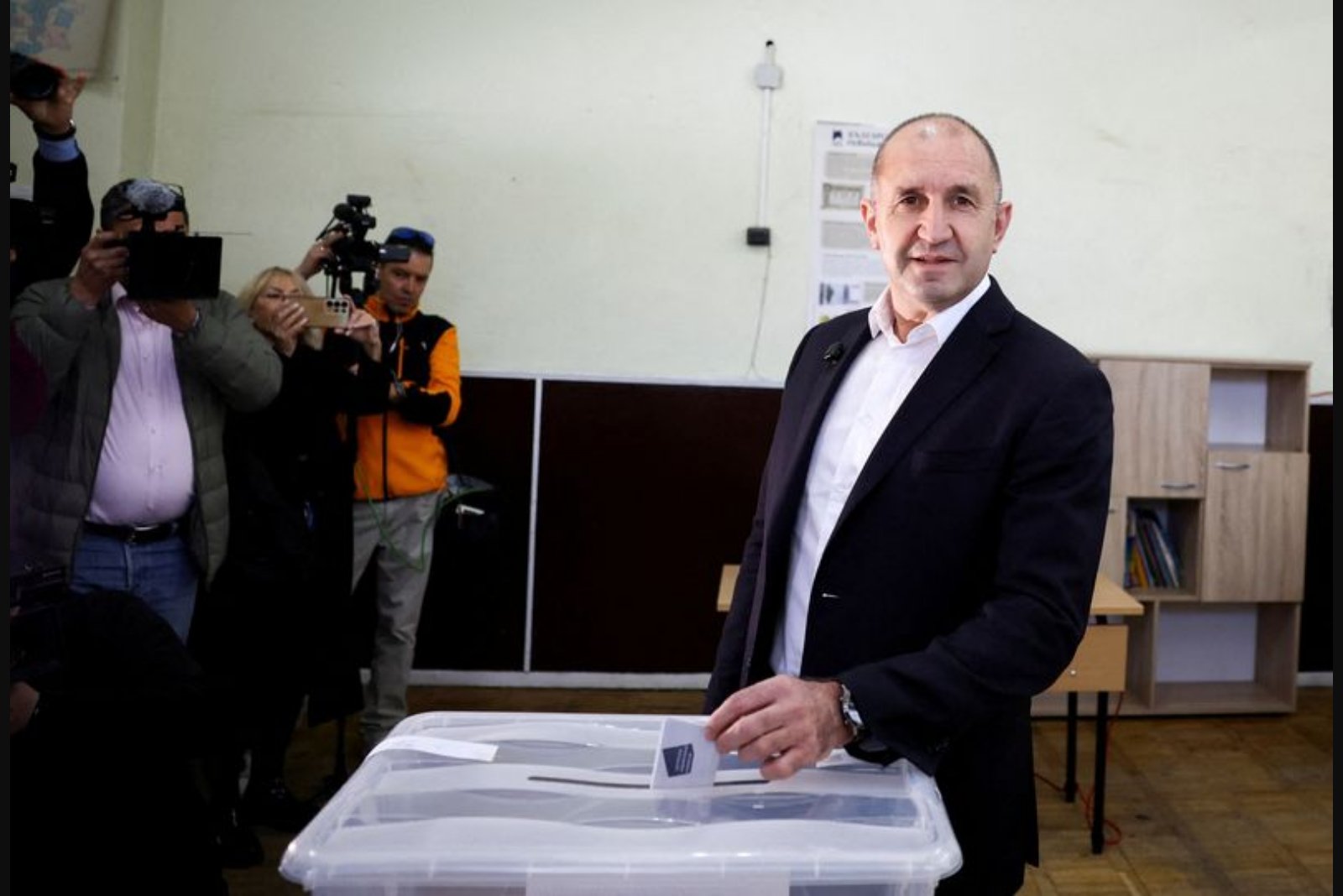
When Rumen Radev gave up his presidential office in January to contest parliamentary elections, he urged citizens to reject what he called "corrupt officials, conspirators and extremists" who he said were running Bulgaria. Voters responded decisively, delivering the former fighter pilot the largest vote haul seen in a generation and paving the way for him to head the country’s first single-party government in nearly three decades.
Election result and immediate context
The scale of Radev’s victory marks a significant moment for a nation that has endured eight national votes in five years. Supporters and analysts view the outcome as a potential route back to political stability after repeated coalition breakdowns and short-lived administrations. Radev described the result as a "victory of hope over distrust, a victory of freedom over fear".
His success came after a long period during which he served as Bulgaria’s largely ceremonial head of state for nine years. The political turbulence that began in 2020 allowed him to occupy a role above parliamentary squabbles - appointing caretaker governments when necessary - and to accumulate political capital while established parliamentary parties struggled to form durable coalitions.
Campaign positioning and public mood
During the campaign, Radev articulated positions that critics and observers identified as aligned with pro-Kremlin talking points. He opposed military aid for Ukraine and publicly criticized Bulgaria’s adoption of the euro in January. He timed his move into active parliamentary politics as public frustration with long-dominant parties reached a high point.
Nationwide protests culminating in December had already forced out the last short-lived government and reinforced a widespread appetite for reform. Parties that had long dominated the political scene saw substantial losses in the poll. These include the pro-European GERB party of former Prime Minister Boyko Borissov and the Movement for Rights and Freedoms, associated with businessman Delyan Peevski, who is under U.S. and UK sanctions for corruption.
Atanas Rusev, director of the security program at the Centre for the Study of Democracy in Sofia, summarized the forces behind Radev’s ascent: "The main factors driving Radev’s victory (were) deep frustration over years of futile anti-corruption efforts, concern over rising prices... and a potent mix of pro-Russian sentiment. Radev played astutely on all these anxieties."
How past presidential terms shaped perceptions
Radev first assumed the presidency in January 2017 following a career in the military and training in the United States. Early in his first term he emerged as a critic of Prime Minister Borissov, who was facing allegations of corruption. A raid on Radev’s offices by prosecutors in 2020 was widely perceived as politically motivated and sparked the largest demonstrations since Bulgaria joined the European Union in 2007. Those protests foreshadowed the end of Borissov’s government. Radev was re-elected to a second presidential term in 2021.
The subsequent period saw persistent instability in parliament, with successive fragile coalitions falling apart. Protests reignited last year in response to a budget proposal that included higher taxes. When that government collapsed, Radev announced he would step down as president to run for parliament.
Observers noted that his campaign style was often described as vague and lacking charisma; campaign posters showing him in a white shirt and maroon tie were singled out by critics. Nevertheless, Radev leveraged visual imagery of strength, including videos circulated on social media of him flying fighter jets, to bolster his public profile.
Domestic and international questions ahead
With the election behind him, attention is shifting to what a Radev-led government will mean both domestically and for Bulgaria’s international relationships. Voters, analysts and foreign diplomats are watching closely for signs of how pro-Russian his administration will be. At a final campaign rally he displayed images on a large screen of himself alongside various world leaders, including President Vladimir Putin.
Elements of his platform drew comparisons with Hungary’s former prime minister when he discussed restoring the free flow of Russian oil and gas into Europe. Those comments prompted concern among some citizens. "I’m very anxious because if he’s so pro-Russian, this might be very problematic," said Tsvetan Hristov, 36, who works in IT.
Yet, as of the election outcome, there have been no clear signs that Radev intends to veto aid to Ukraine or to move to withdraw Bulgaria from the euro. Analysts also express skepticism that he would take actions that would imperil substantial EU funds that are important to the country.
Structural challenges at home
Radev’s larger, immediate challenge will be domestic. Bulgaria is among the EU members cited for persistent problems with corruption and weak public-sector governance. Prosecutors allege that hundreds of millions of euros in European funds have been diverted to businesspeople and officials, that public tenders have been rigged, and that election fraud is common.
Maria Simeonova, head of the Sofia office at the European Council on Foreign Relations, noted that following a landslide victory at home, Radev is likely to seek external legitimacy by cultivating relationships with other European leaders.
Outlook
Radev’s electoral triumph consolidates a rare concentration of power in Bulgaria’s post-communist history and raises immediate questions about how he will navigate competing demands: responding to domestic calls for reform and accountability while managing a cautious posture toward international partners and existing EU obligations. How he addresses issues such as EU funds integrity, energy policy tied to Russian supplies, and defense commitments will shape both the economy and Bulgaria’s standing in Europe.