
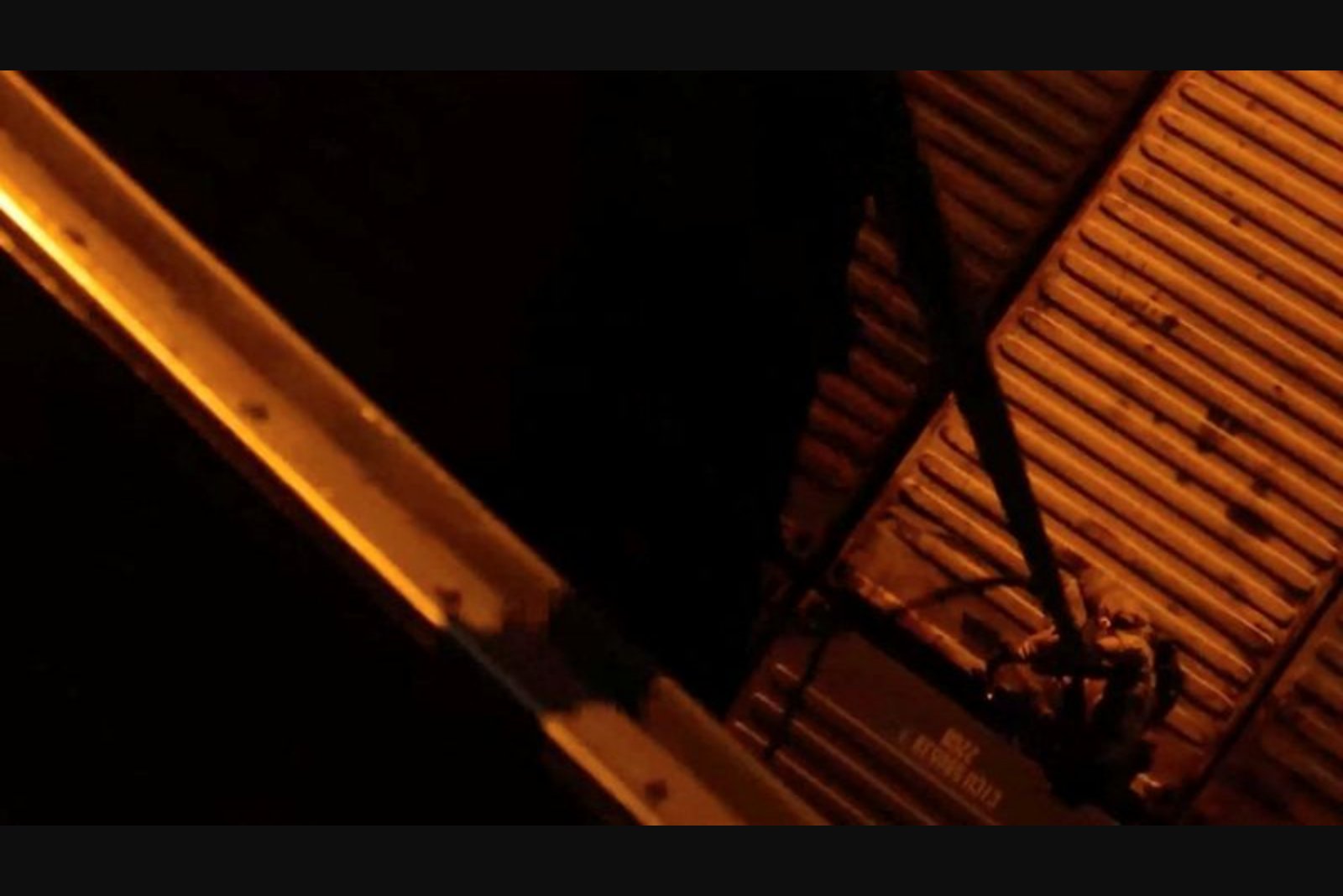
The medium-sized Iranian-flagged container ship Touska was boarded and taken into custody by U.S. forces on Sunday after the vessel was intercepted off the coast of Chabahar in the Gulf of Oman, U.S. military statements and maritime tracking data indicate.
U.S. Central Command said the crew failed to comply with repeated warnings over a six-hour period and that the vessel was in breach of a U.S. blockade. Ship-tracking records on the Marine Traffic platform show the Touska last reported its position at 1308 GMT on the day of the interception.
Maritime security sources who spoke on Monday said their initial assessment was that the ship was likely transporting items Washington regards as dual-use - goods that can have both civilian and military applications. Those sources, who declined to be identified, said the Touska had carried such items on earlier voyages, but they did not provide detailed descriptions of the current cargo.
Separately, U.S. Central Command has listed categories of goods that could be considered to have both industrial and military utility, including metals, pipes and electronic components, and has indicated these could be subject to seizure under the terms the U.S. has applied.
Voyage history and container loading
Satellite analysis conducted by data analytics specialists SynMax tracked the Touska’s movements prior to the interception. The vessel was observed alongside at China’s Taicang port, north of Shanghai, on March 25, and then at China’s southern Gaolan port on March 29-30. SynMax reported the ship loaded containers in Gaolan before calling at the Port Klang anchorage in Malaysia on April 11-12, where it loaded additional containers.
According to the same analysis, the ship was carrying containers when it entered the Gulf of Oman and was boarded by U.S. forces on Sunday.
Responses from Tehran and Beijing
Iran’s military, as reported by state media on Monday, said the Touska had been travelling from China and accused U.S. forces of "armed piracy." The military said it was prepared to confront U.S. forces over what it called a "blatant aggression," but added its response was constrained by the presence of crew members’ families on board.
Iran’s foreign ministry did not immediately reply to requests for comment.
China’s foreign ministry expressed concern about what it described as a "forced interception" of the Iranian-flagged ship and urged relevant parties to act in line with the ceasefire agreement in a responsible manner.
Sanctions backdrop and crew composition
The Touska is part of the Islamic Republic of Iran Shipping Lines (IRISL) group, which Washington sanctioned in late 2019. U.S. authorities described IRISL at that time as "the preferred shipping line for Iranian proliferators and procurement agents," a characterization that said the company was used to move items intended for Iran’s ballistic missile program.
One of the sources familiar with the detained vessel said the Touska’s crew includes an Iranian captain and Iranian crew members, although it was not possible to confirm whether every crewmember was an Iranian national. Other sources noted that IRISL ships are under the control of the Revolutionary Guards and that crews typically include mainly Iranians and sometimes Pakistani seafarers.
U.S. policy on maritime interdiction
The interception comes after the U.S. military expanded its shipping blockade around Iran to include cargoes the U.S. deems contraband. In a navy advisory issued on Thursday, the U.S. said any vessels suspected of attempting to reach Iranian territory could be subject to the belligerent right to visit and search. The guidance lists contraband as including weapons and ammunition.
U.S. President Donald Trump posted on the Truth Social platform on Sunday that the Touska was subject to U.S. sanctions because of its "prior history of illegal activity," and added that U.S. forces were "seeing what’s on board."
What is known and what remains unclear
Public statements and the assessments shared by unnamed maritime security sources indicate a U.S. expectation that the ship carried dual-use goods following a voyage from Asia. The specific contents of the seized containers have not been detailed by the sources, U.S. Central Command, or by Iranian officials responding to the seizure.
As events unfold, the verified inventory of the ship’s cargo and any subsequent legal or diplomatic actions have not been publicly disclosed beyond the statements noted above.