
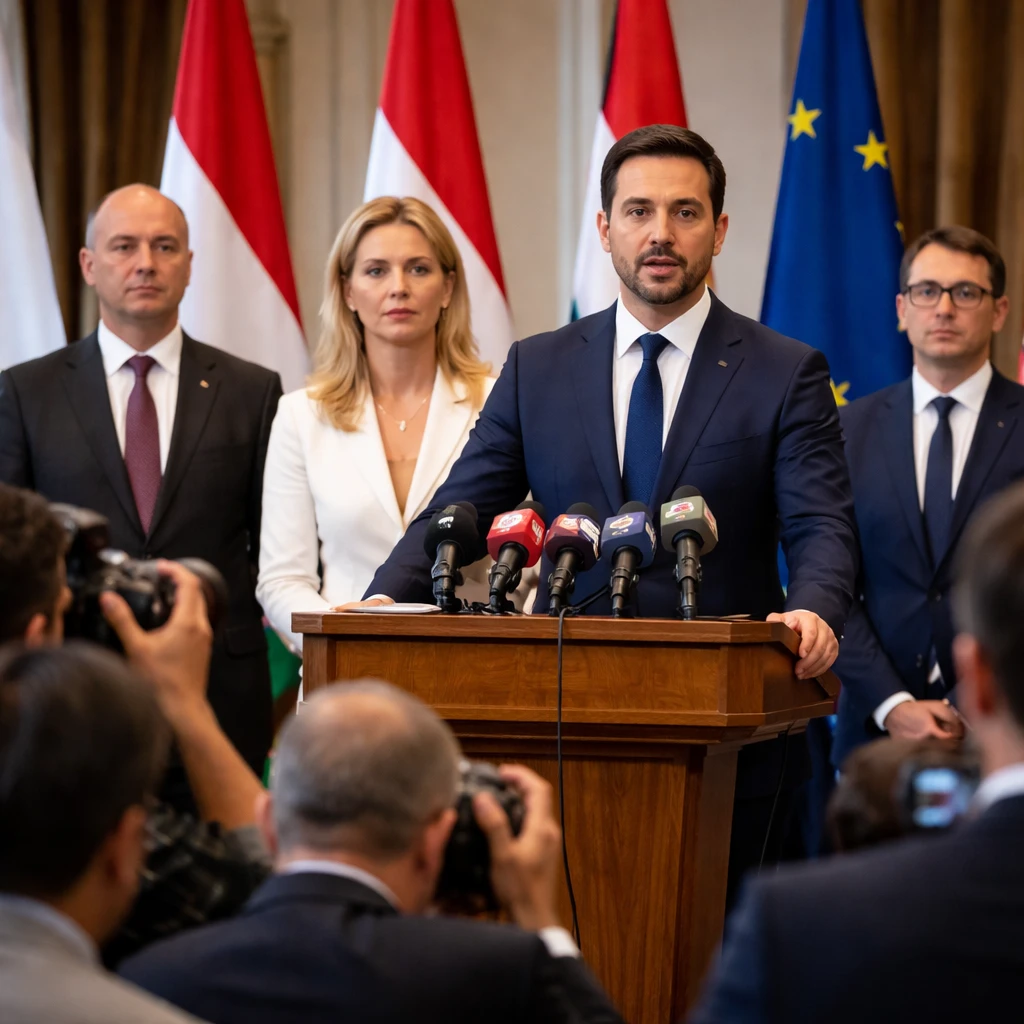
Peter Magyar, the incoming prime minister of Hungary, revealed seven of the 16 ministers who will serve in his new administration at a press briefing on Monday, announcing Anita Orban as foreign minister among the initial appointments.
Magyar's Tisza party displaced Viktor Orban earlier this month. The 45-year-old leader has publicly committed to measures aimed at reducing corruption and reestablishing Hungary's relationship with the European Union.
Anita Orban, tapped to lead the foreign ministry, is described as an energy specialist and a former Vodafone executive. The announcement noted that she separated from the ruling Fidesz party after it came to power in 2010, in part because of objections to the government's reliance on Russian energy imports. The new foreign minister is not related to the outgoing prime minister.
Speaking after a meeting with lawmakers who will form his parliamentary group, Magyar set out the guiding principle for his incoming team. "We are trying to put together a government that deserves the confidence Hungarians have placed in it, that reflects the enormous mandate it has been given," he said.
Magyar's Tisza party secured more than two-thirds of parliamentary seats in the April 12 election, a margin that gives him the power to pursue constitutional changes. Those changes, he has indicated, will be used to reverse elements of his predecessor's 16-year consolidation of authority.
At Monday's press conference, Magyar issued a firm ultimatum to officials installed across the state by the previous government. He ordered those appointees to resign by May 31 or face removal through constitutional amendment. He singled out President Tamas Sulyok, the heads of the two highest courts and the chief prosecutor as targets of that warning.
"If their residual good name matters to them at all I urge them to step down well before May 31," Magyar told reporters, directing the remark at those senior officeholders.
This initial cabinet announcement marks the start of a transition that the incoming government says will reorient Hungary's governance and foreign policy. The appointments include a prominent energy figure in the foreign ministry, reflecting the administration's stated emphasis on distancing the country from a prior energy strategy tied to Russian imports.
Further ministerial names are expected as Magyar completes the full 16-member cabinet that will carry out the mandate won at the April 12 vote.