
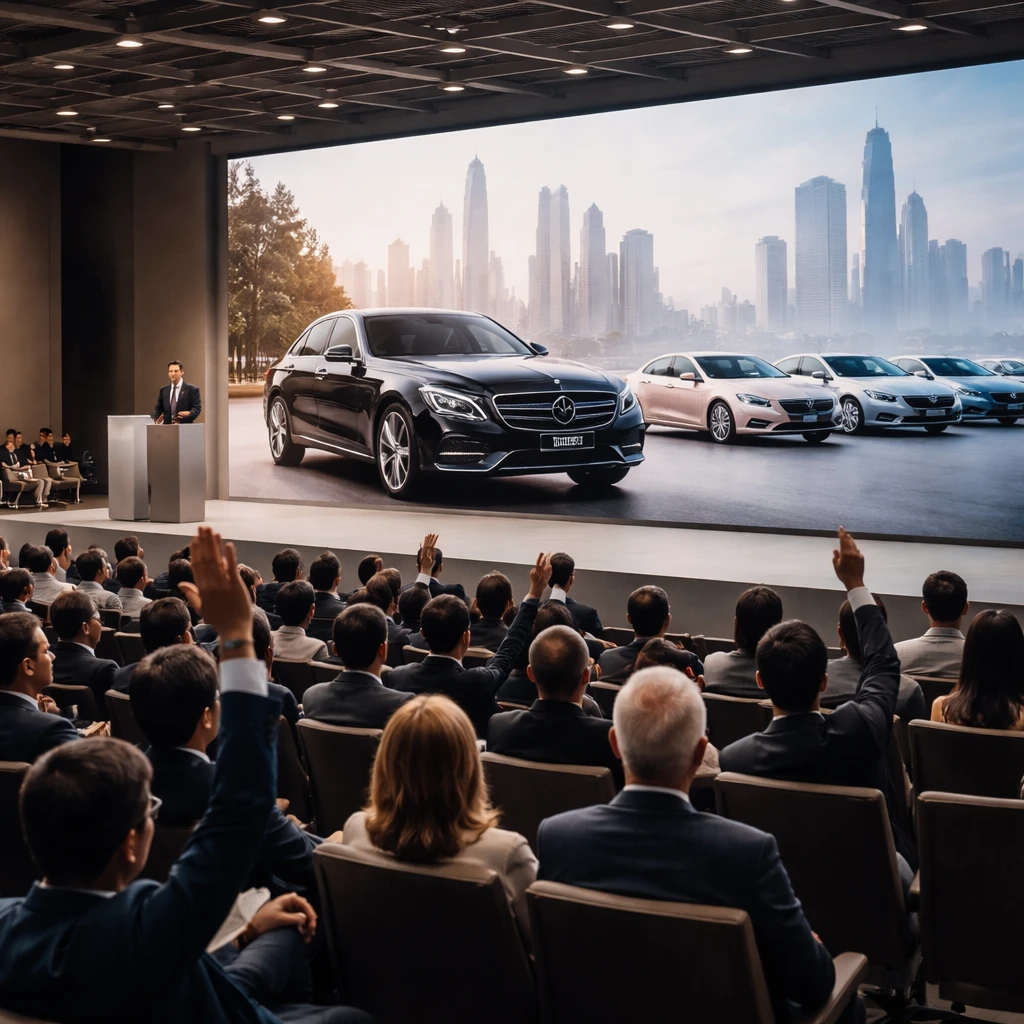
Mercedes-Benz came under pressure from significant investors at its annual shareholders meeting on Thursday as concerns mounted over the company's strategy in China, the world's largest car market. Shareholders warned that an emphasis on high-end luxury models may leave the German automaker exposed as local premium entrants gain momentum.
Investors told management that Mercedes, along with fellow German brands BMW and Audi, has lost market share in China. According to those speaking at the meeting, domestic manufacturers such as BYD, NIO and Li Auto are attracting buyers with premium vehicles that emphasize technology and are priced below many incumbent luxury models.
Shareholder objections
Moritz Kronenberger of Union Investment, identified as a top-20 Mercedes shareholder with roughly $276 million in stock, questioned whether Mercedes is moving quickly enough to meet Chinese consumers' demand for advanced features. "Customers in China today buy innovation, not tradition. Anyone who isn’t a technological leader there becomes a status symbol of a bygone era," he said, criticizing the company's product development sequence that prioritizes the S-Class range before rolling technologies and variants into broader segments.
Tanja Bauer of Deka Investment, which holds about $191 million of Mercedes shares, echoed concerns about the company's narrow emphasis on luxury during her remarks at the meeting, saying that strategy presents a meaningful risk to the brand's competitiveness in China.
Company response and planned moves
In response to the competitive challenge, Mercedes outlined plans to refresh its Chinese portfolio, announcing intentions to introduce seven new models in the market by 2027. The company also said it will deploy advanced driving assistance systems in China developed in partnership with Chinese technology firm Momenta.
The measures described by management represent a targeted effort to address criticism about technological relevance, though investors at the meeting pressed for faster and broader action to align product and technology rollouts with the preferences of Chinese buyers.
Market implications
Shareholder debate at the meeting underscores pressure on established premium automakers to adjust product-development priorities and market strategies where local competitors are winning share on a combination of price and technology appeal. The exchange also highlights active investor engagement on strategy and execution as manufacturers navigate evolving demand in the world's largest auto market.