
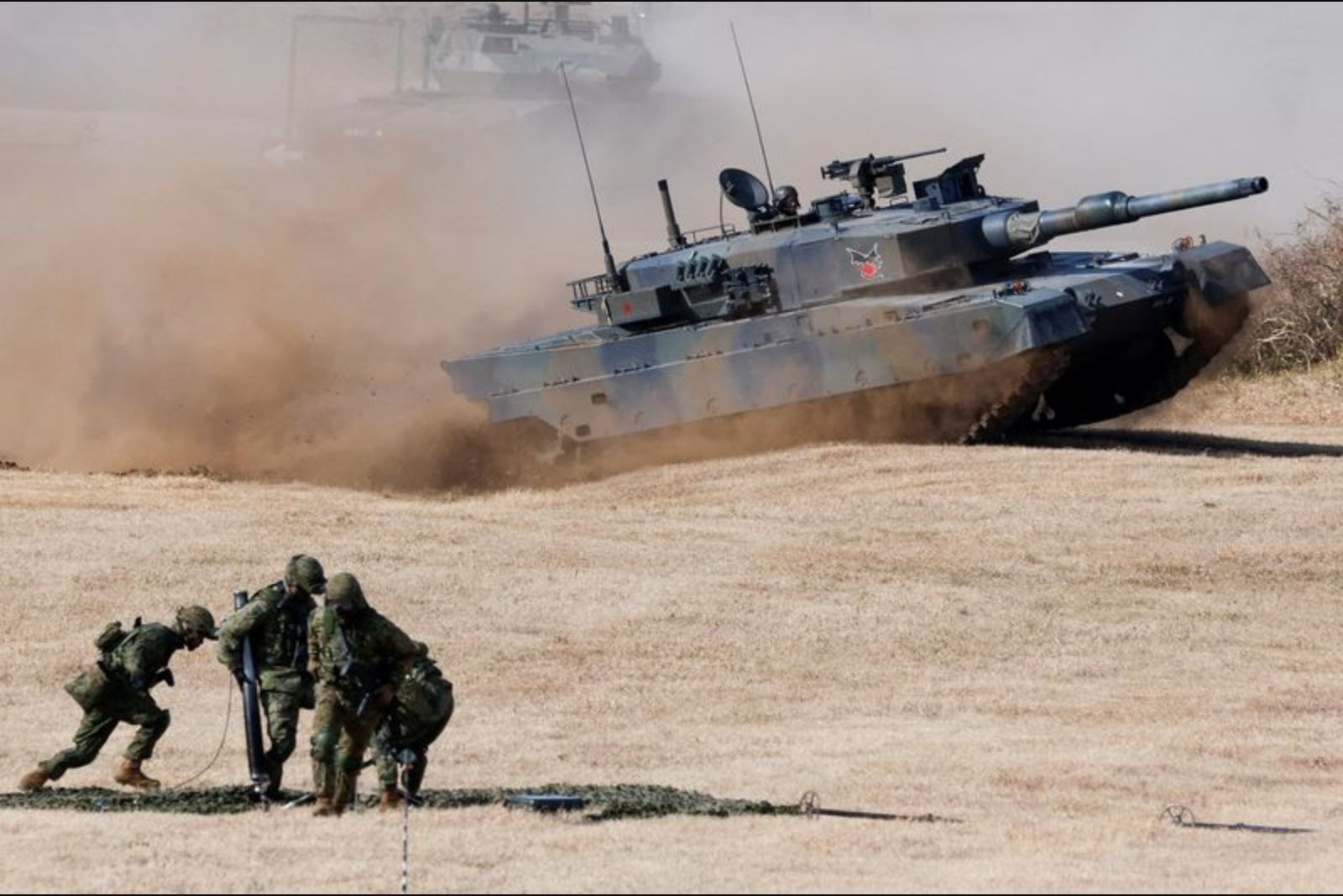
Japan on Tuesday announced a sweeping revision of its defence export policy, eliminating prior categorical limits on overseas arms sales and paving the way for exports that could include warships, missiles and other weaponry. The policy shift is designed to reinforce the country’s defence industrial base and represents a further move away from the postwar, pacifist constraints that have largely governed Tokyo’s security posture.
Officials presented the overhaul as part of a broader strategy to deepen defence cooperation with other countries in Asia in response to what Tokyo describes as China’s growing regional influence. The government also cited strains on global weapons production caused by wars in Ukraine and the Middle East, which have created additional opportunities for Japan to supply allied nations.
Another factor highlighted by Japanese authorities is a trend among U.S. allies in Europe and Asia to diversify sources of military equipment, a shift the government said is occurring as Washington’s long-standing security commitments appear less certain under President Donald Trump.
"No single country can now protect its own peace and security alone, and partner countries that support each other in terms of defence equipment are necessary," Prime Minister Sanae Takaichi wrote in a post on X.
The move drew immediate reaction abroad. The Philippines, among other nations, welcomed the change, while China voiced strong objection. "China is deeply concerned about this," foreign ministry spokesperson Guo Jiakun said at a daily press briefing, adding that Beijing "will remain highly vigilant and resolutely resist any reckless actions by Japan towards a new form of militarism." Relations between Tokyo and Beijing have been tense since Takaichi said in November that a Chinese attack on Taiwan that threatened Japan’s survival could trigger a Japanese military response.
How the rules change
The revision removes five specific export categories that previously constrained most military exports to items for rescue, transport, warning, surveillance and mine-sweeping. Under the new framework, proposed sales will be evaluated on a case-by-case basis by ministers and officials rather than being automatically blocked by category.
Tokyo will retain three guiding export principles: a commitment to strict screening, controls on transfers to third countries, and a ban on sales to nations that are involved in active conflicts. However, government documents accompanying the announcement note that exceptions may be permitted in circumstances deemed necessary for national security.
Japanese officials and foreign diplomats told Reuters that countries ranging from Poland to the Philippines are assessing procurement prospects as they modernise their armed forces. Two sources said one of the earliest potential transactions could be the transfer of used Japanese warships to the Philippines.
Philippine Defence Secretary Gilberto Teodoro praised the rule change, saying it would give Manila access to defence "articles of the highest quality" that would "strengthen domestic resilience" and "contribute to regional stability through deterrence." Military planners note the Philippines and Japan’s southwestern island chain are part of the First Island Chain, a geographic series of islands that constrains China’s seaward access from its coastal waters to the wider Western Pacific.
Tokyo and Manila have already expanded practical military cooperation: they signed an agreement in September to make it easier for their forces to operate on each other’s territory and in January relaxed rules for exchanging military supplies.
U.S. Ambassador to Japan George Glass described the export-rule revision on X as a "historic step" to fortify collective defence. Germany’s envoy to Tokyo, Petra Sigmund, said the change opened prospects for deeper cooperation "with the aim of enhancing global stability."
Domestic industrial and capability implications
Japanese policymakers say that allowing defence exports can strengthen the domestic industrial base by increasing production volumes, driving down unit costs and building additional manufacturing capacity that could be mobilised during a crisis. Firms such as Mitsubishi Heavy Industries possess the technical capability to produce advanced systems including submarines, fighter aircraft and missiles, but historically have depended on relatively small orders from a single customer - Japan’s Self-Defense Forces.
Tokyo is simultaneously pursuing an unprecedented expansion of its own military capabilities, purchasing missiles, stealth aircraft and drones that government officials say are necessary to deter potential threats, particularly in the seas and islands near Taiwan. Beijing, for its part, has maintained that its intentions in East Asia and beyond are peaceful.
Japan is also collaborating with Britain and Italy on a next-generation fighter jet targeted for deployment in the mid-2030s, a partnership intended to share development costs and provide access to new technologies. The country has raised defence spending in recent years to 2% of GDP, and the Takaichi administration is expected to unveil further increases this year when it releases an updated security strategy.
Outlook
By shifting to a case-by-case approval system while retaining core export principles, Tokyo has broadened the scope for military sales to international partners while signalling continued restraint in specified areas. The policy change is likely to affect defence suppliers, shipbuilders and the aerospace sector, and it will shape procurement options for partner countries considering diversification of their military suppliers.