
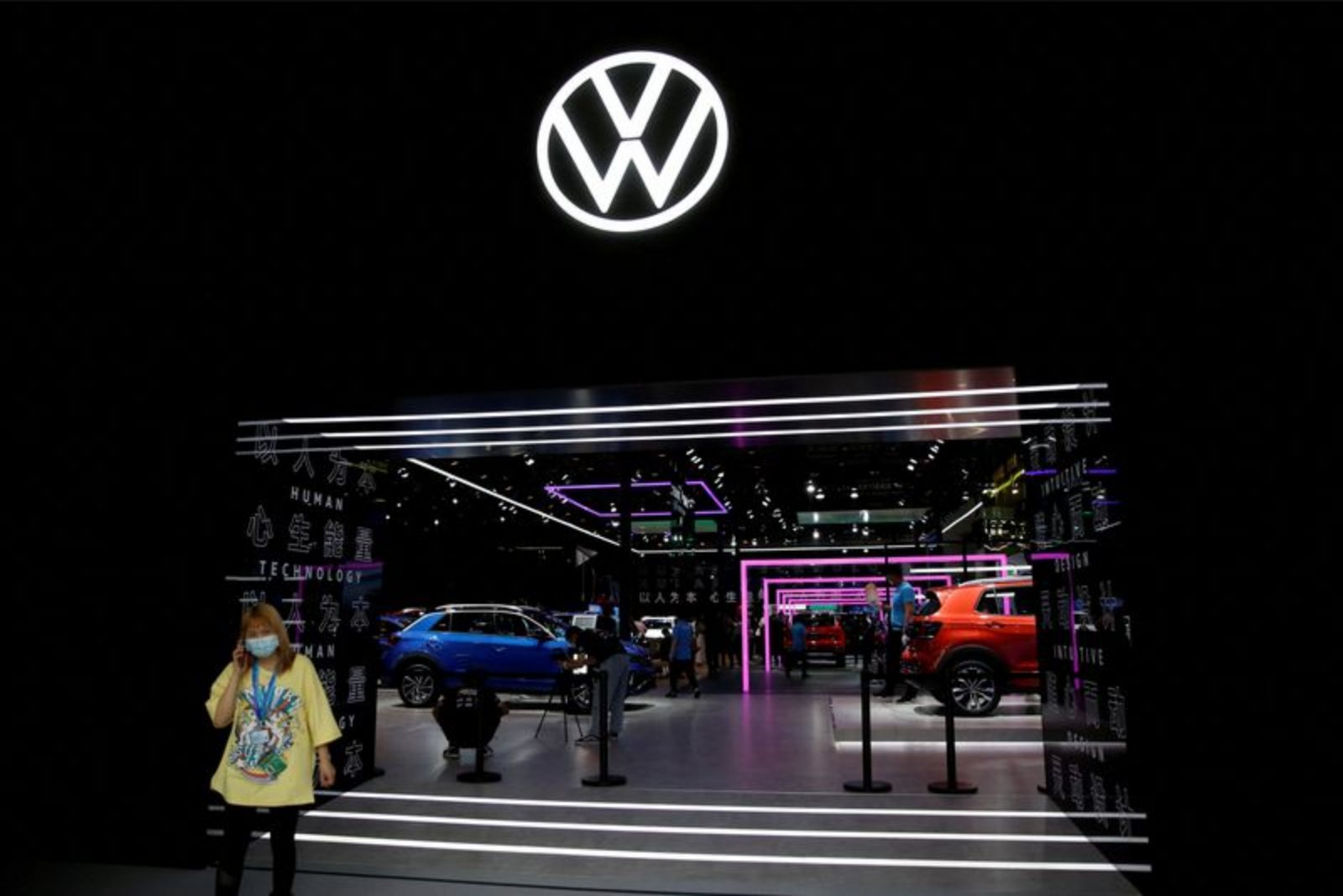
More than four decades after Volkswagen first drew huge crowds at a Chinese auto exhibition, the German carmaker and its compatriots have seen their cachet erode among Chinese consumers - particularly younger, tech-oriented buyers. Once synonymous with engineering and combustion-engine pedigree, the label "Made in Germany" has lost some of its persuasive power in the world’s largest car market, where local manufacturers are rolling out flashy, affordable electric vehicles that many buyers view as extensions of their smartphones.
"Maybe some younger customers perceive us as the brand for the parents," Robert Cisek, CEO of the Volkswagen brand in China, said in remarks to Reuters. That perception reflects a broader decline in the standing of German marques in China: sales at Volkswagen and its Porsche and Audi units, along with rival premium brands BMW and Mercedes-Benz, have contracted, leaving these groups racing to stop the slide in a market that once supplied roughly a third of their global volumes.
From market leader to challenger
After operating for 25 years as China’s top-selling carmaker, Volkswagen was surpassed by EV leader BYD in 2024 and pushed down to third place by Geely in 2025. The speed of this transformation has been stunning to executives and analysts alike. "The transformation of China’s auto market for these companies - from growth driver to battleground - has been beyond imagination," Cisek said.
When Volkswagen first appeared at a Chinese auto show in Shanghai in 1985, the reaction underlined the novelty of Western cars in the market. Then-CEO Carl Hahn recalled in his memoirs that attendees were transfixed by the sheer quality of the automaker’s printed materials. "We were met by an unimaginably huge crowd and our brochures flew off the shelves," Hahn wrote. "For people at that time, it was enough simply to marvel at the quality of the paper and print and to dream about owning a car."
Today, that kind of impression-building paper is not sufficient. Market dynamics have shifted sharply: more than one in four new vehicles sold in China is now fully electric. As Chinese brands introduced a wide range of consumer-focused EVs, Germany’s legacy producers lost ground. Across the German groups, sales in China fell by 25% over a five-year span, reaching 3.9 million vehicles in 2025, according to S&P Global Mobility data.
Premium segment pressure and strategic response
The competitive pressure has mounted this year as domestic brands begin to encroach on the premium segment that traditionally favored German automakers. Analysts note these local competitors are increasingly targeting wealthier buyers who once turned to German cars for perceived quality and prestige.
Executives in Wolfsburg, Stuttgart and Munich failed to anticipate how rapidly Chinese companies would progress in electric vehicle technology and market traction. "They didn’t see this big change coming, and they didn’t see the speed at which it came," automotive consultant Felipe Munoz said.
Faced with that reality, Germany’s major automakers are retooling their China strategies. Volkswagen Group, under CEO Oliver Blume, is planning 20 "new energy vehicle" launches in China this year - a lineup spanning pure battery-electric models, plug-in hybrids, and EVs that use small combustion engines as range extenders. Ahead of the Beijing Auto Show, Volkswagen scheduled the debut of four new EVs on Tuesday, including mass-market models developed with Chinese partners FAW and Xpeng, as well as a China-only AUDI developed jointly with SAIC. The AUDI model features a branding change in China, replacing the marque’s long-used rings with an all-caps nameplate.
The weight of legacy
Industry observers attribute part of the problem to the heritage that once gave German brands their advantage. Yale Zhang, managing director at Shanghai-based Automotive Foresight, said the legacy reputation now acts as a handicap in an environment that prizes agility and rapid technological iteration. "You can’t really rely on your chrome metal strips, your Napa leather seats and your ’one-hundred-year’ history to convince the consumers," Zhang said.
At times, German automakers have hesitated to adopt technology from emerging Chinese firms. That stance is changing as companies like Volkswagen, Mercedes and BMW increasingly partner with local suppliers to close capability gaps. Among the Chinese technology firms cited as partners are Momenta, a developer in autonomous driving, and ECARX, which focuses on in-car software.
The reputational strength of German engineering continues to matter globally, but consumer attitudes in China appear mixed. A January consumer survey by Berylls by AlixPartners signaled younger buyers are more likely to avoid German cars. Cisek acknowledged the dual nature of Volkswagen’s standing: "The good thing is, of course, there is this credibility when it comes to the Volkswagen’s safety, reliability and quality," he said. "At the same time, it’s also a little bit of a burden."
Looking ahead
As German automakers prepare displays and premieres at the Beijing Auto Show, they face the immediate task of regaining relevance among Chinese consumers while executing a fast-paced product launch schedule. Their strategies emphasize a mix of homegrown collaboration, expanded new-energy model portfolios, and greater reliance on Chinese software and autonomy suppliers. Whether those moves will halt or reverse the sales decline is uncertain, but they mark a clear shift in how legacy automakers are approaching the world’s largest car market.