
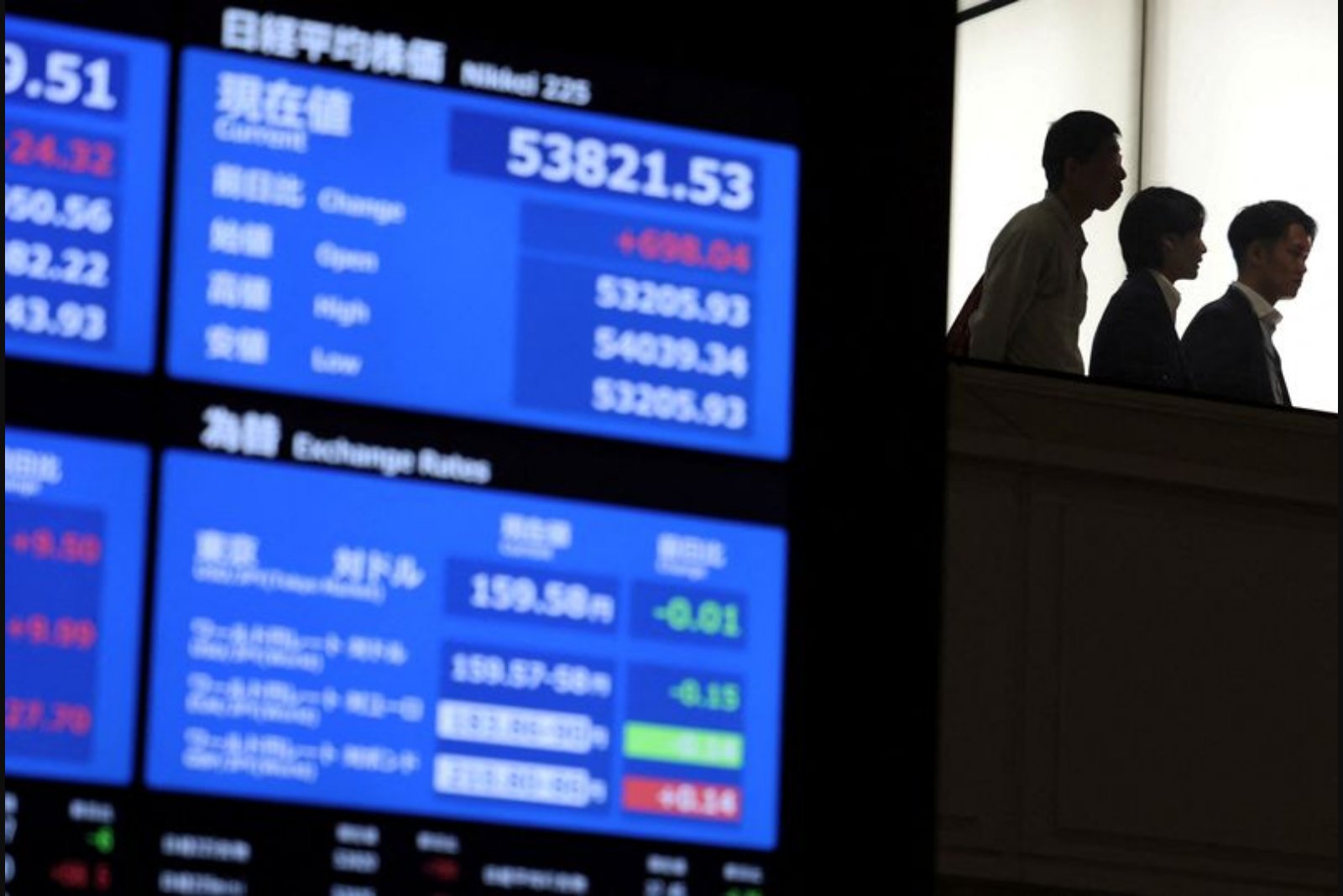
SINGAPORE, April 24 - Asian stock markets delivered an uneven performance on Friday as a fragile ceasefire in the Middle East and stalled U.S.-Iran peace talks left investors with limited reasons for optimism. The broader picture was one of cautious positioning: MSCI's gauge of Asia-Pacific shares outside Japan rose 0.3% and looked poised to finish the week up about 0.8%, while Japan's Nikkei gained 0.45% even as equities in South Korea, China and Hong Kong retreated.
Futures trading suggested a similarly mixed global backdrop. Nasdaq futures were up 0.6% and S&P 500 futures rose 0.1% after U.S. benchmarks closed lower in the previous cash session, but EUROSTOXX 50 futures were down 0.65% and FTSE futures slipped 0.9%.
Market participants have been oscillating between brief hopes for an imminent end to regional hostilities and renewed concern that de-escalation may not materialize. "The thing is, a ceasefire is a funny term to use in conjunction with a blockade and rolling tensions and animosities," said Vishnu Varathan, Mizuho's head of macro strategy for APAC, underlining the disconnect between ceasefire language and ongoing operational frictions in the region.
Tensions in the critical maritime route persisted. Iran released video footage showing commandos in a speedboat boarding a large cargo vessel, a demonstration of increased control over the strategic Strait of Hormuz. U.S. President Donald Trump said he had instructed the Navy to "shoot and kill" Iranian boats laying mines in the strait and to intensify demining efforts. Those comments followed an announcement by Trump that he would indefinitely extend what had been a two-week ceasefire with Iran to permit further peace talks.
Varathan cautioned that market dynamics are unlikely to follow a smooth path: "It's not going to be a linear de-escalation of violence and oil prices and volatility around the entire supply shock. (Investors) have just been looking for excuses to put on optimistic trades opportunistically. I don't think anybody in the market truly believes that this will be over in a week or two."
The standoff around the Strait of Hormuz fed through directly to energy markets. Brent crude futures climbed more than 1% to $106.21 a barrel, while U.S. crude rose 1% to $96.77 per barrel, resuming an upward trend as supply-route risks remained elevated.
Elsewhere in the region, markets appeared to largely discount news that Lebanon and Israel had extended their ceasefire for three weeks following a high-level meeting at the White House.
Currency moves were relatively restrained on Friday, though the dollar looked set to post a weekly gain as investors sought refuge amid heightened geopolitical risk. The euro was trading at $1.1684 and was on track to lose nearly 0.7% for the week. Sterling was little changed at $1.3469 and headed for a modest weekly decline.
Attention now turns to a series of major central bank decisions scheduled for next week, including the U.S. Federal Reserve, the European Central Bank and the Bank of England. Policymakers' commentary on how the conflict is shaping inflation and economic outlooks will be watched closely by markets.
"In view of the demand destruction implied by higher energy prices, there may be an understandable reluctance by many G10 policymakers to push ahead with rate hikes over the coming months," said Jane Foley, head of FX strategy at Rabobank, highlighting how commodity-driven demand effects could influence monetary policy decisions.
The Bank of Japan also meets next week, and the yen remained a focal point for currency traders. The Japanese unit was last slightly weaker at 159.78 per dollar, positioning it to lose about 0.7% for the week and leaving it just shy of the widely watched 160 per dollar level that many market participants view as a potential trigger for intervention.
Japanese Finance Minister Satsuki Katayama reiterated warnings about possible currency intervention on Friday, stressing the need for "decisive action" coordinated closely with the United States. Commenting on the potential for market moves around a holiday period, Carl Ang, a fixed income research analyst at MFS Investment Management, said lower liquidity during Golden Week - which follows the BOJ meeting and runs into early May - "may provide an opportunity for FX intervention and a knee-jerk appreciation in the yen within the 150-160 range." Markets will be closed on a number of days during the annual Golden Week holiday.
Precious metals showed little directional change in the session. Spot gold was flat at $4,691.60 an ounce as investors balanced safe-haven demand against other asset flows.
Outlook
With the combination of elevated geopolitical risks, rising oil prices and a busy central bank calendar, markets are likely to remain sensitive to both developments in the Middle East and any signals from policymakers about how they will respond to energy-driven inflationary pressures and slower demand.