
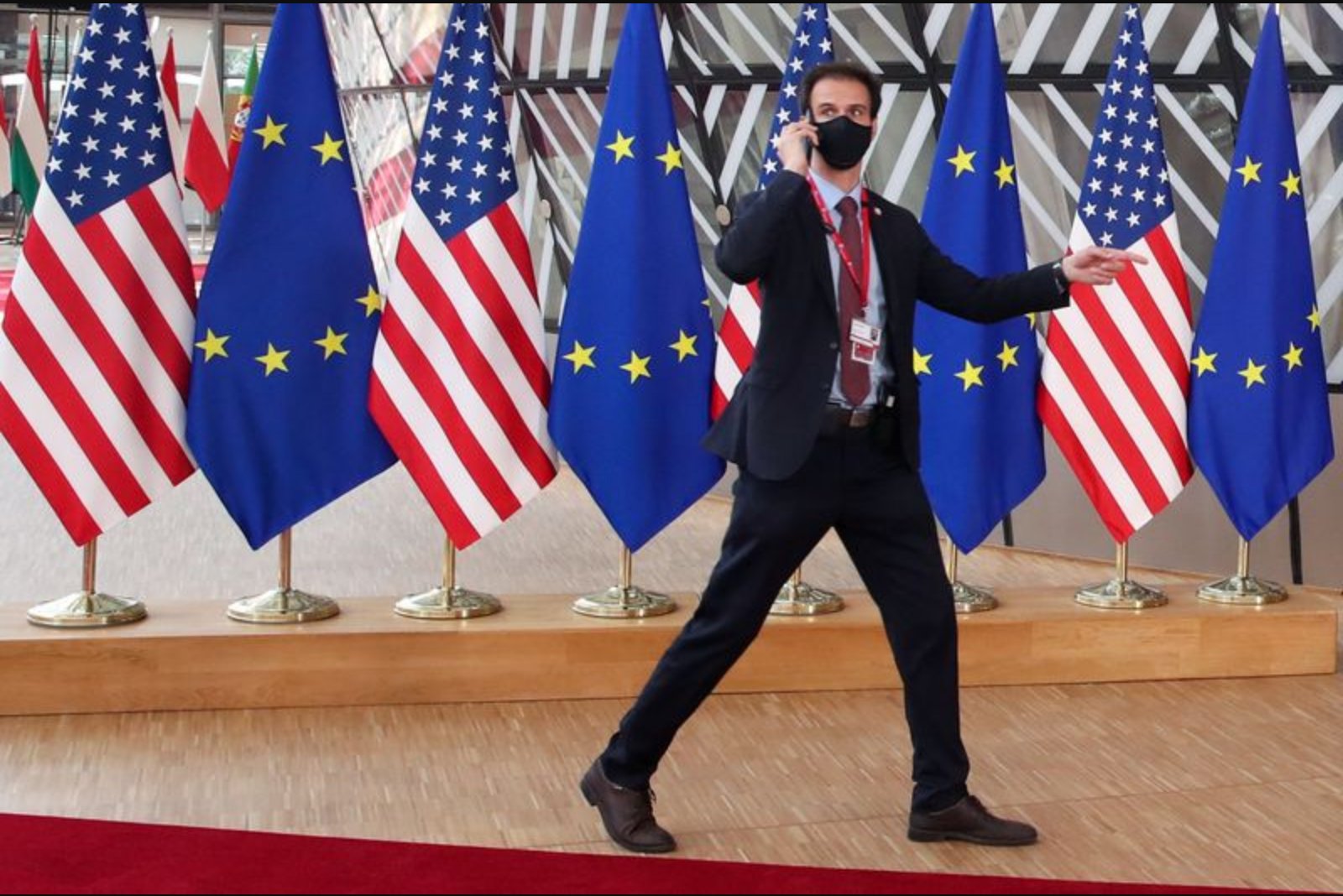
The United States and the European Union are set to formalize a preliminary partnership on critical minerals with a memorandum of understanding scheduled for signing on Friday, the State Department said late on Thursday.
U.S. Secretary of State Marco Rubio and EU Trade Commissioner Maros Sefcovic will meet on Friday and participate in the signing ceremony, the department added. The announcement frames the agreement as an initial step toward closer U.S.-EU coordination on minerals considered critical for advanced manufacturing and technology supply chains.
The United States has been intensifying efforts to secure access to critical mineral reserves, especially rare earth materials, where supply chains are currently dominated by Chinese companies. That strategic concern has been a driving force behind diplomatic engagement and trade discussions between Washington and Brussels.
Sefcovic told reporters in late March that he had held a "very positive" meeting with U.S. Trade Representative Jamieson Greer, during which they discussed critical minerals and tariffs. The officials have been exploring policy tools and frameworks to strengthen supply resilience and diversify sources of supply.
Washington has urged allied governments to accept higher costs for critical minerals sourced from outside China as part of a broader push to reduce dependence on a single dominant supplier. U.S. trade officials have argued that some form of price mechanism may be necessary for rare earth minerals; Greer has previously said that there needs to be some kind of price mechanism on rare earth minerals.
Reports earlier this month indicated that EU and U.S. negotiators were closing in on an agreement to coordinate on producing and securing critical minerals. Those reports said a potential deal could include incentives such as minimum price guarantees designed to favor suppliers located outside China.
The economic context for the move underscores the depth of U.S.-EU trade ties. The United States is the EU's largest trading partner, with EU exports to the U.S. reaching a record 555 billion euros in 2025. Separately, political tensions were noted in recent comments by President Donald Trump, who has repeatedly expressed frustration with EU and NATO allies for not getting directly involved to help the U.S. in its war on Iran.
($1 = 0.8558 euros)