
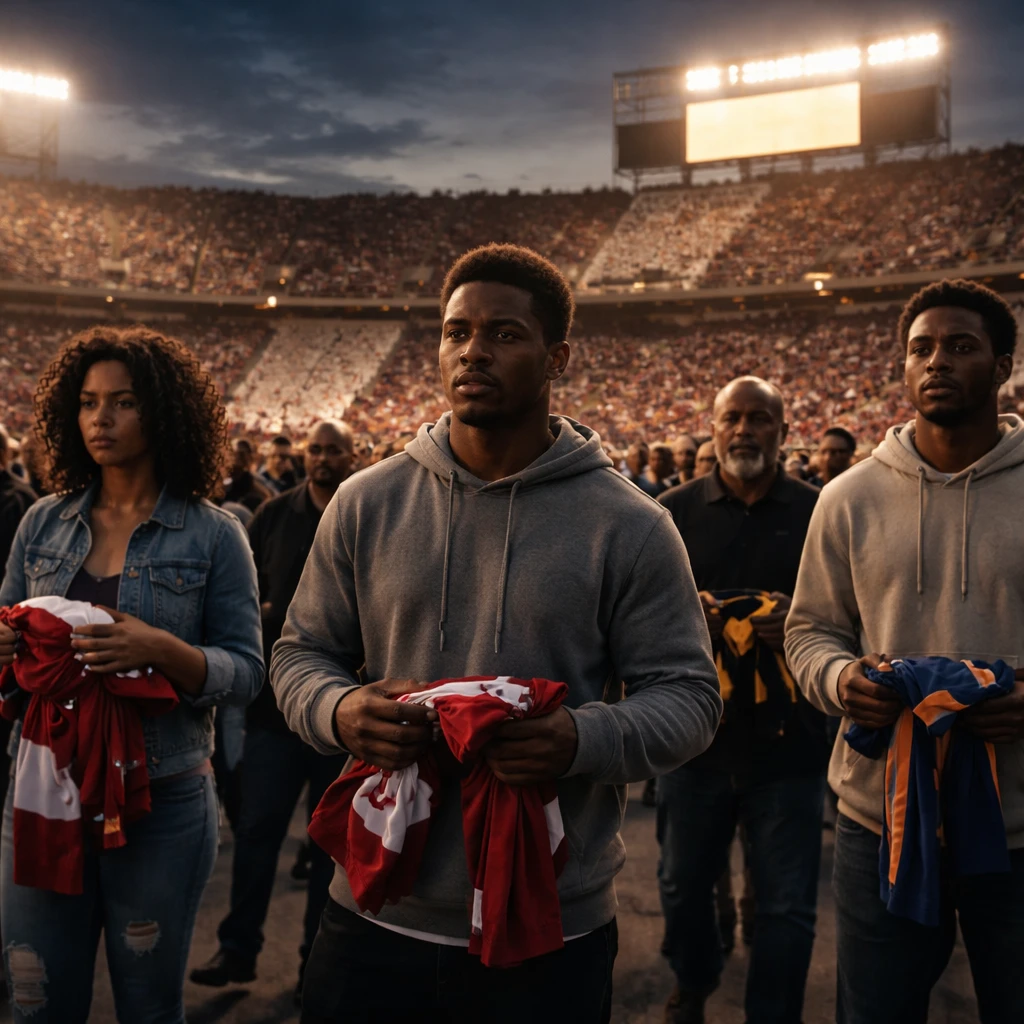
The NAACP on Tuesday announced a campaign designed to pressure public universities in eight Southern states it says are facilitating the erosion of Black voting influence. Named "Out of Bounds," the effort asks Black athletes, prospective recruits, fans and donors to withhold athletic commitments and financial support from flagship programs while state governments pursue congressional maps that civil rights advocates contend weaken Black political representation.
Targeted states named by the NAACP are Tennessee, Louisiana, Alabama, Florida, Mississippi, South Carolina, Texas and Georgia. The campaign focuses on flagship public athletic programs that, according to the organization, produce more than $100 million in annual revenue and continue to recruit Black athletes even as state legislatures move to redraw congressional boundaries.
Redistricting activity in the South has accelerated in recent weeks after the U.S. Supreme Court limited a central provision of the Voting Rights Act earlier this month. In response to the court's ruling, Republican-led legislatures in several states have moved quickly - in some instances within days - to revise congressional maps. Civil rights groups contend those new maps diminish or eliminate Black voting influence in certain districts. State Republican officials maintain that the changes are intended to align maps with the court's decision and to satisfy legal requirements.
The timing of the redistricting push precedes the midterm elections in November, contributing to a wider national debate over how political districts are drawn and how representation is determined. The NAACP said the speed of the changes is notable, saying in a statement: "These actions happened in days, in some cases in hours, of a Supreme Court ruling that gives extremist lawmakers a playbook to erode Black representation." NAACP President Derrick Johnson added, "The same power that built these programs can be redirected."
Details of the Out of Bounds campaign are focused on several specific tactics. The NAACP is asking top football and basketball recruits to delay or withhold commitments to the targeted programs until affected states restore what the group describes as fair congressional maps and meaningful Black representation. Current college athletes are urged to leverage their platforms and name-image-likeness rights, and where applicable, to use transfer options to press their institutions to take public stands against what the NAACP calls racial vote dilution.
Beyond athletes and recruits, the campaign calls on fans, alumni and donors to stop purchasing tickets, merchandise and licensed apparel from the targeted programs and to redirect those funds to historically Black colleges and universities and related organizations. The NAACP said the campaign will persist until the listed states enact voting rights protections, repeal maps that the group says dilute Black voting power and commit to transparent redistricting processes.
The boycott announcement coincides with action from the Congressional Black Caucus, which has signaled opposition to a proposed national framework for college athletics. The bill under discussion would establish rules on athlete compensation, name-image-likeness rights and student-athlete protections. The caucus said it cannot back legislation that benefits major athletic institutions that have not publicly opposed actions that, in the caucus's view, are systematically dismantling Black voting rights and political power across the South.
As part of its response, the Congressional Black Caucus reported sending letters to commissioners of three major college athletic conferences and to the NCAA, demanding engagement and public responses on the issue. "For generations, Black athletes have helped build college athletics into one of the most powerful and profitable industries in American life," the caucus said in its statement. "Yet at the very moment those same communities face coordinated attacks on their democratic representation, too many leaders across college athletics have chosen silence."
The NAACP set clear conditions for when the campaign would end: adoption of voting rights protections, reversal of maps the organization says undercut Black political influence and assurance of transparent redistricting procedures. Until those conditions are met, the group said it will continue to press athletes, recruits, and the broader community to shift allegiances away from the targeted public programs and toward institutions and organizations that support the protections it seeks.