
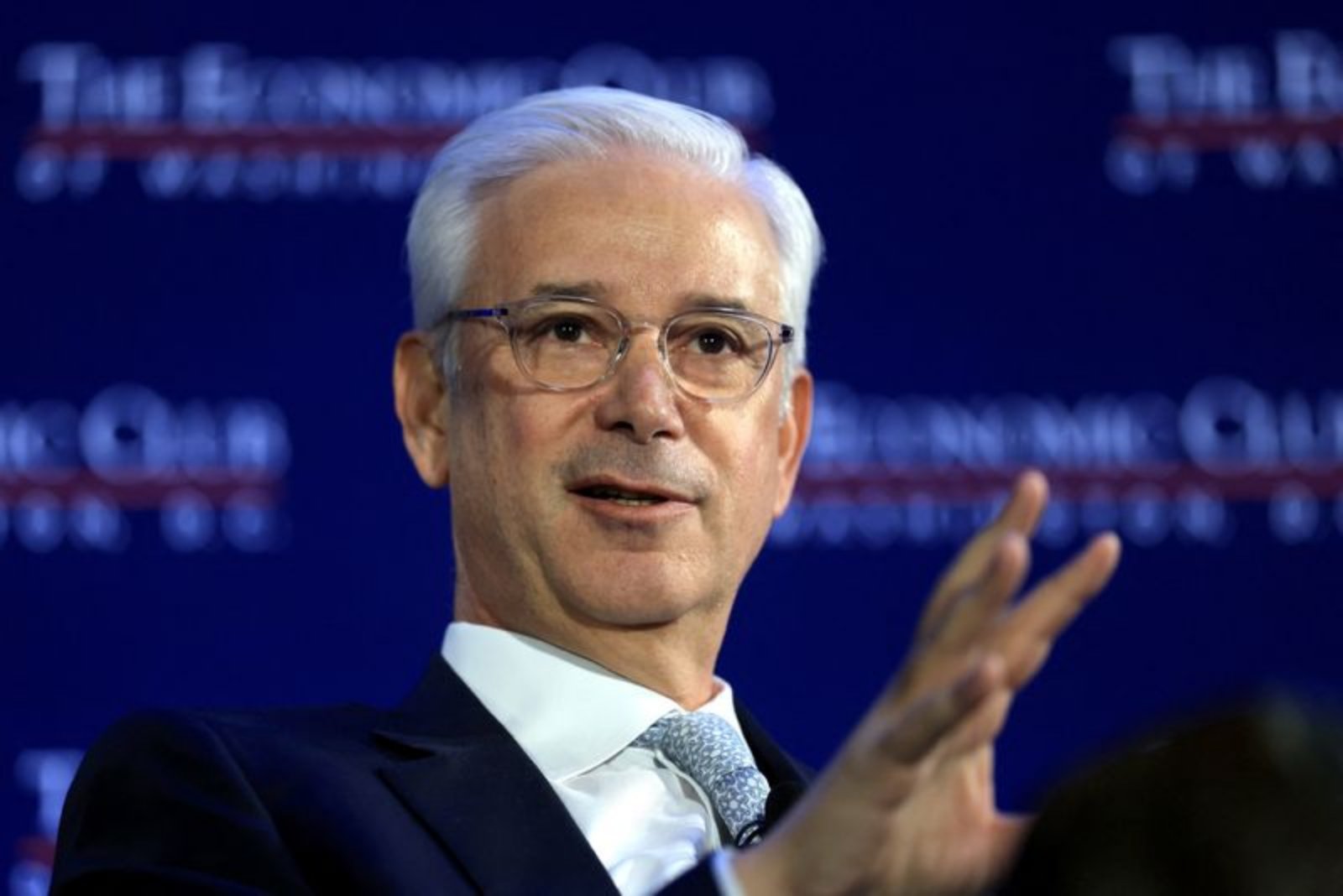
NEW YORK, April 20 - Charlie Scharf, chief executive of Wells Fargo, said on Monday that cutting interest rates before there is a clear end to the Iran conflict would be "the wrong thing to do." Speaking at an event at the Economic Club of Washington, Scharf said there is a consensus forming around waiting to see how the situation plays out.
Scharf acknowledged that, so far, the conflict has had little discernible impact on the U.S. economy. He described the economy as continuing to be strong even amid periods of volatility in financial markets.
The Wells Fargo CEO pointed to ongoing consumer resilience as evidence of underlying strength. He said U.S. consumers are still increasing spending - from 5 to 7% over the same period a year ago - though higher costs at the pump have prompted adjustments in other spending categories.
Scharf warned that the economic effect could grow if the conflict endures. "If this goes on for a longer period of time, it can be damaging," he said, stressing the conditional nature of the risk.
On credit markets, Scharf said he does not see a systemic risk in losses with private credit and noted that it would be natural for some portfolios to be more affected by the credit cycle than others.
Summary
Wells Fargo's chief executive urged policymakers and market participants not to rush into rate reductions until there is clarity on the Iran conflict's trajectory. He described current U.S. economic indicators as largely positive, cited consumer spending growth of 5 to 7% year-on-year for the same period, and cautioned that prolonged geopolitical tensions could produce larger economic harm. He does not view private credit losses as systemic but said variability across portfolios is to be expected.
Key points
- CEO Charlie Scharf said cutting interest rates before clarity on the Iran conflict would be "the wrong thing to do," and suggested a consensus for waiting to see how the situation develops.
- Scharf said the Iran conflict has so far had little effect on the U.S. economy, which he described as still strong despite market volatility.
- U.S. consumer spending is reported to be up from 5 to 7% compared with the same period a year earlier, though higher gas prices are prompting shifts in other spending categories.
Risks and uncertainties
- If the Iran conflict continues for a longer period, Scharf warned it could become damaging, creating broader economic risks.
- While he does not see systemic risk from private credit losses, Scharf noted that some portfolios could be more exposed to the credit cycle, implying uneven impacts across financial portfolios.