
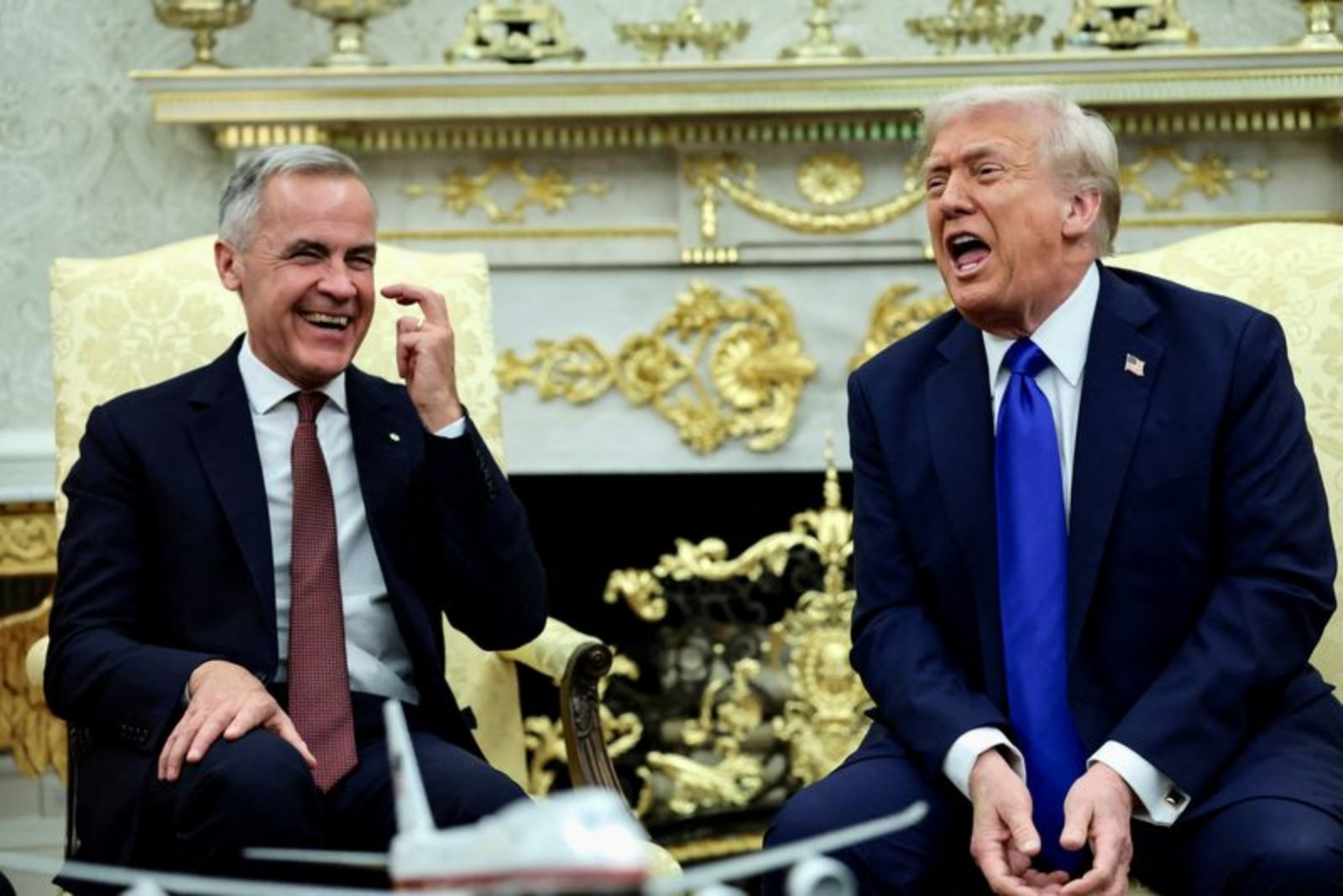
Prime Minister Mark Carney said Canada’s long-standing closeness to the United States has shifted from being an asset to a weakness, speaking in a video message to Canadians that also paid tribute to military leaders who opposed U.S. incursions more than 200 years ago.
In the address he held up a small toy soldier representing General Isaac Brock, the British commander who died defending what is now Canada from a U.S. invasion during the War of 1812. Carney invoked Brock alongside Chief Tecumseh, who united Indigenous nations around the Great Lakes to resist U.S. expansion in 1812, saying the nation has confronted similar threats before.
Carney stressed that Canada cannot control the disruption coming from its U.S. neighbour and cautioned that it would be unwise to bet the country’s future on the hope that such disruption will suddenly cease. "The situation today feels unique, but we’ve faced down threats like this before," he said, referencing those historical figures.
The prime minister, who secured a parliamentary majority for his Liberal government last week, has said the election result will strengthen his hand as he contends with the trade dispute initiated by U.S. President Donald Trump. Carney indicated he will deliver regular addresses in the coming weeks and months to keep Canadians informed about what his government is doing to grow the economy and defend national sovereignty.
"It’s our country, it’s our future, we are taking back control," he said, outlining his intent to communicate ongoing policy steps to the public.
Relations with Washington have been strained recently. U.S. Commerce Secretary Howard Lutnick criticized Canada last week, calling the country a difficult trading partner. The economic link between the two nations is extensive: Canada sends almost 70% of its exports to the United States.
This year the trilateral U.S.-Mexico-Canada free trade pact is scheduled for review, and U.S. officials have signaled that they seek major changes to the agreement. Separately, Washington has imposed tariffs on Canadian shipments including steel, aluminum and autos. President Trump has also, on multiple occasions, speculated about annexing Canada and converting it into the 51st U.S. state.
Carney’s office did not immediately answer questions about the timing of the video or the prime minister’s decision to highlight leaders who resisted U.S. expansionism.
As Carney prepares to use regular public addresses to outline his administration’s response to trade pressures, his remarks underscore the government’s view that defending market access and national sovereignty will be central to its agenda moving forward.