
Project Vault - the U.S. government's initiative intended to shore up critical mineral supplies - is moving toward the close of its first funding tranche and will begin operational activities aimed at easing processing, storage and broader supply-chain frictions for manufacturers, U.S. Export-Import Bank (EXIM) President and Chairman John Jovanovic said on Monday.
Announced in February by President Donald Trump, Project Vault is intended to serve as more than a traditional reserve of metals. While its mandate includes building emergency inventories, organizers have designed the program to confront structural weaknesses in the market that extend beyond simple stockpiling, Jovanovic said.
Design and financing
The financing structure for Project Vault pairs $2 billion in private capital with a $10 billion loan commitment from EXIM Bank. The project will be administered by an independent entity separate from EXIM, with its own management team responsible for overseeing storage and logistics in coordination with manufacturers, according to Jovanovic. He did not disclose the name of that independent manager.
Jovanovic emphasized that the vehicle will be dynamic in operation - structured to respond to market needs rather than merely hold a static stockpile. "It was designed not to be a stockpile alone," he said. "What it was designed to do was actually solve problems that the market faces."
From raw ores to refined inputs - operational flexibility
Unlike a conventional strategic reserve that stores only raw material, Project Vault is being organized to accommodate both unprocessed and processed forms of critical minerals. The independent entity will work closely with manufacturers to permit conversion activities within the program. Under the model described by Jovanovic, material could be withdrawn from Vault inventory, routed to processing facilities, and then re-entered into the Vault system in a refined state, while keeping the aggregate commodity exposure within the vehicle.
That mechanism is intended to provide clearer demand signals to processing and refining assets. "That also allows manufacturers to think ahead and start to provide demand signals to refining and processing assets," Jovanovic said, indicating the program is meant to enable coordination across the value chain.
Addressing capital and counterparty constraints
Jovanovic pointed to persistent market limitations that Project Vault seeks to alleviate: a shortage of capital in the sector, too few large, creditworthy counterparties, and the need for more adaptable arrangements that can underpin processing and long-term supply commitments. Balance-sheet limits for companies are a central constraint in the current market, he said.
Part of the intended solution is to use Project Vault to support off-take arrangements and long-term commitments by manufacturers. "You could use Project Vault to make that commitment," Jovanovic said, suggesting the vehicle could serve as a creditworthy counterparty that enables downstream firms to contract with processors or refiners.
Participants, capacity and U.S. infrastructure limits
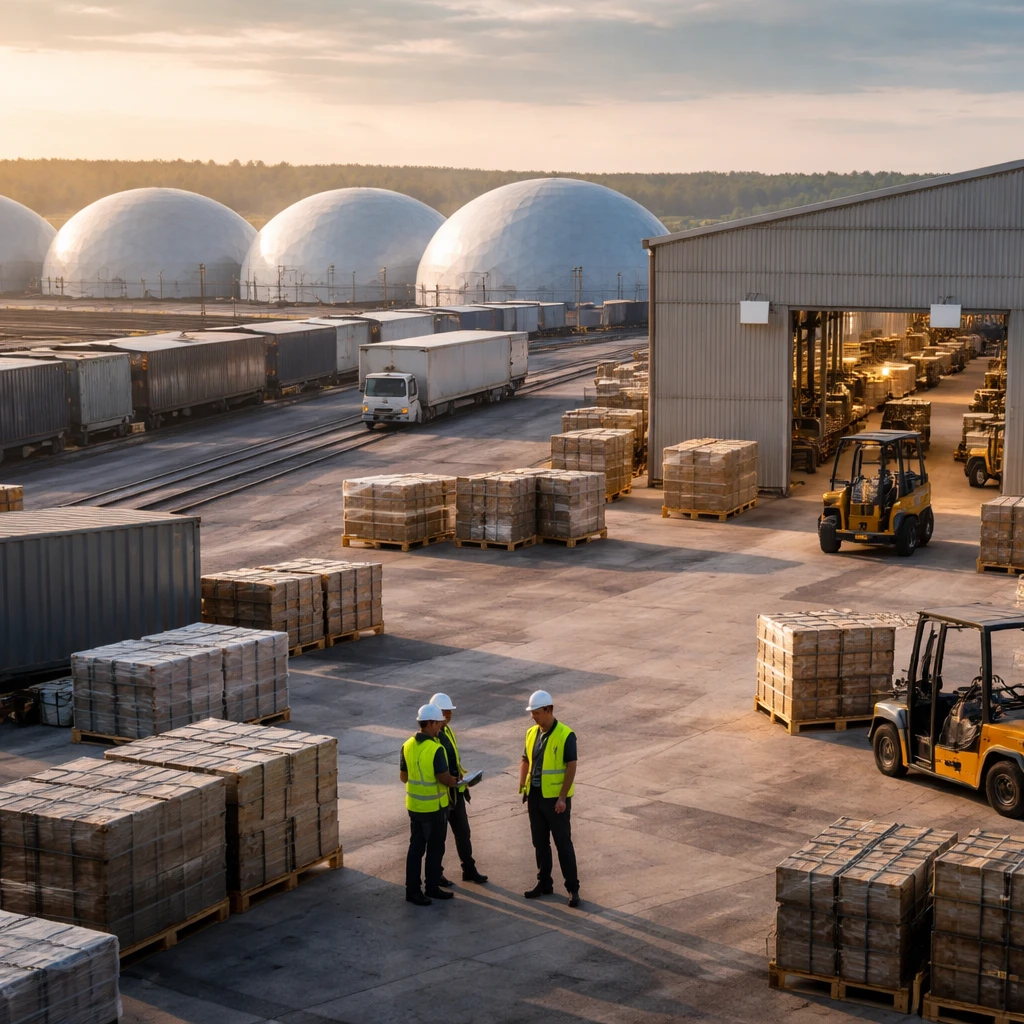
Jovanovic declined to identify participants beyond those already public but noted that additional suppliers have signed up and that discussions have occurred with "every leading supplier" serving U.S. manufacturers. He also warned that U.S. infrastructure could be a bottleneck: "We may not have enough bonded inventory, warehousing, and storage facilities in the United States," he said.
However, Jovanovic framed that capacity gap as an opportunity: if Project Vault is a creditworthy source of demand, it could spur investment in the development and construction of additional warehousing and storage facilities.
Implications for manufacturers and logistics
Operationalizing Project Vault with the described flexibility would mean manufacturers gain access to a vehicle that can help smooth supply disruptions, provide longer-term demand visibility to processors, and offer a potentially creditworthy partner for commercial commitments. For logistics operators, storage providers and bonded warehousing, the initiative signals potential incremental demand for capacity build-out tied to the vehicle's inventory and processing flows.
Project Vault is now approaching the close of its first funding tranche and, once the tranche is closed, will begin the activities described above that integrate storage, processing and supply-chain functions to support U.S. manufacturers dependent on critical minerals.