
Lede
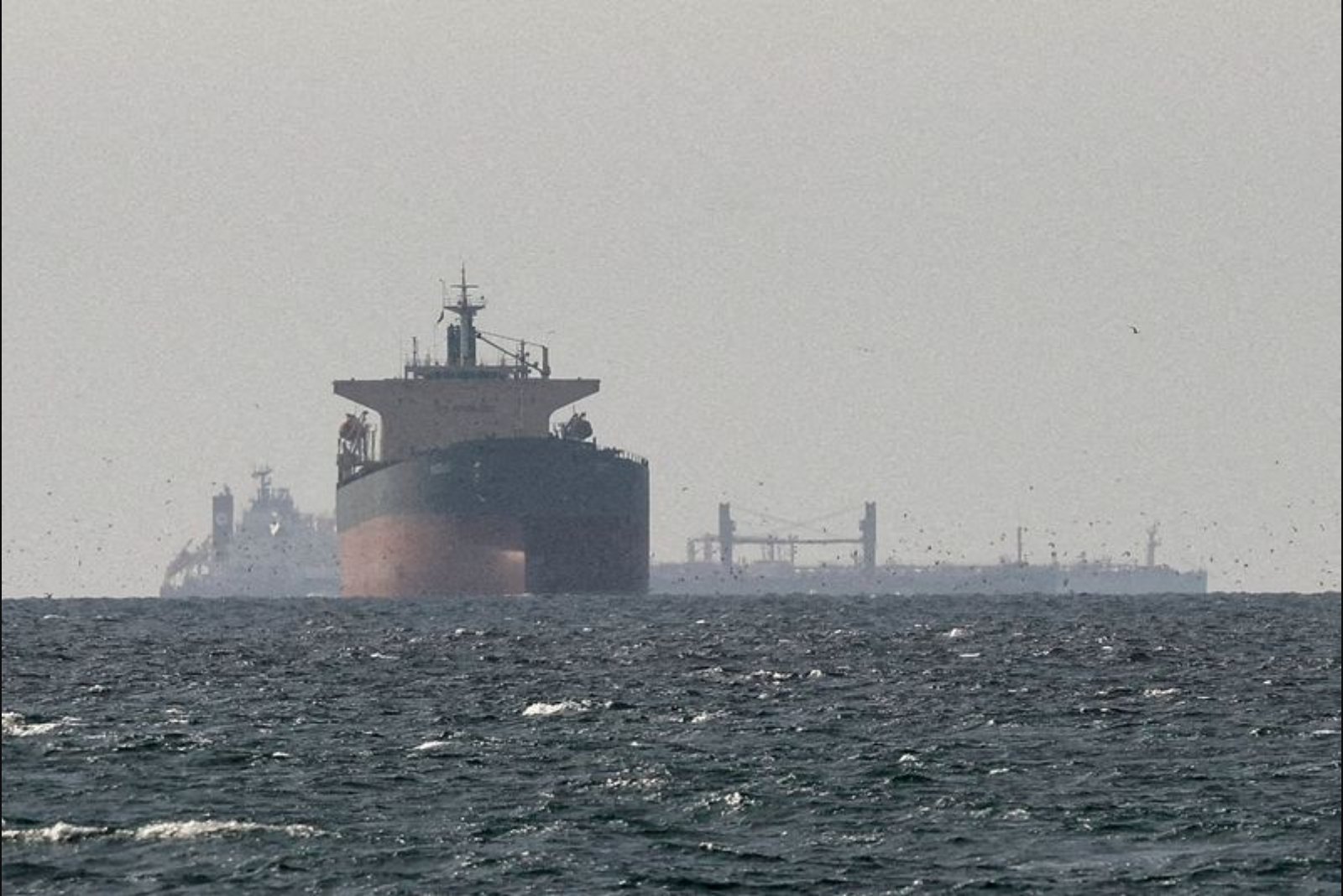
Gulf officials have warned that a narrowing of the U.S.-Iran dialogue toward enrichment levels and control of shipping through the Strait of Hormuz could lock in Tehran’s capacity to influence global energy flows without dismantling the military and proxy threats that have destabilised the region. With negotiators due to meet next in Islamabad, officials and analysts say the substantive focus appears to be shifting away from missiles and proxies toward uranium limits and management of the Strait itself.
Negotiations and the new priorities
People familiar with Gulf governments' thinking say U.S.-Iran diplomacy increasingly centres on technical questions of enrichment and how to reduce the immediate economic shock of a closed waterway. That emphasis, they argue, risks treating the Strait of Hormuz as a problem to be managed rather than a source of strategic leverage to be dismantled.
Although the talks are still deadlocked over enrichment - with Iran rejecting both demands for zero enrichment and requests to ship its stockpiles abroad - Gulf sources say the change in priorities itself is a source of alarm. They report a sense that the agenda has shifted in ways that deprioritise Gulf security concerns.
"At the end of the day, Hormuz will be the red line," one Gulf source close to government circles said. "It wasn’t an issue before. It is now. The goal posts have moved." There was no immediate response from Gulf Arab governments to requests for comment on the issues raised in this article.
Hormuz as strategic leverage
Commentary from senior international and Iranian security figures has underlined the Strait’s central role. Dmitry Medvedev, deputy chairman of Russia’s Security Council, framed Hormuz bluntly in a social media post on April 8: "It’s not clear how the truce between Washington and Tehran will play out," he wrote. "But one thing is certain - Iran has tested its nuclear weapons. It is called the Strait of Hormuz. Its potential is inexhaustible."
Iranian security sources have privately described the Strait not as a contingency but as a deliberate instrument of deterrence prepared over years. "Iran prepared for years for a scenario involving the closure of the Strait of Hormuz, planning every step," a senior Iranian security source said. "Today it is one of Iran’s most effective tools - a form of geographic leverage that serves as a powerful deterrent."
That source characterised the waterway as a "golden, invaluable asset rooted in Iran’s geography - one the world cannot take away precisely because it flows from Iran’s location." A second Iranian source close to the Revolutionary Guards described a taboo on using Hormuz as broken, portraying the Strait as a sword "drawn from its sheath" that external powers must now reckon with.
Gulf concerns: rules versus control
Gulf Arab governments and analysts say their principal fear is not merely control of the Strait but who ultimately defines the rules governing transit. They see a widening gap between those setting the terms of passage and those who would suffer the consequences when rules are breached.
"What is taking shape today is not a historic settlement," Ebtesam Al-Ketbi, president of the Emirates Policy Center, told Reuters. "But a deliberate engineering of sustainable conflict." She asked rhetorically, "Who’s suffering from missiles and proxies?" and answered by pointing to Israel and specifically the Gulf states. "What would be a good deal for us is (addressing) missiles, proxies - and Hormuz. And it seems they don’t care about the missiles or the proxies."
Regional consequences and economic fallout
Analysts say a deal that stabilises tensions at a manageable level for global markets could still entrench a precarious status quo for Gulf states exposed to Iranian missiles and proxies. The conflict that began on February 28 has already affected Gulf economies via attacks on energy infrastructure, and through increased export and insurance costs. Alternate export routes carry higher costs and remain vulnerable to the same missile threats.
Diplomats report that Gulf officials have urged Washington against immediate, full sanctions relief for Iran, advocating instead for a phased approach that would test Tehran's behaviour. Their core complaints remain unaddressed in their view, particularly Iran’s missile forces capable of striking Gulf capitals and the armed proxies that serve as extensions of Tehran’s influence.
Across the region, sentiment toward Washington now spans quiet resentment to growing frustration and confusion over perceived unilateral U.S. decision-making. "Dealing with the Iran issue required a different approach," said Abdulaziz Sager, chairman of the Saudi-based Gulf Research Center. "The U.S. is part and parcel of regional security... But that does not mean acting unilaterally - going full-fledged without involving the region."
Security dynamics and limits of external protection
Gulf officials acknowledge the U.S. remains militarily decisive in shaping outcomes. Observers say U.S. air and missile defence cooperation, naval security and protection of critical infrastructure have been central to Gulf states' survival during the war. UAE academic Abdulkhaleq Abdulla noted that Gulf Arab states survived the war in large part due to their own defences and sophisticated U.S.-supplied weapons such as the THAAD and Patriot air defence systems.
At the same time, analysts argue that dependence on a single external protector has limits. Mohammed Baharoon, director of the Dubai-based research center B'huth, said one of the war’s lessons is the limit of relying on a single external protector, a point Gulf states have voiced privately as well as publicly.
Gulf rulers have long cautioned Washington against escalation with Iran, though they have kept a public silence since the war began. That restraint, officials say, reflects both diplomatic calculation and uncertainty about a conflict that imposes economic and defence burdens on them but is not under their control. As the U.S. and Iran conduct talks, Gulf officials argue their exclusion from those negotiations has implications beyond the region because Hormuz sits at the intersection of regional security and global economic stability.
What remains unresolved
Negotiators remain at odds over enrichment parameters, and Iran continues to reject demands for complete cessation of enrichment or the relocation of its stockpiles. Gulf officials view the emphasis on minimizing global economic damage - including keeping Hormuz open - as potentially coming at the expense of addressing the security threats they face most acutely.
For Gulf states, the balance of who benefits from any technical or economic stabilisation versus who continues to bear the security costs remains the central unresolved question. As Islamabad prepares to host the next round of talks, Gulf sources see the agenda's tilt toward enrichment and management of Hormuz as a development that could institutionalise Iran’s strategic leverage unless missile, proxy, and regional security concerns are also taken up in earnest.
Conclusion
Officials and analysts in the Gulf warn that managing the practicalities of the Strait of Hormuz without simultaneously addressing Iran’s military and proxy capabilities risks stabilising a dangerous status quo. Their message to Washington and other negotiating parties is that any settlement that leaves their core security concerns unaddressed would be partial and potentially enduring - a negotiated peace in form, but a sustainable conflict in substance.