
Economy April 20, 2026 04:24 PM

Administration Uses Defense Production Act to Speed U.S. Natural Gas and LNG Capacity Buildout

Presidential memorandum directs Energy Secretary to treat gas and LNG infrastructure as essential to national defense and to use DPA tools to overcome financing, permit and supply hurdles

By Hana Yamamoto
Administration Uses Defense Production Act to Speed U.S. Natural Gas and LNG Capacity Buildout

The White House on Monday issued a presidential determination invoking the Defense Production Act to accelerate expansion of natural gas transmission, processing, storage and liquefied natural gas facilities across the United States. The memorandum, addressed to the Secretary of Energy, designates a broad set of gas and LNG assets as essential to national defense and authorizes purchases, commitments and financial instruments to shorten timelines impeded by financing limits, long-lead equipment schedules, permitting delays and infrastructure bottlenecks.

Key Points

  • The White House issued a presidential determination on Monday invoking the Defense Production Act to speed expansion of U.S. natural gas transmission, processing, storage and LNG capacity - sectors including energy production, infrastructure construction and export operations will be directly affected.
  • The Energy Secretary is authorized to purchase, commit to, and use financial instruments to support projects identified in the memorandum, with certain DPA requirements waived to accelerate implementation.
  • The determination cites financing constraints, long-lead equipment and construction schedules, permitting delays and infrastructure bottlenecks as primary obstacles that the DPA measures are intended to address - impacting project finance, manufacturing of long-lead items and permitting-dependent construction sectors.

The White House on Monday issued a presidential determination authorizing the use of the Defense Production Act (DPA) to expedite the expansion of natural gas infrastructure and liquefied natural gas (LNG) capacity in the United States.

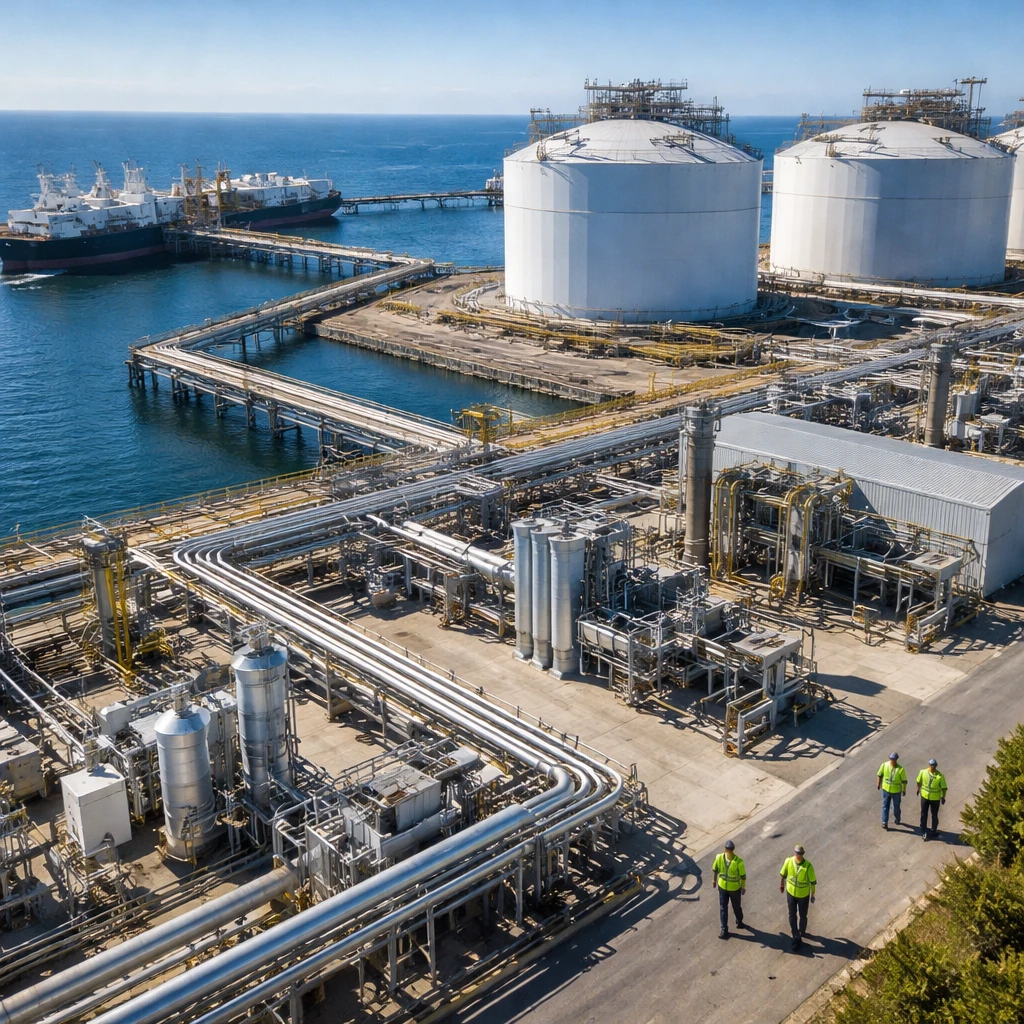
The memorandum, which is addressed to the Secretary of Energy, formally classifies natural gas and LNG infrastructure as essential to national defense. It lists a wide range of facilities and components covered by the determination, including gathering and transmission pipelines, compression facilities, processing plants, underground storage, LNG liquefaction facilities, storage and marine loading operations, export facilities and critical distribution infrastructure.

The presidential determination cites Executive Order 14156, issued on January 20, 2025, which declared a national energy emergency and stated that hostile foreign actors have weaponized the nation’s reliance on foreign energy, causing significant swings in international commodity markets.

According to the memorandum, Section 303 of the Defense Production Act must be used because, without it, United States industry cannot reasonably be expected to provide the required capabilities in a timely manner. The text identifies several obstacles to timely delivery: financing constraints, long-lead equipment and construction schedules, permitting delays and infrastructure bottlenecks.

To address those obstacles, the determination waives certain requirements of the Act to enable faster implementation and authorizes the Secretary of Energy to make necessary purchases, commitments and to use financial instruments to support the projects covered by the memorandum.

The document underscores the national security rationale for the action, stating that inadequate pipelines, processing, storage or natural gas and LNG export capacity would leave the United States and its partners dangerously exposed in times of crisis.


Context and immediate effect

The memorandum directs the Secretary of Energy to employ the DPA authorities outlined in the determination to accelerate projects that expand transmission, processing, storage and LNG capacity. The authorization is structured to address constraints identified in the memorandum by enabling government-supported purchases and financial commitments where required.

Next steps outlined in the memorandum

  • The Secretary of Energy is empowered to use purchases, commitments and financial instruments allowed under the Act to enable construction and deployment of the covered infrastructure.
  • Certain statutory requirements of the Act are waived to allow more rapid implementation.
  • The memorandum frames these steps as necessary to reduce exposure for the United States and its partners in times of crisis.

Risks

  • Financing constraints remain a material challenge for timely project delivery - this risk affects project developers, construction firms and the financial services sector involved in energy infrastructure lending.
  • Long-lead equipment and extended construction schedules could delay capacity additions despite the DPA authorization - manufacturers and supply chain participants for specialized gas and LNG equipment are impacted.
  • Permitting delays and existing infrastructure bottlenecks may continue to impede roll-out of new capacity even with DPA tools - this poses operational and timeline risks for utilities, pipeline operators and export facility developers.

More from Economy

Germany's March tax receipts climb 3.6% amid one-off distortions and energy uncertainty Apr 20, 2026 Labor Secretary Lori Chavez-DeRemer Departs Amid Inspector General Inquiry Apr 20, 2026 Clarifai Removes 3 Million OkCupid Photos and Trained Models After FTC Settlement Apr 20, 2026 Markets Tick Lower as Strait of Hormuz Tensions Reignite; Oil Surges Apr 20, 2026 Senate Democrats Question How Fed Nominee Would Unload Millions in Assets Apr 20, 2026