
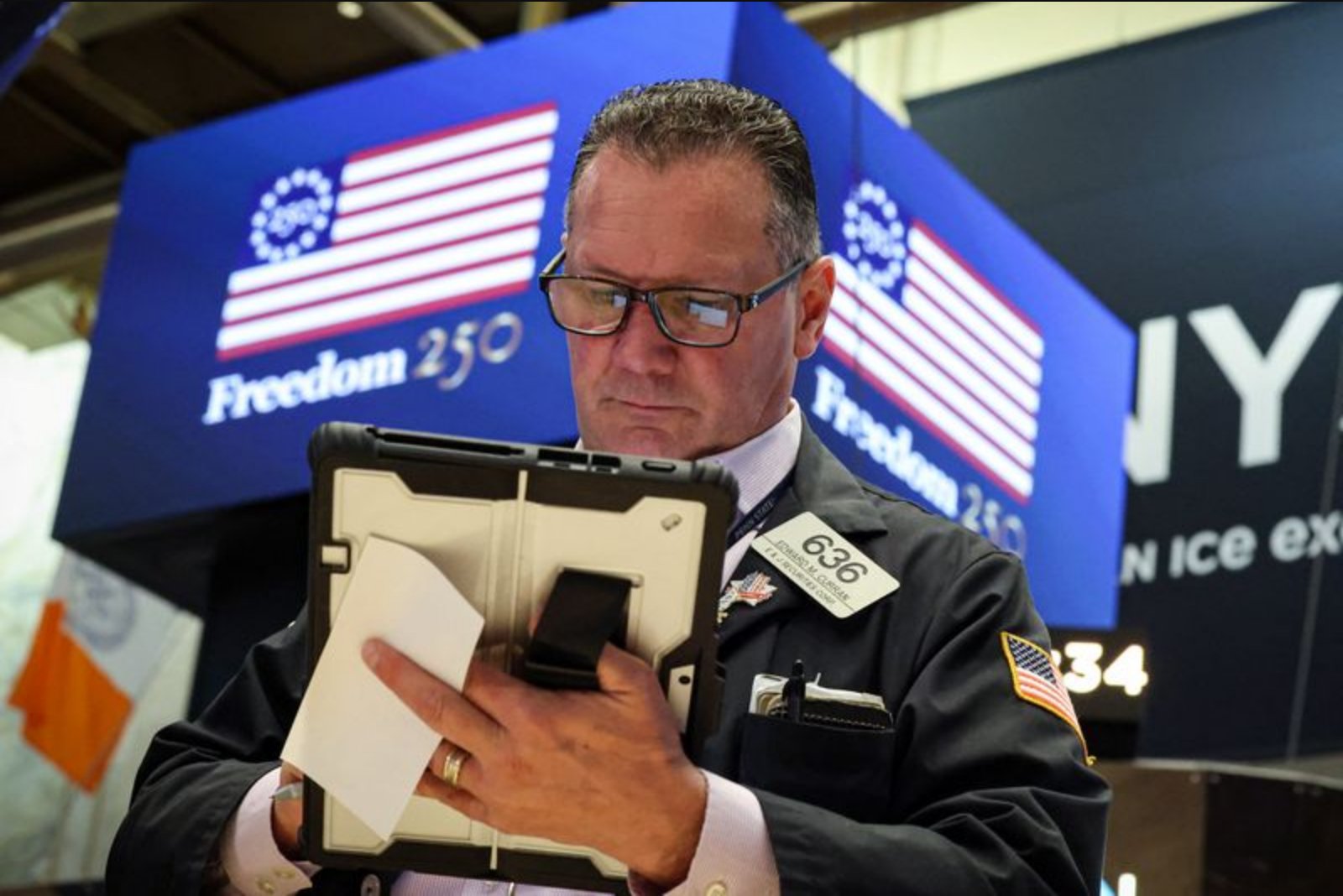
Global markets saw a mixed start to the week as oil climbed and major U.S. stock benchmarks retreated on Monday, the result of renewed tensions between the United States and Iran and a closure of the Strait of Hormuz. Despite the spike in energy prices and a pick-up in equity volatility, overall market moves were relatively contained, indicating investors may be banking on negotiations resuming and easing immediate disruptions.
An LSEG webinar scheduled for April 23 will examine safe-haven assets in times of heightened uncertainty and is expected to feature Mike Dolan. For readers who want more context on the day’s developments, suggested items for further reading include several contemporaneous reports on the regional standoff and central bank developments.
Recommended reading
- Iran considers US talks in Pakistan with blockade still unresolved
- Hormuz shipping again near standstill after shots and seizure
- Fed nominee Warsh commits to central bank’s independence, with limits
- EXCLUSIVE-BOJ is likely to hold off raising rates in April, sources say
- Investors pile into US stocks as ’TINA’ revival knocks ’TIARA’ trades
Market snapshot - key moves
- STOCKS: Asian markets finished higher, with major indices up about 0.5 percent; European markets were lower, with major indices off roughly 1 percent. Wall Street’s three main indexes ended the day down, the Nasdaq saw its 13-day winning streak end, while the Russell 2000 rose 0.5 percent to a fresh all-time high.
- SECTORS/SHARES: Six S&P 500 sectors advanced and five declined. Shares of psychedelic drug developers rallied. Apple fell 1.5 percent in after-hours trade on news that Tim Cook is stepping down as CEO, but the stock recovered most of that loss.
- FX: The U.S. dollar edged lower. The Canadian dollar and Norwegian krone were the largest G10 currency gainers, while the Indian rupee and South African rand were among the biggest emerging market decliners.
- BONDS: Japanese government bond yields slipped, with the 30-year JGB at its lowest in three weeks. The UK 10-year gilt yield rose 7 basis points, while U.S. yields were up about 2 basis points at the short end of the curve.
- COMMODITIES/METALS: Oil spiked with Brent rising 5.6 percent and West Texas Intermediate up 6.9 percent, though both remained comfortably below the $100 per barrel mark. Precious metals retreated roughly 1 percent.
Talking points
Geopolitics and market resilience - The market reaction on Monday showed a clear sensitivity to the re-escalation of U.S.-Iran tensions and the closure of a key shipping lane. Oil prices and measures of equity volatility jumped and U.S. stocks declined as hopes that the Strait of Hormuz would quickly reopen were dashed. Yet broader resilience to the conflict’s economic consequences appears to be strengthening. As a thought experiment, were one to have predicted at the war’s outset that it would last at least eight weeks and that oil would still be below $100 per barrel, while the S&P 500 and Nasdaq reached record highs, the VIX remained below 20 and the 10-year Treasury yield was about 4.25 percent, such an outlook might have seemed unlikely. Those are, nonetheless, the conditions markets have displayed.
Fed nomination in focus - Kevin Warsh, a former Federal Reserve governor, is set to face U.S. senators at a confirmation hearing on Tuesday as he seeks to replace Jerome Powell as the Fed Chair. Warsh is expected to tell lawmakers he is "committed to ensuring that the conduct of monetary policy remains strictly independent." His nomination comes from President Donald Trump, who has signaled a preference for lower interest rates and has questioned the extent of Fed independence. Warsh is likely to receive probing questions about how he would lead the central bank and handle political pressure from the White House.
Tech earnings and AI optimism - Attention in corporate America has shifted from financials last week to technology this week, with IBM, Intel and Tesla due to report results. Although the Nasdaq’s 13-day winning run was snapped on Monday, the index’s pullback from Friday’s record high amounted to only about 0.3 percent. Current optimism around artificial intelligence has overshadowed concerns about returns on capital expenditure, concentration risk within the tech sector, rising energy costs tied to AI workloads, and reported Mythos security issues. The upcoming earnings from these three companies will be watched closely as an early test of whether this renewed enthusiasm for AI is supported by fundamentals.
What could move markets next
- Any fresh developments in the Middle East
- Further shifts in energy markets
- New Zealand CPI inflation (Q1)
- Taiwan export orders (March)
- UK employment figures (February)
- Germany ZEW investor sentiment index (April)
- U.S. retail sales (March)
For readers who want Trading Day delivered daily, there is an option to sign up for the morning newsletter. The author’s perspectives and analysis in this piece are presented as commentary and interpretation of market events.