
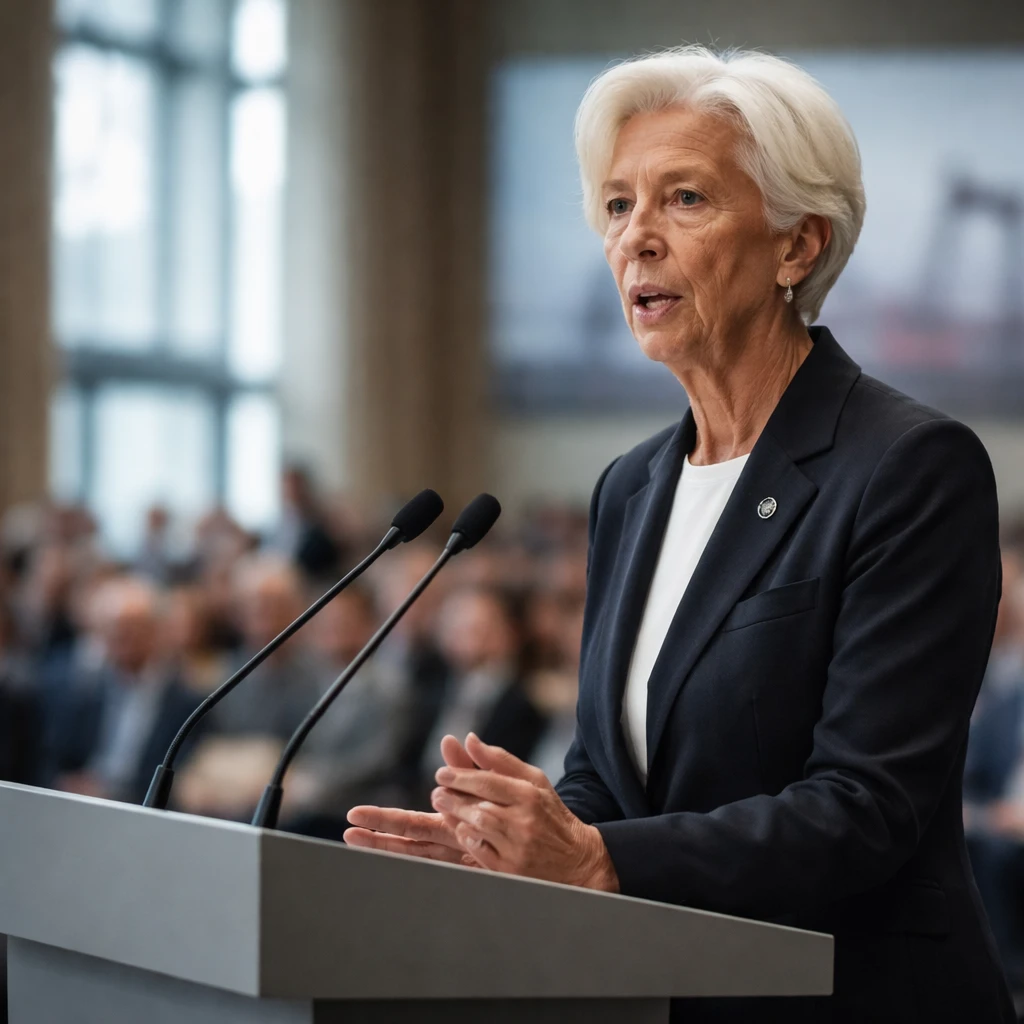
European Central Bank President Christine Lagarde said the institution needs more empirical evidence before reaching definitive policy judgments about how the war in Iran is affecting the economy.
Speaking in Berlin, Lagarde said the current economic consequences of the conflict have not yet met the threshold of the ECB's adverse scenario. Energy prices rose in the last month following the outbreak of hostilities, she noted, but policymakers have not observed clear signs that those moves are feeding through into broader, persistent inflationary pressures.
Lagarde emphasized that second-round price effects - where initial energy cost increases translate into wider wage and price adjustments - have not presented themselves in a way that would make a rate increase immediately necessary. "So far, we have not seen energy prices rise far enough to push us squarely into our adverse scenario," she said. She added that uncertainty about both how long the shock will last and how widely price increases will pass through argues for collecting more information before drawing firm monetary policy conclusions.
The comments come less than two weeks before the ECB's April 30 policy meeting, and they are likely to bolster market views that a rate rise at that meeting is unlikely, even if the bank retains the option to act later should data warrant it.
Lagarde also outlined how specific energy markets compare with the ECB's baseline assumptions: oil spot and futures prices are running above the bank's baseline projections, while natural gas prices remain below those assumptions. She attributed part of the lower gas price outcome to some Asian buyers switching to coal, reducing upward pressure on gas markets.
Finally, Lagarde pointed to the lingering memory of the 2022 inflation shock among firms and households. That memory may prompt faster adjustments in wage and price-setting behavior this time around, she said, a factor the ECB is monitoring as it weighs the balance of risks when making policy decisions.
Key takeaways
- ECB will wait for more data before making firm policy moves on the economic effects of the war in Iran.
- Recent energy price increases have not yet produced clear second-round inflationary effects that would necessitate an immediate rate hike.
- Oil prices are above the ECB's baseline, while natural gas prices remain below it, in part because some Asian buyers are switching to coal.
Risks and uncertainties
- Duration of the energy price shock remains uncertain - this affects inflation outlook and monetary policy timing.
- Breadth of pass-through from energy costs into wages and wider prices is unclear - this could change the ECB's assessment of whether to raise rates.