
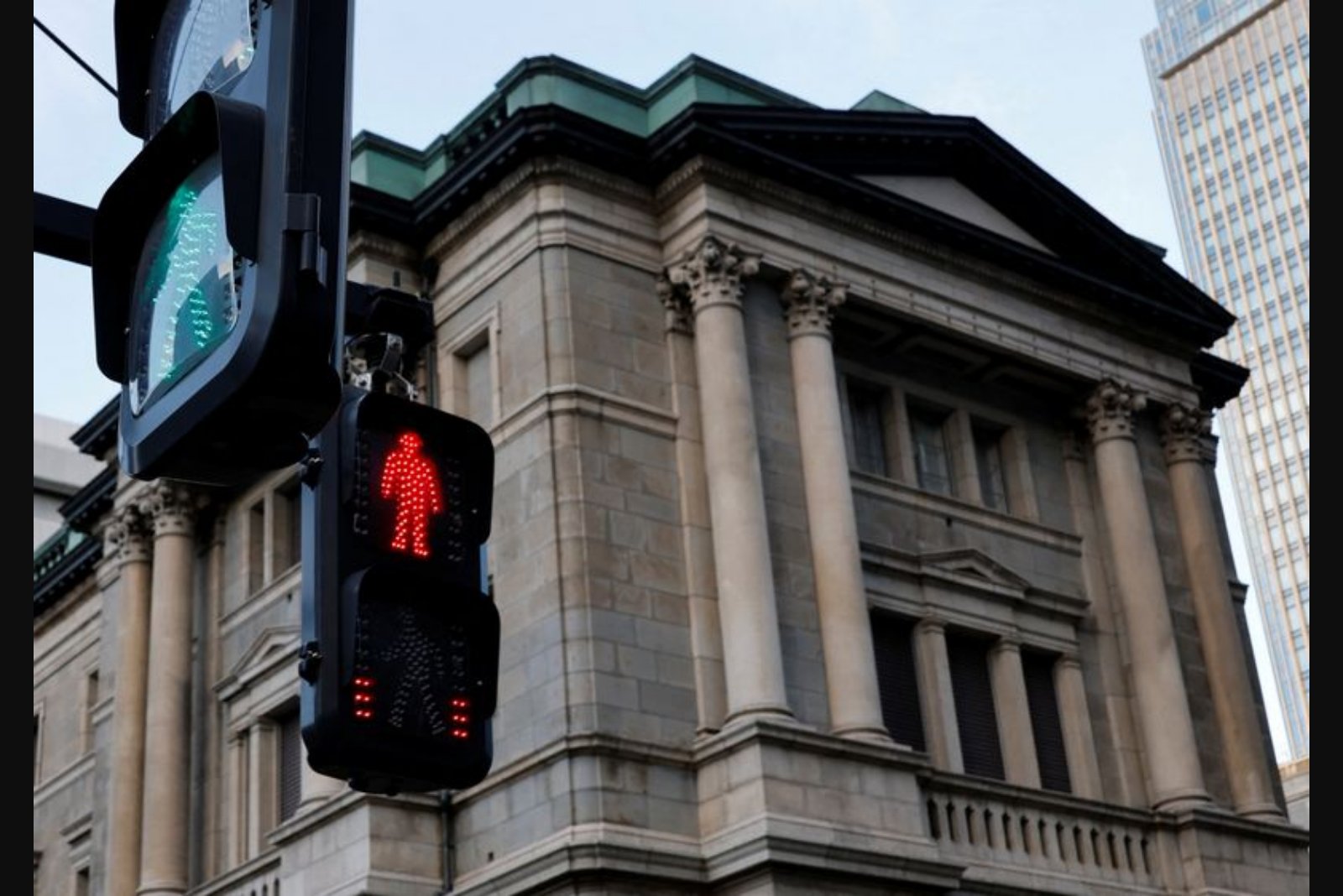
On April 28 the Bank of Japan opted to maintain its short-term policy rate at 0.75% after a two-day meeting that concluded on Tuesday. While the central bank left policy unchanged as widely anticipated, the decision was not unanimous: three of the nine board members voted to raise rates to 1.0%.
Board members Hajime Takata, Naoki Tamura, and Junko Nakagawa registered the dissent, calling for an immediate increase in borrowing costs. Their votes have drawn attention from investors and currency traders, with markets looking to Governor Kazuo Ueda’s media briefing for further signals on how the protracted Iran war and related energy price pressures may influence the BOJ’s path on rates.
Market participants described the meeting as a close call and said the split among policymakers reflects a broader dilemma facing central banks: whether to tighten policy in response to an energy-driven inflation shock that also threatens growth.
Fred Neumann, chief Asia economist at HSBC in Hong Kong, commented on the narrow margin within the board: "A close call for the BOJ. While the Bank of Japan kept rates on hold, the three dissenting votes highlight the tensions monetary officials face." He added: "Monetary officials in Japan are not alone in facing the dilemma whether to tighten policy into an energy price shock that is simultaneously inflationary and growth destructive."
Neumann further interpreted the bank’s posture as signaling potential near-term tightening: "Still, today’s message from the Bank of Japan is that it remains poised to tighten policy sooner than later. The Bank of Japan will not be able to hold out for too long before tightening policy again, even if the spike in energy costs will take its inevitable toll on growth."
Observers linked the dissenting votes to moves in the currency market. TohrU Sasaki, chief strategist at Fukuoka Financial Group and a former BOJ official in Tokyo, pointed to the vote split as a driver of recent yen appreciation. He said: "I think that’s the reason behind the yen appreciation right now: the three dissenters. The focus is on the CPI, and the inflation forecast has been revised up by the majority. So I think that’s also another reason to see this decision as kind of hawkish."
Sasaki noted an additional institutional element shaping expectations: "One of the three dissenters, Nakagawa, whose term will expire in June, will be replaced by a very dovish person. So it could be a last chance to see the three dissenters. But three is the three, so I think it’s a hawkish result."
Market and investment professionals tracked indicators of price pressures and the BOJ’s likely next steps. Bart Wakabayashi, branch manager at State Street in Tokyo, said their internal measures show rising inflation: "We’re seeing higher inflation on our indicators. I’m not surprised (they held), but I would not have been surprised if they hiked. They want to avoid shocking the market, and the expectations were for no change."
Wakabayashi added a succinct view of market expectations for the near term: "There’s consensus that they need to do a hike next time. That’s pretty much written in stone, as far as we can predict this far out - get it to 1% and then they’re done."
Hirofumi Suzuki, chief FX strategist at SMBC in Tokyo, also flagged the significance of the three votes for a hike, noting that Board Member Nakagawa shifted to support an increase. He said: "It was somewhat surprising that three votes were cast in favour of a rate hike, with Board Member Nakagawa also shifting to support an increase."
Suzuki emphasized the feedback loop between sentiment and prices in Japan: "In Japan, it is already concerning that the impact is beginning to show up in consumer sentiment, and it is likely to feed through to prices going forward. At the same time, depreciation pressure on the yen persists in financial markets. Taken together, the BOJ will have little choice but to maintain its bias toward rate hikes."
On timing, Suzuki qualified the outlook with a conditional statement linked to developments in the Middle East: "If it can be confirmed that the situation in the Middle East has improved to some extent, an additional rate hike is expected around June-July."
The decision to stand pat, coupled with the trio of dissenting votes, has left market participants assessing the balance of risks across inflation, growth, the currency, and future bank policy. Investors will be watching Governor Ueda’s briefing closely for clues about the BOJ’s next steps and the degree to which energy-driven price pressures could force a faster return to tightening.