
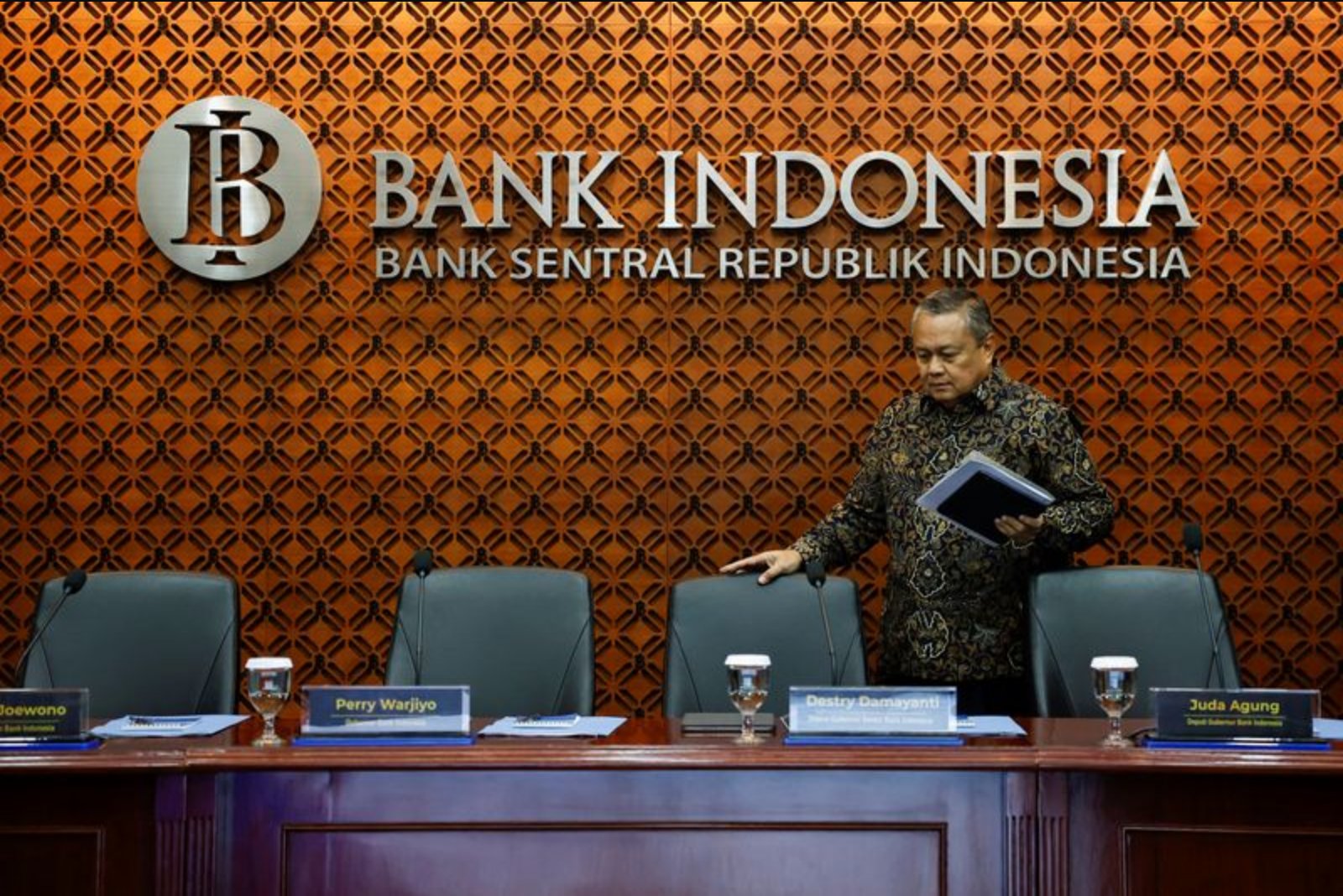
Bank Indonesia is expected to maintain its key policy rate at 4.75% this week, according to all 31 economists polled between April 13 and April 20. The unanimous forecast reflects a sharp pivot from the central bank's earlier signals that easing might be possible, as a conflict involving Iran has amplified energy price pressures and destabilised the currency.
Inflation measured 3.48% in March, putting it close to the top of Bank Indonesia's 1.5% to 3.5% target band. At the same time, the rupiah has weakened roughly 3% so far this year after having declined nearly 4% in 2025, despite repeated foreign-exchange interventions. Those developments have reduced the central bank's room for policy loosening.
The survey respondents also expect associated policy rates to remain steady: the overnight deposit rate and the lending facility rate were seen holding at 3.75% and 5.50%, respectively. While a hold at this week's decision appears certain among those polled, economists have markedly trimmed expectations for rate cuts over the remainder of the year.
All 27 economists who provided specific views for the second quarter now forecast no change to policy in that period - a notable reversal from the mood in March when around 70% of respondents had anticipated one or two cuts. "Recent developments point increasingly towards no rate cut, driven by at least three factors: capital outflows that have pressured the rupiah, rising inflation expectations and higher government bond yields stemming from the war," said Elbert Timothy Lasiman, an economist at Bank Central Asia. "Adding to this, markets now expect the Fed to keep rates on hold throughout the year."
Analysts emphasised the interplay between U.S. policy and Indonesia's options. A higher federal funds rate tends to attract capital to the United States and away from emerging markets, which can exacerbate rupiah weakness and constrain room for domestic easing.
Looking beyond the immediate meeting, more than 60% of economists - 17 out of 27 who provided full-year views - expect Bank Indonesia to leave rates unchanged for the remainder of the year. Nine respondents still forecast one or more cuts and one economist predicted a 25 basis-point hike. This represents a substantive shift from the previous survey round, when nearly all economists were calling for reductions.
Median projections in the poll put inflation at 3.0% for the year, up from the 2.7% median forecast made before the conflict escalated. The government has signalled it may need to deploy up to 100 trillion rupiah, equivalent to about $5.8 billion, in additional energy subsidies to help contain consumer price pressures. "Should the government decide to raise subsidised fuel prices, inflation could surge to as high as 5%," Timothy Lasiman warned.
Some economists in the survey suggested the inflation and currency risks might even force the central bank to consider rate hikes this year, at a time when economic growth is expected to run around 5% in both the current year and the next. Others maintained that a hold is the most likely outcome unless inflation accelerates further or subsidy choices shift materially.
Implications for markets and policy are clear in the survey responses: mounting energy costs and capital outflows have tightened Bank Indonesia's policy calculus, pushing a previously dovish outlook toward extended policy firmness.