
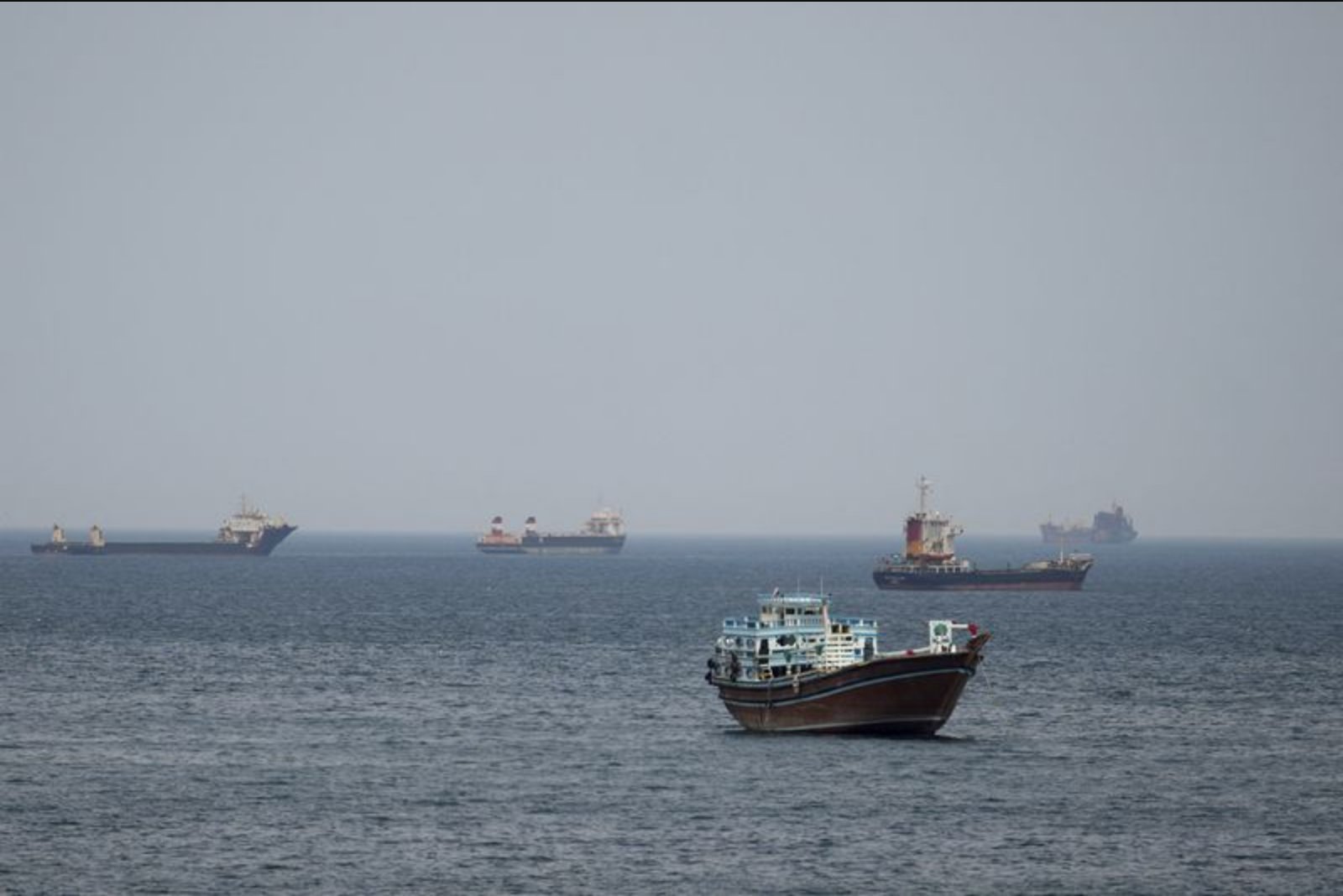
Top executives from large shipping companies said they will not resume routine transits through the Strait of Hormuz until they see unequivocal evidence that vessels can pass in a safe and sustained manner.
Jotaro Tamura, chief executive of Japan's Mitsui O.S.K. Lines (MOL), and Alexander Saverys, chief executive of Belgium's CMB.Tech, each described deep uncertainty around whether the waterway is effectively open following conflict-related disruptions to shipping in the region.
"Two weeks ago when the ceasefire, said to be temporary, came into picture, we thought there was hope. But in reality, the agreement was not translated into the safety and passage (of the vessels)," Tamura told Reuters in an interview on the sidelines of the Singapore Maritime Week conference. MOL is one of the world's largest shipping companies and is the top owner of oil and liquefied natural gas tankers.
Tamura cautioned that questions about safety could persist even if authorities declare the strait open. He noted reporting that Iran's Islamic Revolutionary Guard Corps had warned of mines around the strait and posed a practical dilemma about how to interpret the meaning of "open" in such circumstances.
"It's a question of the definition of open. Is it really open, or is it half open? Is it open, but there is risk?" Tamura said. He added that voyages will resume when normalisation occurs, but he emphasised the difficulty of forecasting how that reality will unfold.
When asked whether MOL would pay toll fees to Iran if requested, Tamura said the company's stance is to adhere to international law, which he characterised as guaranteeing freedom of passage through the strait.
Alexander Saverys, whose company CMB.Tech operates a diversified fleet of more than 250 ships, said the operator cannot hedge against the current uncertainty and must await developments in the Middle East before altering deployment plans.
"We need to be confident that we can transit without having any issues," Saverys said at the Singapore conference. "Today we have no reassurance whatsoever. We will only get the reassurance once we see that ships can pass through the straits in a safe and sustainable way."
Saverys reiterated a position on free passage: "The Strait of Hormuz is a free passage where normally no toll should be paid. If that would change in the future, we will investigate." He declined to disclose how many of his company's vessels are currently inside the Gulf, and said CMB.Tech is in contact with governments to ensure navigation remains possible, while adding that the situation is not safe yet.
Operational impact
Shipping through the Strait of Hormuz has been at a virtual standstill since the U.S.-Iran war began on February 28, according to the executives' statements. The strait typically sees about 130 vessels each day entering and exiting the Gulf and handles around 20% of the world's daily oil and liquefied natural gas supplies. With traffic effectively paused, operators say they are waiting for clear, demonstrable conditions that signal a durable reopening.
The comments from MOL and CMB.Tech underscore how major shipowners are treating navigational safety as a threshold condition for redeploying tonnage and resuming regular trade lanes. Both firms tied their decisions to observable assurances rather than declarations alone, and both flagged legal and commercial questions that would arise if passage conditions or practices changed.
Context limitations
The executives' remarks highlight the present state of uncertainty. They did not provide a timetable for restart, specific counts of vessels affected in every case, or detailed steps governments might take to restore safe passage. Their positions reflect an emphasis on demonstrable safety for crews and cargo before re-establishing normal operations.