
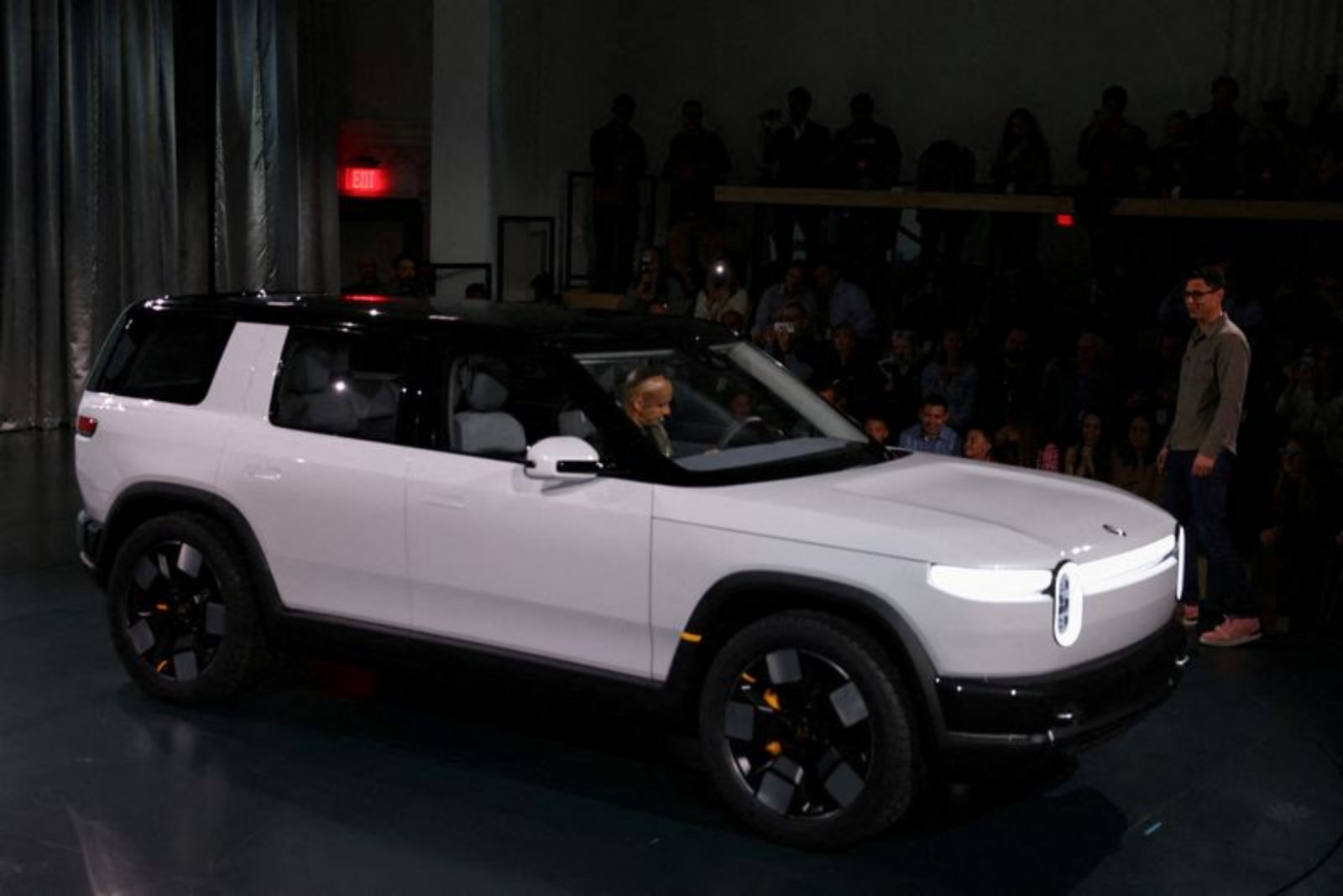
Rivian has started manufacturing its compact R2 sport-utility vehicle, and the company said customer deliveries are expected later this spring. The smaller model is central to Rivian’s strategy to widen its market reach beyond the higher-end R1 pickups and SUVs and to put the business on a firmer path toward profitability.
The R2 is positioned as a lower-priced alternative intended to compete with established high-volume models such as Tesla’s Model Y and to stimulate growth at a time when the U.S. electric-vehicle market has been affected by the removal of certain tax incentives. Company executives have highlighted early reservation activity as encouraging, while noting they will have clearer visibility on demand once customers are invited to configure vehicles in June.
Rivian has detailed the sequence of R2 trims and pricing it expects to roll out. The initial launch variant will begin deliveries at a price of $57,990. Following that, a Premium trim priced at $53,990 is expected to arrive late this year. In the first half of 2027 Rivian plans to introduce a rear-wheel-drive Standard version at $48,490, and a $45,000 variant is targeted for delivery by late 2027.
On unit-costs, Rivian forecasts that as production reaches a higher run rate in 2027 the R2 will cost the company less than half as much to build as the R1. Those savings are predicated on an aggressive program of parts consolidation and component simplification. The automaker quantified some of the expected manufacturing savings: die castings are estimated to reduce costs by 32 percent, a new drive unit is projected to deliver a 25 percent cut, and a simplified suspension is said to lower spending by 72 percent.
Despite those longer-term cost reductions, the company expects the R2 to be a near-term drag on margins. Rivian plans to exit 2026 with positive automotive gross profit margins, a goal the company says will be supported by rising R2 volumes together with lower non-material costs across the R1 lineup and its commercial vans.
Rivian’s delivery forecast for 2026 implies roughly 22,000 to 23,000 R2 deliveries this year, an expectation that assumes steady demand levels and a smooth production ramp. Independent analyst projections cited by the company suggest a much slower initial ramp this quarter, with fewer than 400 deliveries, then rising to about 7,000 in the third quarter and roughly 15,000 in the fourth quarter.
Company leadership has acknowledged the principal external risk to the rollout lies in the supply chain. To mitigate that exposure, Rivian said it has placed personnel at key supplier sites to monitor operations and identify potential disruptions early.
The R2 also underpins broader commercial and technology strategies beyond direct vehicle sales. Rivian has introduced a $2,500 driver-assistance package and developed a custom self-driving chip. Separately, the company last month reached an agreement with Uber that includes up to a $1.25 billion investment tied to a robotaxi partnership centered on the R2 platform.
Executives stated they are monitoring reservation activity and plan to begin inviting customers to configure vehicles around June, which should provide greater clarity on demand and timing as the company moves from initial production into customer deliveries and scale-up.
Note: Projections and timelines presented above reflect company guidance and analyst estimates disclosed in connection with the R2 rollout. The figures assume steady demand and an uninterrupted production ramp.