
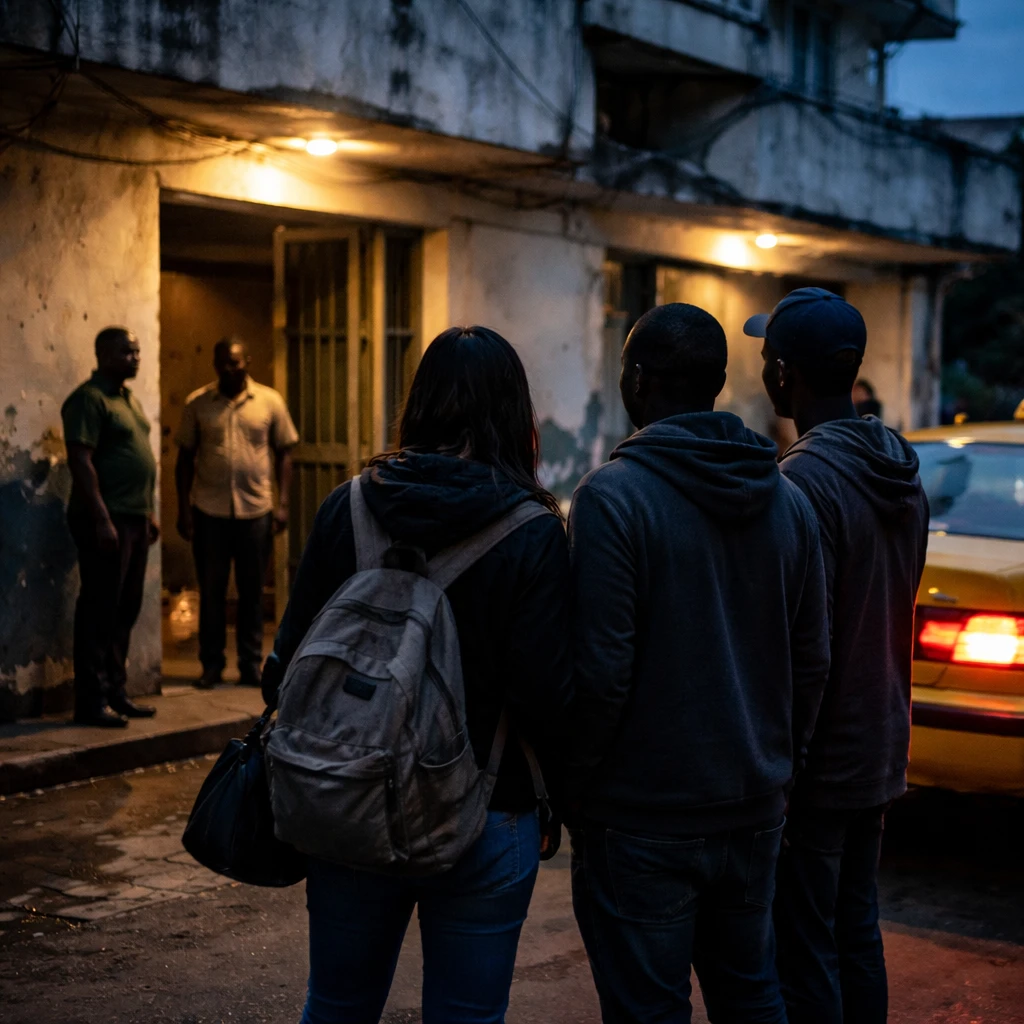
A Colombian national deported from the United States to the Democratic Republic of Congo under a newly signed agreement told reporters she and others in her group feel pressured to return to their countries of origin even though they face grave dangers there.
The 29-year-old woman, who requested anonymity because she fears reprisals from both Congolese and Colombian authorities, is part of an initial cohort of 15 South American migrants flown to the Central African country last week. Two other members of the small group, from Peru and Ecuador, corroborated her account that they have been offered no realistic alternative to repatriation since arriving in Kinshasa.
"We feel pressured to agree to go back to our country, regardless of the risks," she said.
According to documents she submitted in support of an asylum application in the United States, which were reviewed by reporters, she fled Colombia in January 2024 after being kidnapped and tortured by the FARC rebel group and suffering serious abuse from an ex-husband who is a police officer. U.S. court records show that a U.S. immigration judge ruled in May 2025 that she was more likely than not to be tortured again if returned to Colombia.
The other two migrants interviewed said U.S. judges had also granted them legal protections. Reporters were not able to independently confirm those accounts.
The transfer to Congo took place under a broader set of third-country deportation agreements Washington has negotiated with multiple African nations as part of the Trump administration's drive to curb irregular migration. U.S. and Congolese officials have not made the details of the arrangement public.
Congo is among the most unstable countries in Africa, with more than seven million people internally displaced by conflict and more than one million living as refugees abroad, according to publicly stated assessments. The Congolese government has described the agreement with Washington as "strictly transitional, temporary and time-limited." Neither the Congolese government nor the Colombian foreign ministry immediately responded to requests for comment.
A State Department spokesperson, asked about the accounts from the deportees and the agreement with Congo, said carrying out the administration's immigration policies was a top priority. "We remain unwavering in our commitment to end illegal and mass immigration and bolster America's border security," the spokesperson added, while declining to discuss the details of diplomatic communications with other governments.
A U.S.-based lawyer representing one of the migrants in Congo said the process places deportees at risk, despite legal protections previously granted in the United States. The lawyer said several deportees were sent without their passports.
"The goal is clear: put people in a place so unfamiliar that they give up and agree to return home, despite the immense risk they face there," she said.
Reporters who attempted to meet the migrants at the hotel in Kinshasa where they are being housed were turned away, and the migrants have been prevented from leaving the premises, according to accounts of the attempted visit.
The United Nations' International Organization for Migration offers assistance with repatriation, but the organization said it provides such assistance only when an individual chooses it. Two of the three deportees interviewed said IOM staff and Congolese officials told them they would risk losing accommodation and other support after seven days if they refused repatriation.
One of the migrants said IOM staff recommended she not apply for asylum in Congo because it was dangerous. Another said Congolese authorities had not informed them that applying for asylum locally was an option.
The IOM responded that it did not discourage asylum applications and that it had not discouraged such applications for these arrivals. The organization said it used translators and relayed concerns to the relevant authorities.
Details about how many migrants Washington intends to send to Congo and what, if anything, Congo will receive in return remain undisclosed. Reporters were told the agreement was negotiated as Washington sought to implement a regional peace deal and secure access to critical minerals, but officials have not published the terms.
The situation exposes tensions between legal findings made in U.S. immigration courts and the practical options available to deported individuals once they are transferred to a third country. The migrants and their legal counsel say that the environment in Kinshasa and the handling of their case have left them with little meaningful choice but to consider returning to countries where some were found by U.S. judges to be at serious risk of harm.
As the agreement's implementation proceeds, questions remain about the safeguards in place for people who had sought protection in the United States and were found by U.S. judges to warrant legal protections. Those questions touch on diplomatic discretion, humanitarian assistance, and the responsibilities of international organizations on the ground in receiving states.
For now, the three migrants interviewed say they are constrained in movement, worried about the loss of support if they refuse repatriation, and uncertain about the options available to them in Congo.