
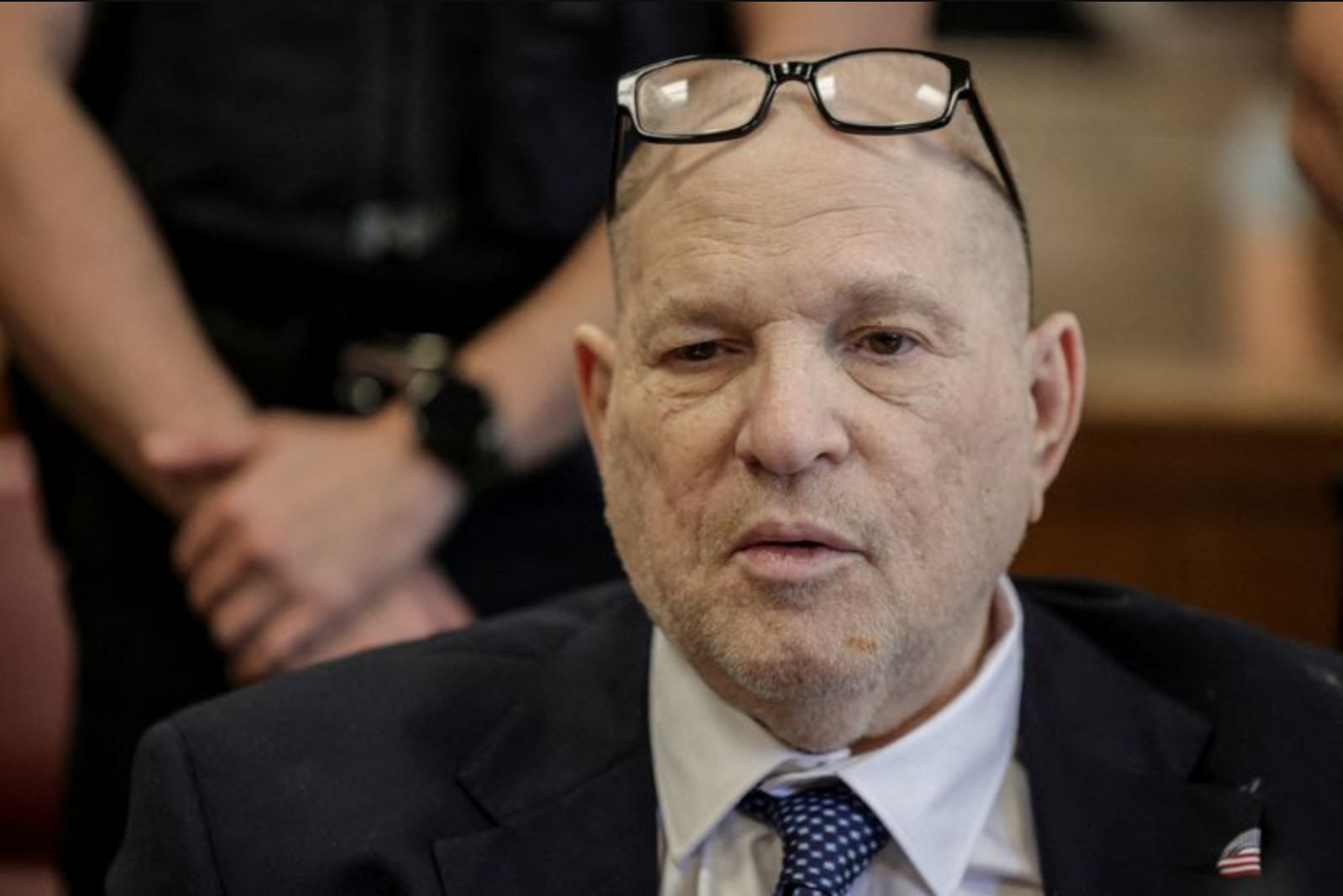
Prosecutors told a Manhattan jury on Tuesday that Harvey Weinstein used the sway of his position in Hollywood to prey on and sexually exploit women, while the defense insisted the encounter at the center of the case was consensual.
Prosecutor Candace White told jurors the chief charge involves the alleged rape of aspiring actress Jessica Mann in a Manhattan hotel room in 2013, saying Mann resisted and repeatedly said "No." "This case will come down to power, to control and to manipulation," White said, accusing Weinstein of taking advantage of "fragile and sheltered" young women who hoped their careers might be advanced by him.
Defense attorney Jacob Kaplan responded by saying Mann fabricated the allegation after being disappointed that her relationship with Weinstein did not produce career benefits. Kaplan told jurors that emails will show Mann to be a "strong and capable" woman and argued that the relationship between Mann and Weinstein was consensual. "In the end, this case will be her word against her word," Kaplan said in his opening remarks.
Testimony was scheduled to begin Tuesday afternoon. Jury selection for the latest New York trial began last week in Manhattan state court, and the proceedings are expected to run about a month before Justice Curtis Farber.
The case marks another chapter in Weinstein's long-running legal battles. Weinstein, 74, rose to prominence as a film producer before allegations of sexual misconduct surfaced and led to his downfall, and to a broader movement that encouraged other women to disclose abuse by powerful men. He has pleaded not guilty to one count of third-degree rape in this case and has denied assaulting anyone or engaging in non-consensual sex.
In a previous New York trial in 2020, Weinstein was convicted of raping Mann in 2013 and of sexually assaulting one-time production assistant Miriam Haley in 2006. The state's highest court later overturned that conviction and the accompanying 23-year prison sentence, finding Weinstein did not receive a fair trial.
At a subsequent New York retrial, a jury convicted Weinstein of sexually abusing Haley in a trial in June 2025, but acquitted him of assaulting former model Kaja Sokola. That same jury deadlocked on the third-degree rape charge accusing Weinstein of assaulting Mann, prompting Justice Farber to declare a mistrial on that count.
Separately, Weinstein was convicted of rape in California in 2022 and is serving a 16-year prison sentence; he is appealing that conviction and sentence. When he is later sentenced for the Haley conviction, Weinstein faces up to 25 years behind bars.
The prosecution framed the current trial in terms of influence and exploitation, saying jurors will hear evidence intended to show how Weinstein used his position to control and manipulate women seeking careers in film. The defense countered that documentary evidence, including emails, will demonstrate consent and an ordinary relationship dynamic rather than the coercive conduct alleged by the prosecution.
With testimony set to begin and the case slated to continue for roughly a month, jurors will weigh conflicting accounts amid a complex procedural history that includes prior convictions, an overturned verdict, a retrial with mixed outcomes and pending appeals.