
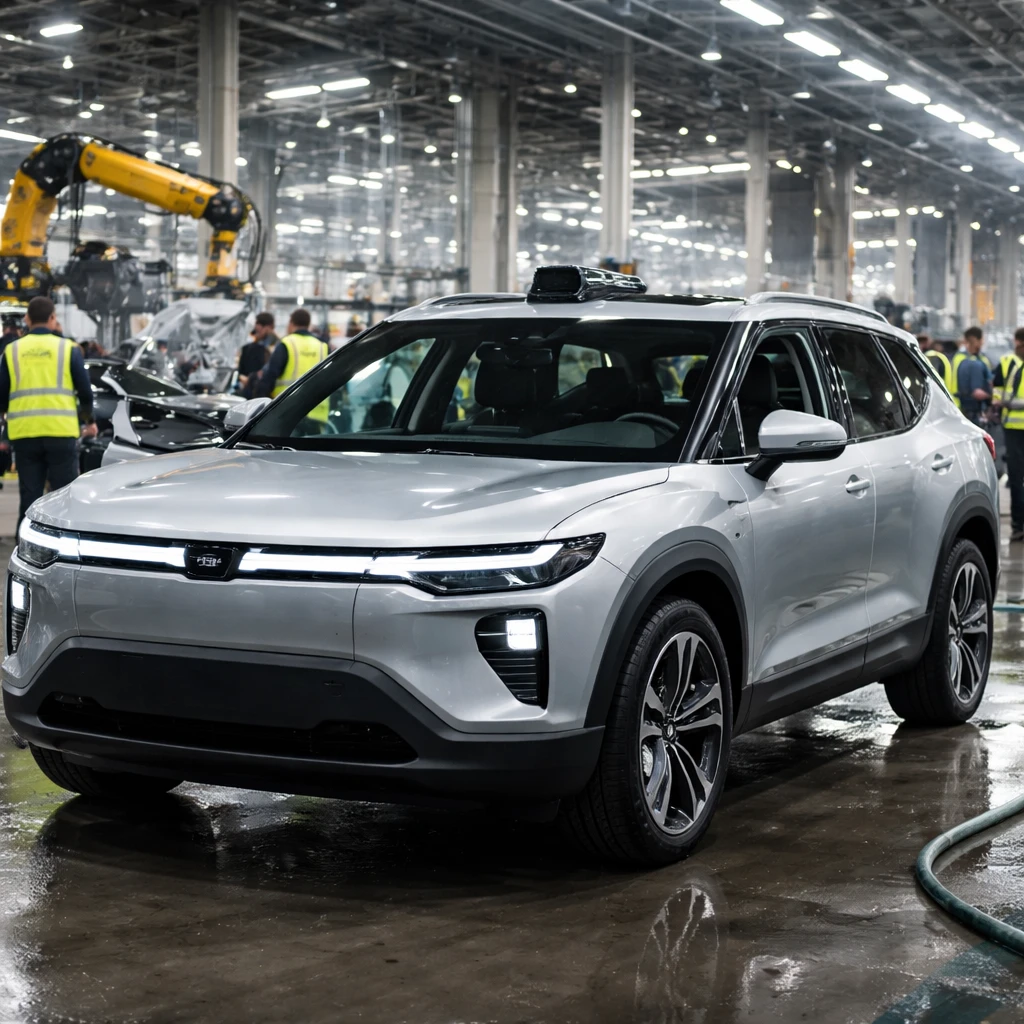
Rivian Automotive Inc. announced that its first customer R2 SUVs have started coming off the production line, and Chief Executive Officer RJ Scaringe described the new vehicle as central to the company’s autonomous driving development plans.
Scaringe told Bloomberg Television that the R2 fleet will be used to gather data for training Rivian’s large driving model. The vehicle is equipped with laser-based sensors and upgraded chips intended to capture driving inputs for the automaker’s artificial intelligence systems.
The R2 is a midsize SUV that represents Rivian’s effort to reach a broader market with a lower entry price than the company’s existing models. Initial offerings will include higher-priced variants, with a performance version priced up to $57,000. A base model priced at $45,000 is scheduled to arrive within the next year.
Rivian altered its production plan for the R2, moving manufacturing from an originally planned multibillion-dollar plant in Georgia to its existing Normal, Illinois facility. The company said this shift is expected to save billions in capital expenditures and accelerate the vehicle’s launch timeline.
Production continued despite weather-related damage at the Illinois plant. A tornado struck part of the facility on Friday, and Scaringe said workers spent the subsequent 72 hours removing water and working around damaged sections to keep the launch on schedule.
On the software front, Rivian intends to roll out advanced driver assistance features later this year. The initial capability will be a point-to-point Level 2 system that permits hands-off steering while requiring the driver to keep their eyes on the road. The company also expects to introduce Level 3 highway autonomy next year, which would allow passengers to look away from the road while the system is engaged.
Product and market positioning - The R2’s sensor suite and compute upgrades are described as tools to build the data foundation for Rivian’s large driving model, aligning hardware and software development on a new vehicle designed to appeal to a wider buyer base.
Production strategy - Consolidating R2 manufacturing at the Normal, Illinois plant is presented as a capital-saving measure intended to speed the vehicle’s market entry, despite localized storm damage that the company said it mitigated through immediate repairs and recovery work.
Autonomy roadmap - Rivian plans a staged deployment of driver assistance and autonomy: Level 2 point-to-point hands-off capability later this year, followed by Level 3 highway autonomy next year, per the company’s statements.